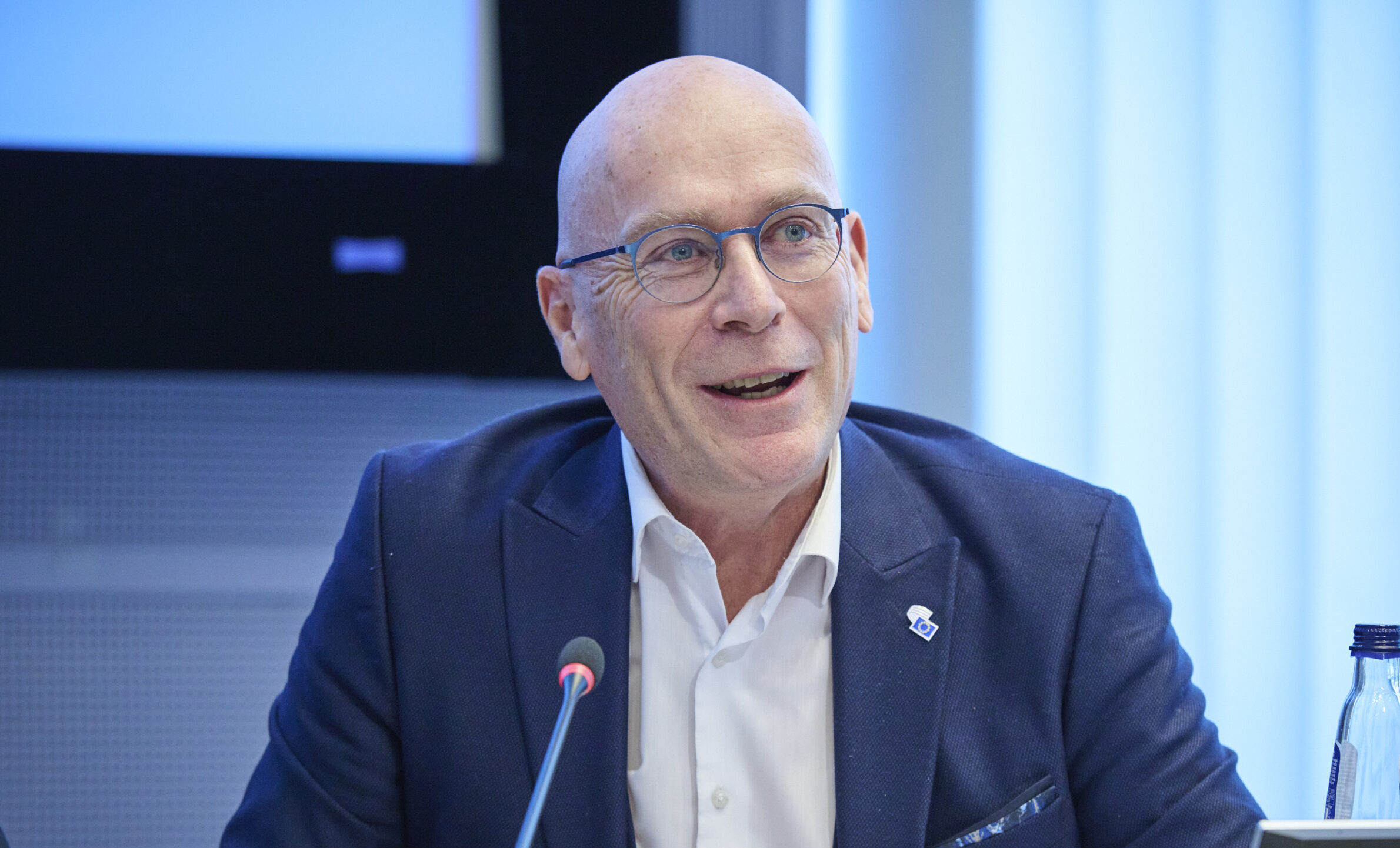
By Hervé Jeannin, co-rapporteur for the EESC opinion on the potential of the sodium battery manufacturing sector
Europe’s energy transition requires an industrial base capable of delivering it. Batteries power electric mobility, facilitate the integration of renewable electricity and help households and businesses manage their energy consumption. Our ability to manufacture them will shape Europe’s competitiveness and energy security. Yet intense international competition and dependencies on materials, components and equipment are weakening this essential industry.
As co-rapporteur for the European Economic and Social Committee’s opinion on sodium battery manufacturing, I am convinced that sodium technologies offer a tangible opportunity to strengthen Europe’s capabilities while making better use of its own resources.
Beyond lithium: what makes sodium batteries different?
Today, lithium-ion batteries dominate the global market, powering everything from smartphones to electric vehicles and energy storage systems. Their production is heavily concentrated in Asia, particularly China, which leads in battery manufacturing and the processing of key materials. Sodium-ion batteries offer an emerging alternative: they use sodium instead of lithium, reducing reliance on certain critical raw materials.
Although they generally store less energy for the same weight, they could be cheaper to produce and are particularly promising for stationary energy storage and more affordable electric vehicles. China is already investing heavily in this technology, making it essential for Europe to develop its own manufacturing capacity before another strategic dependency takes hold.
Sodium batteries: an opportunity for Europe
Sodium is abundant in Europe. Suitable battery chemistries can reduce dependence on lithium, cobalt and nickel, while the hard carbon used for anodes can be derived from wood or agricultural waste. The EESC highlights the possibility of producing sodium batteries entirely from European raw materials. Turning this potential into strategic autonomy requires European capabilities across the entire value chain, from processing to recycling, and, above all, strong political commitment to driving the development of European solutions encompassing both raw materials and manufacturers.
Sodium should complement lithium-ion technologies. Each application calls for a different balance between energy density, cost, safety and durability. Sodium-ion batteries generally have slightly lower energy density, but weight and size matter less for stationary storage than for electric vehicles. Storing renewable electricity for households, businesses and grids therefore represents a particularly relevant market opportunity.
Public support must reflect technological maturity. Sodium-ion batteries offer prospects for deployment in the nearer term; sodium–saltwater systems require further research, particularly into solid electrolytes, to explore their potential for marine applications and longer-term storage. Our opinion also identifies the possibility of using sodium recovered from desalination by-products, linking water resilience to energy storage, subject to technical and environmental assessment.
From innovation to industrial production
The immediate challenge is industrial scale-up. A laboratory breakthrough alone does not create a competitive factory. Companies must demonstrate the reliability of their solutions, secure customers and finance production equipment. Small businesses often struggle to shoulder these risks. The EESC therefore calls for an updated industrial roadmap for lithium and sodium batteries, coordinated by the European Battery Alliance, with targeted investment support and cooperation with research and technology organisations.
Investing in Europe’s battery industry
The EESC’s opinion on the Battery Booster strategy makes a specific request: broaden funding to cover chemistries beyond lithium and explicitly include sodium. Support should reach SMEs, suppliers and recyclers alongside cell manufacturers, and should not be limited to electric vehicles. Critical chemicals, electrolytes and European-made machinery also deserve investment. Dependence on imported inputs and equipment leaves vulnerabilities that building more cell factories alone cannot resolve.
Affordable energy, predictable permitting procedures and timely funding are essential. The EESC calls for stronger and better-targeted funding for the Battery Booster strategy in the next EU Budget. Our opinion on sodium advocates an overall budget of at least EUR 220 billion for FP10.
International cooperation must help build lasting European expertise. Both opinions call for technology transfer; the Battery Booster opinion recommends making state aid, public procurement and subsidies conditional on technology transfer and local content. Investment must strengthen European research (80% of current projects are not launched for lack of funding in Europe), skills and suppliers, while ensuring that requirements for products entering the EU market are applied fairly.
Sustainability, jobs and regional development
Circularity must be built in from the outset. Ecodesign should facilitate disassembly and materials recovery, while production should minimise energy consumption and the use of hazardous substances. Recycling requires economically viable facilities, harmonised collection and the efficient transport of used batteries to authorised facilities within the single market. Materials recovery capacity must grow in step with production.
Industrial ambition must also benefit workers and regions. The Battery Booster opinion makes job quality and compliance with EU standards conditions for public support. Adequate staffing, training, investment in prevention and effective inspections are essential. Workers must be involved in identifying risks arising from new processes.
Keeping Europe on the global battery map
These priorities will guide discussions at the event Keeping Europe on the Global Battery Map – The Case for Innovation, jointly organised by the EESC’s Consultative Commission on Industrial Change and the Batteries European Partnership Association and to be held on 30 November in Brussels. The event will bring together Europe’s technological prospects and the public support and funding mechanisms needed to turn them into reality.
Europe has the scientific expertise and industrial talent needed to shape the next generation of batteries. Sodium offers an opportunity to harness these strengths. Sustained investment in production, infrastructure and skills can turn European innovation into European industrial capacity.
Hervé Jeannin, from the European Economic and Social Committee Consultative Commission on Industrial Change (CCMI) is a co-rapporteur for the EESC opinion on the potential of the sodium battery manufacturing sector and