Brussels – An overwhelming majority that brings Kosovo ever closer to joining the Council of Europe. With 131 votes in favor, 29 against, and 11 abstentions, the Parliamentary Assembly of the Strasbourg-based international organization (which is not among the institutions of the European Union) gave the green light yesterday (April 16) to the recommendation of the Greek rapporteur Dora Bakoyannis, who stresses that Pristina’s membership would lead to the “strengthening of human rights standards by ensuring access to the European Court of Human Rights for all those under Kosovo’s jurisdiction.”
A vote that does not cast doubt on the orientation of the Parliamentary Assembly ahead of the final decision of the Committee of Ministers (the organization’s executive body comprising the foreign ministers of the 46 member countries) that is expected in May but which provides some interesting indications on the approach of several member states, including those of the European Union to the issue of Kosovo’s independence from Serbia and its possible membership in international organizations (as per the February 27, 2023 Brussels Agreement). Among the five EU member states that do not recognize Pristina’s sovereignty, Cyprus and Spain still show stiff opposition (two out of two delegates and eight out of nine against, respectively), Romania and Greece are the most open-minded (two out of two and four out of five in favor) while Slovakia did not participate in the vote. Also noteworthy is the vote against by all four Hungarian members, demonstrating Budapest’s unconditional support for Belgrade (the Hungarian Premier, Viktor Orbán, is the closest ally of the Serbian president, Aleksandar Vučić within the Union).
“The voice of Europeans has been heard,” Kosovo’s President Vjosa Osmani said, commenting on the “new step forward” toward her country’s first entry into an international organization since the declaration of independence in 2008. As noted a few weeks ago in the positive opinion of the Committee on Political Affairs and Democracy of the Parliamentary Assembly of the Council of Europe, Kosovo’s accession as the 47th member country would be “the culmination of a dialogue that has developed over two decades,” even though it “should in no way be seen as the end of a process.” On the contrary, it should “catalyze momentum for continued progress in strengthening human rights, democracy, and the rule of law.” Also of particular relevance is how the Balkan country could be helped to “address challenges and outstanding issues,” in particular regarding the Association of Serb-majority Municipalities in Kosovo (to which autonomy on a whole range of administrative matters should be granted): “It should be a post-accession commitment in the future exam by the Committee of Ministers of Kosovo’s application for membership in the Council of Europe.”

Speaking of Kosovo and Serbia, it is worth mentioning that the top political authorities in Belgrade threatened that an entry of Kosovo into the Council of Europe could imply an exit of Serbia. A blackmail that, once more, violates point 4 of the Brussels Agreement on the normalization of relations between the two countries: “Serbia will not oppose Kosovo’s membership in any international organization.” But in any case, according to Article 4 of the Statute, “any European state that is deemed to be able to and willing to fulfill the provisions of Article 3 [accepting the principles of the rule of law and the enjoyment of human rights and fundamental freedoms, ed.] may be invited to become an associate member of the Council of Europe by the Committee of Ministers.” All seven Serbian delegates opposed the recommendation voted on yesterday in the Parliamentary Assembly but without the Russian Federation – expelled/exited from the organization after the decision of the March 16, 2022, Committee of Ministers invasion of Ukraine – Belgrade has lost a powerful ally in the Council of Europe to continue to stall the issue of Pristina’s membership.
Tensions between Kosovo and Serbia
The first event that kicked off one of the most complex and violent years for relations between Serbia and Kosovo occurred on May 26, 2023. Violent protests erupted after the newly-elected mayors of Zubin Potok, Zvečan, Leposavić, and Kosovska Mitrovica took office, turning into guerrilla warfare on May 29 that also involved soldiers from the international KFOR mission led by NATO. Tensions erupted over the Albin Kurti government’s decision to bring special police forces to allow mayors elected on April 23 into municipalities in a controversial election round due to very low voter turnout.
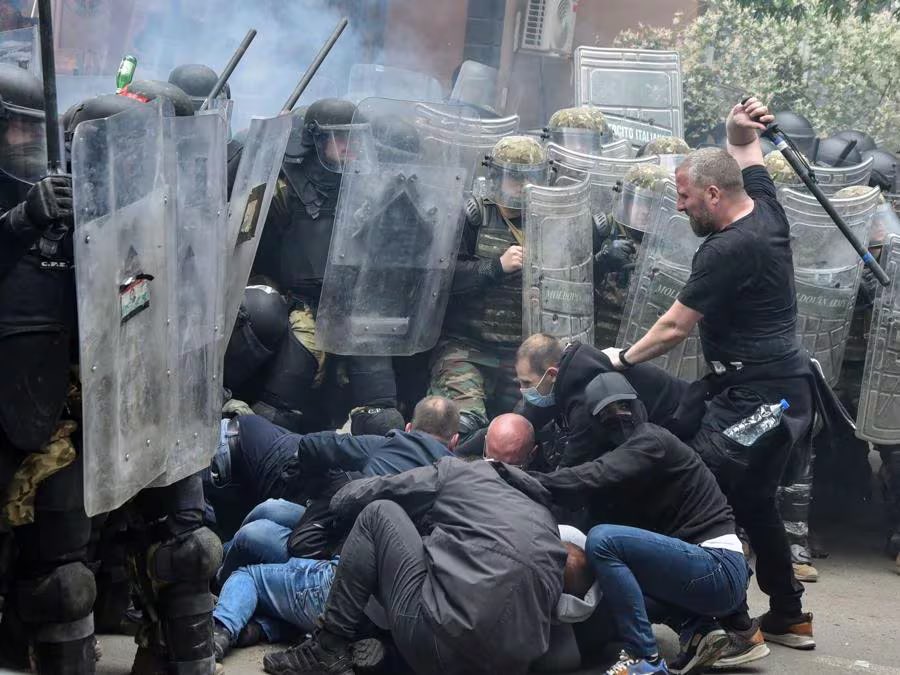
Clashes between Kosovo Serb protesters and NATO Kfor mission soldiers in Zvečan, May 29, 2023 (credits: Stringer / Afp)
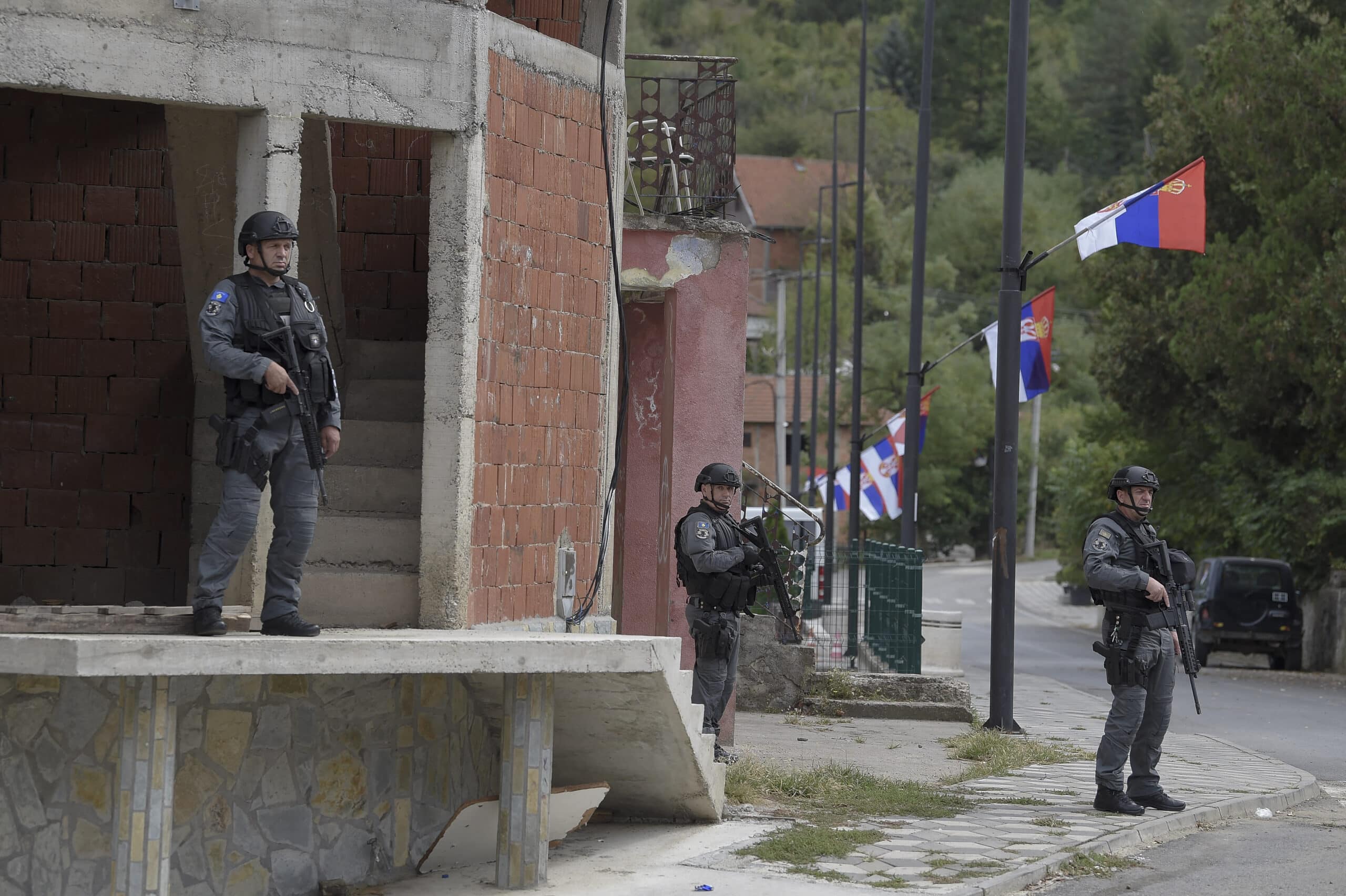
Meanwhile, on June 14, three Kosovar policemen were arrested/kidnapped by Serbian security services, with the respective law enforcement agencies of Pristina and Belgrade accusing each other of trespassing. Brussels convened an emergency meeting with PM Kurti and President Vučić to exit “crisis management mode,” but the three policemen were released only on June 22. Due to Pristina’s failure to take a “constructive attitude” to de-escalate the tension, Brussels imposed “temporary and reversible” measures against Kosovo in late June (still in place, despite the roadmap agreed on July 12). However, the situation escalated with the terrorist attack on September 24 near the Serbian Orthodox monastery in Banjska. On the day of clashes between the Kosovo police and a group of about 30 gunmen, a policeman and three attackers were killed.
Developments in the attack showed clear links in neighboring Serbia. The bombers outside the monastery included Milan Radoičić, deputy head of Lista Srpska – as he confirmed a few days after the armed attack – as well as Milorad Jevtić, a close associate of the Serbian president’s son, Danilo Vučić. To make matters worse, Serbia deployed the armed forces along the administrative border, a move that the United States denounced. The threat did not materialize, but the EU began to reflect on the possibility of imposing the same measures in force against Pristina on Belgrade. However, the green light needed to be unanimous in the Council, and Vučić’s closest ally inside the Union – the Hungarian premier, Viktor Orbán – vetoed. As if that were not enough, before early elections in Serbia on December 17, the last act of the government led by Ana Brnabić was to send a letter to Brussels to warn that Serbian institutions do not recognize the legal value of the verbal commitments made in the context of the Pristina-Belgrade dialogue and that they would not recognize the de facto sovereignty of Kosovo either.
(credits: Armen Nimani / Afp)
At the moment, the only positive news is the resolution of the ‘license plates’ row between Serbia and Kosovo, thanks to the decision between late 2023 and early 2024 on the mutual recognition for vehicles entering the border, even given the unpromising assumptions with which the new year started. With the entry into force of the Regulation on Transparency and Stability of Financial Flows and Combating Money Laundering and Counterfeiting, as of February 1, the euro became the sole currency of exchange and deposit in bank accounts: the Serbian dinar can still be exchanged on par with the Albanian lek or the dollar, but the decision will impact all those public services that never adjusted to Pristina’s adoption of the euro in 2002 (even before independence). On February 5, the special police operations at the offices of the temporary institutions run by Serbia in four municipalities in northern Kosovo (Dragash, Pejë, Istog and Klinë) and at the headquarters of the NGO Center For Peace and Tolerance in Pristina raised controversy in Brussels: since 2008, Belgrade has continued to fund municipalities, companies, public enterprises, kindergartens, schools, public universities and hospitals available to the Serb minority, illegally according to the Kosovo Constitution.
Find more insights on the Balkan region in the BarBalkans newsletter hosted by Eunews
English version by the Translation Service of Withub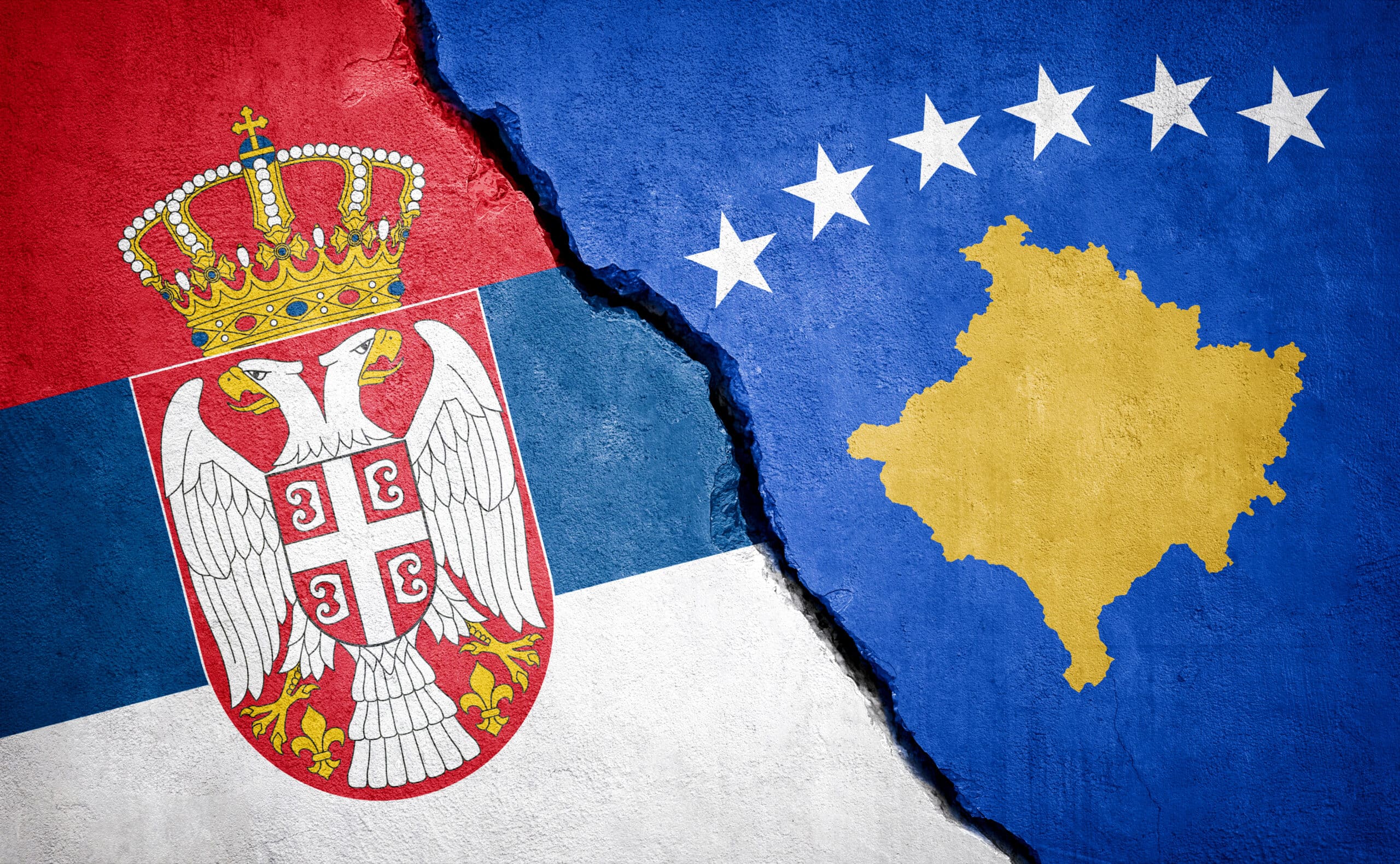

![Da sinistra: il presidente del Consiglio europeo, Antonio Costa; il presidente dell'Ucraina, Volodymir Zelensky: la presidente della Commissione europea, Ursula von der Leyen [Bruxelles, 18 giugno 2024. Foto: European Council]](https://www.eunews.it/wp-content/uploads/2026/06/euco_ua260618-120x86.jpg)
![[foto: Saverio De Giglio/imagoeconomica]](https://www.eunews.it/wp-content/uploads/2026/10/cpt-120x86.png)