Brussels –“Brexit has deprived young people of opportunities”; “people
realise that the status quo isn’t working”; “this isn’t a suitable situation
for Britain”; “according to the latest polls, three out of four citizens are in
favour of closer ties with Europe”; “today we are rebuilding the bridges that
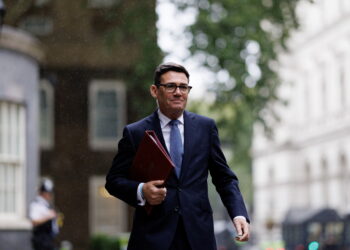
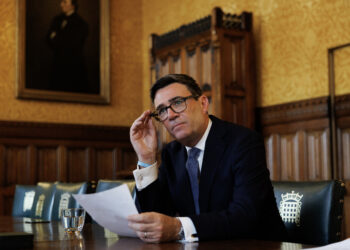
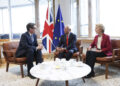
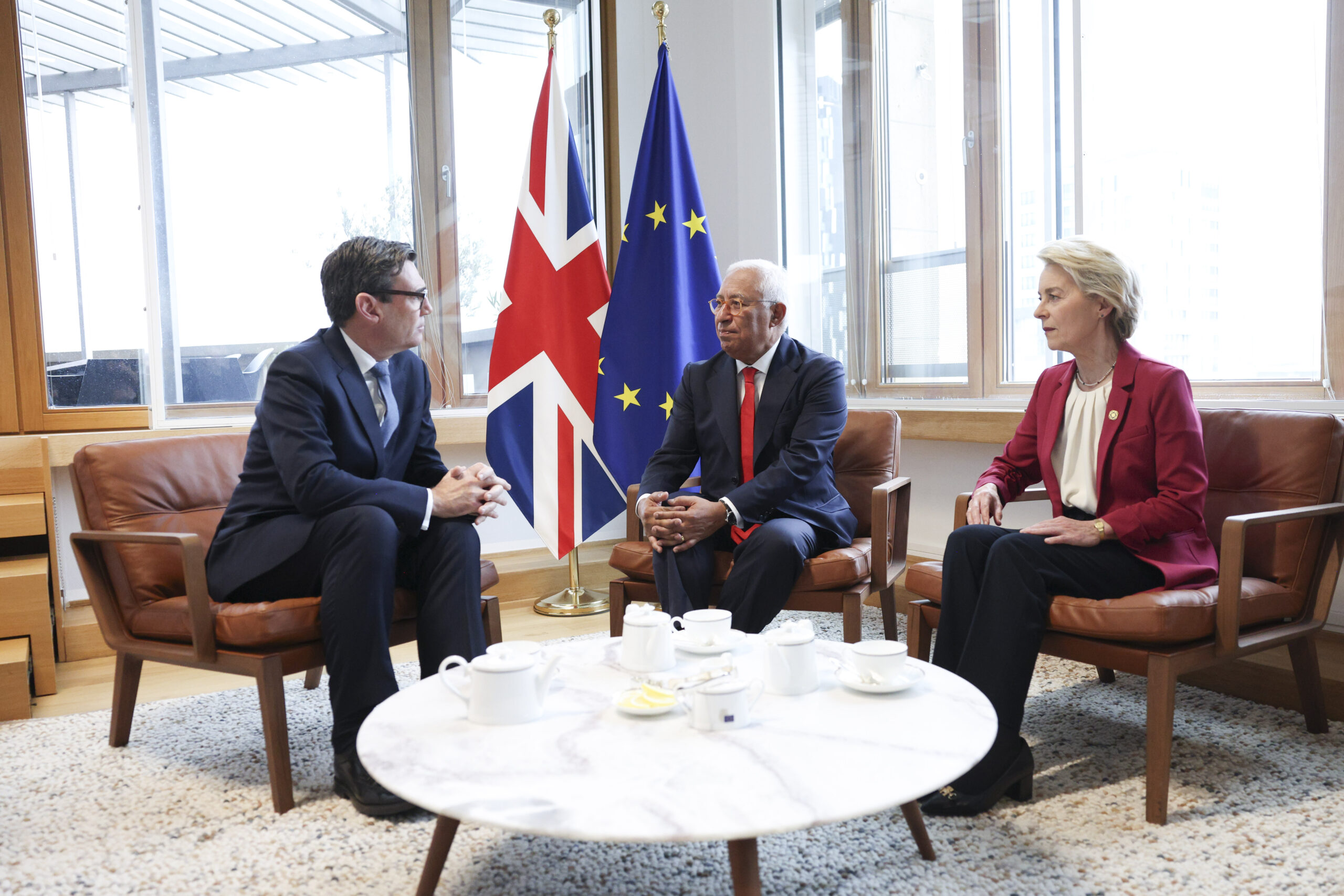
were broken years ago.” The UK Prime Minister, Andy Burnham, arrives in Brussels today (20 November) for the second EU–UK Summit and, at the press conference following his meeting with the President of the European Council, António Costa, and the President of the European Commission, Ursula von der Leyen, he laid out all the pieces of a jigsaw puzzle to be reassembled more closely: that of relations between the two sides of the Channel. “Today’s world is different from that of 2016. The UK of 2026 finds itself in a different situation, but the same applies to Europe. And anyone looking at today’s world realises that those who share the same vision must work together; they must draw closer,” he said. “In a world that is changing around us, we are working together to draw closer and, in doing so, to make ourselves stronger: both our economies and our security,” he added.
At the end of the meeting, there were 18 pages containing 72 points of an agreement which the British Prime Minister describes as “historic”, and today’s signing as “a good day for the United Kingdom and for Europe” because “citizens across Europe and throughout the United Kingdom will reap tangible benefits from the agreement.” The text aims to reaffirm both sides’ support “for an ambitious and dynamic relationship that brings benefits to our citizens in the face of increasingly complex geopolitical and economic challenges.” The UK’s return to the European Union has once again become a topic of public debate in Britain. Burham emphasised that “citizens want a better deal than the ‘hard Brexit’ we have ended up with,” and therefore “the deal directly addresses the most important challenges of our time and people’s main concerns: the cost of food and energy, the lack of economic growth, the burden on businesses, levels of irregular migration, and the challenges facing our young people.” Among the various commitments made today, three initiatives stand out: a programme that will enable “100,000 young people, from the EU and the UK respectively” to reside “in the other party’s territory” to pursue their studies; the conclusion of “negotiations on a Common Sanitary and Phytosanitary Area, based on certain shared quality standards” – the so-called SPS Agreement –; and the conclusion of negotiations on the link between the EU and UK Emissions Trading Schemes (ETS).
More exchanges between British and EU students
First and foremost, young people. “To young people who are wondering how today’s agreement affects them and their lives, I would say: this agreement is for you,” said Burnham. “I think we are all aware that the last decade has been difficult for many, but most of all for young people,” because “Brexit has taken away opportunities from our young people; it has limited their life prospects,” he added. But now “I can say to young Britons: thanks to this agreement, you will have a new freedom. You will find it much easier and have far more opportunities to move to any of the wonderful 27 Member States of the European Union to live, work, and study. And that is a truly positive development.” As the occupant of the Berlaymont Building noted during the press conference, in 2027 the United Kingdom will rejoin the Erasmus+ exchange programme. “In other words, we will see British Erasmus students in the European Union, and I can only say that it’s wonderful because we’ve missed them so much,” she commented. Added to this is the new “Youth Experience Scheme” (YES). The aim is to enable “100,000 young people from the EU and the UK, respectively, to reside for a maximum period of three years in the other party’s territory, to undertake activities such as work, study, au pair placements, volunteering or simply travelling, in accordance with their respective legal frameworks.” The aim is to have it up and running by 2028 and to commit to “ensuring that the opportunities provided by the programme are accessible to our young people by January 2030 at the latest.” The two parties will also work on a supplementary agreement to the Trade and Cooperation Agreement – the bilateral treaty governing their relations since Brexit – concerning tuition fees for EU students in the UK and for UK students in the EU. The commitment is to conclude “negotiations within six months of the date of the summit.”
ETS, electrification, and health standards
Today, leaders concluded negotiations on the link between the EU and UK emissions trading schemes (ETS). This provides “a stable basis for the mutual recognition of EU and UK emission allowances, as well as for exempting goods from the EU and the UK from each other’s carbon border adjustment mechanisms.” Similarly, the two sides hope to make “this agreement operational from 2028.” Work is also continuing “on the UK’s participation in our electricity market. We are electrifying our economies with clean, domestically produced energy, thereby reducing our excessive dependence on imported fossil fuels,” announced the President.
Another success was the conclusion of negotiations on a Common Sanitary and Phytosanitary Area, based on specific shared quality standards (the SPS Agreement), which “would allow the vast majority of movements of animals, animal products, plants and plant products between Great Britain, the Crown Dependencies and the EU to take place without the certificates or checks currently required. Ursula von der Leyen emphasised that this is “a two-way street” because for “businesses on both sides of the Channel, it means easier trade and lower costs”, and for “consumers, it means greater choice and more affordable food, leading to a reduction in the cost of living.” According to the British Prime Minister’s estimates, “the agreement reached will lead to a 0.5 per cent increase in UK GDP” and to “a boost of £17 billion to the British economy.” This outcome comes after “agricultural exports from Britain to the European Union have fallen by over 30 per cent over the last decade,” he pointed out.
Defence, migration, and much more
As part of the security and defence partnership signed last year at the first summit between the UK and the EU, “we are strengthening cooperation in specific areas, ranging from hybrid threats, democratic resilience and foreign interference, to maritime and space security,” explained Costa. Today “we have a framework agreement that will enable the UK to participate more regularly in the European Union’s civilian missions” under the Common Security and Defence Policy (CSDP). The two sides agreed that “cooperation on military mobility, including logistics, is of vital importance” and are committed to strengthening their engagement on maritime security, including through joint naval activities and greater cooperation to tackle the challenges posed by the so-called Russian ‘shadow fleet’ by countering its operations and activities.
Over the coming months, leaders will also be working on the issue of “illegal immigration.” Sources close to the matter have clarified that the European Commission presented an action plan in June and that the initiative will cover several areas: migrant smuggling, engagement with third countries and the establishment of repatriation centres in those countries. They described the negotiations as “not complex.” In addition to migration, other areas of work to which both sides have pledged to commit include economic security, with a particular focus on the supply of raw materials, and the digital sector.
Next steps
Burnham explained that next week “a bill will be introduced in the UK Parliament to implement this agreement, which includes SPS measures, the ETS and other elements.” He then offered reassurances. “We will not waste any time: we will proceed immediately with implementation, rebuilding the bridges that were severed so many years ago,” he said. The day marked a change of pace that Burnham highlighted with hope. “Today we are drawing a line under a decade of drift and divisions, re-establishing ties with old friends and forging a far more constructive relationship with our closest neighbours and our largest market,” he concluded. Costa echoed this tone, recalling the EU’s stance in 2016. “We have respected the sovereign decision made by the British people and, now, we will, in the same way, respect any decision the United Kingdom takes regarding the future of its long-term relations with the European Union,” the President of the European Council recalled.
English version by the Translation Service of Withub