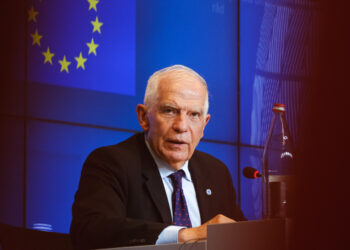
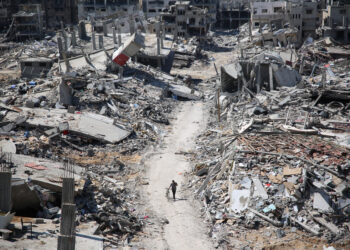
Brussels – In the never-ending harrowing list of Israeli bombings of Gaza—75,000 tons of explosives in the first year of the conflict —some make more noise than others. Like yesterday’s on the Jabalia refugee camp, which completely levelled a residential building and killed at least 30 people. And which is part of the total siege Israel has imposed over the past month on the northern Gaza Strip. There comes timely “firm condemnation” from the EU High Representative for Foreign Affairs, Josep Borrell, who bitterly noted, “The words ‘ethnic cleansing’ are increasingly being used to describe what is happening in northern Gaza.”
The Israel Defense Forces justified the raid by the alleged presence of terrorists at the scene. According to the report to the BBC by a witness to the attack and family member of some of those killed, the victims were nothing but “innocent civilians who did not belong to any military organization.” In recent weeks, the Israeli offensive has escalated further, leading several observers to speculate that Tel Aviv is enacting a conscious plan of forced displacement and annexation of that portion of the territory. It is not only the systematic bombardment of all buildings but also the total stop to food and humanitarian aid entry and continuous evacuation orders to the exhausted population.
“The daily reality of forced displacement violates international law,” Borrell reminded for the umpteenth time in a post on X. And “even the use of hunger as a weapon of war is contrary to international humanitarian law.” Indeed, only a few days ago, the renewed alarm of the United Nations Integrated Food Security Phase Classification (IPC) stated that “an imminent famine is very likely in areas of the northern Gaza Strip.”
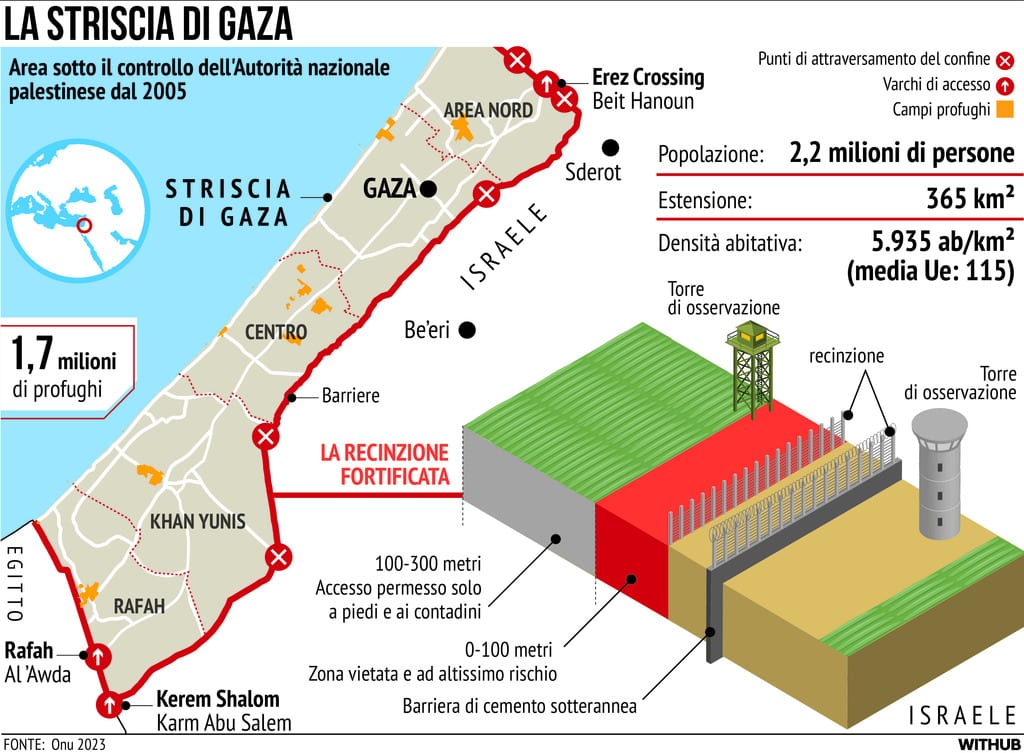 The snapshot of October released by the UN’s Office for the Coordination of Humanitarian Affairs (Ocha) leaves no doubt: the Israeli authorities have “closed the Erez crossing and imposed a siege on large areas of northern Gaza governorate, including Beit Lahia, Beit Hanoun and most of Jabalia.” Of 98 attempts to enter humanitarian aid from the south through the checkpoint along Wadi Gaza, 85 per cent were “denied or prevented.” Since Oct. 6, a “blockade of humanitarian mission access has been in place on the three main cities in the northern Gaza governorate, with rare exceptions.”
The European diplomacy chief reminded the Israeli partner that “as an occupying power, it has an obligation to act by bringing in aid.” According to the IPC, it requires “immediate action, within days not weeks, by all actors directly participating in the conflict or having an influence on its conduct” to avert famine. Ethnic cleansing.
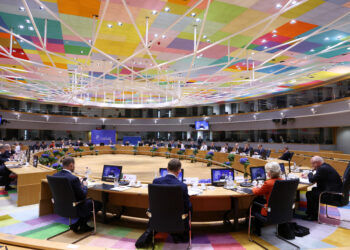
“It is up to the international community and Israel’s key allies to take urgent measures to end the suffering of the Palestinians and free the hostages,” Borrell said again, making a desperate appeal to the governments of member countries, whose governments the High Representative is almost captive whenever he proposes to increase diplomatic pressure on the Jewish state. Sure enough, the foreign ministers of the 27 will discuss this next 18 November in Brussels, at the last Foreign Affairs Council chaired by Borrell before he leaves office to Estonian Kaja Kallas. At the meeting, Borrell will engage in a deep discussion on meeting human rights obligations under the EU-Israel Association Agreement and call on the 27 to adopt new sanctions against extremist Israeli settlers. One week to go: in the one just past, some 330 people were killed in Gaza.
English version by the Translation Service of Withub