- Europe, like you've never read before -
Wednesday, 17 June 2026
No Result
View All Result
  • it ITA
  • en ENG
Eunews
  • Politics
  • World
  • Business
  • News
  • Defence
  • Health
  • Agrifood
  • Other sections
    • Culture
    • Diritti
    • Energy
    • Green Economy
    • Finance & Insurance
    • Industry & Markets
    • Media
    • Mobility & Logistics
    • Net & Tech
    • Sports
  • Newsletter
  • European 2024
    Eunews
    • Politics
    • World
    • Business
    • News
    • Defence
    • Health
    • Agrifood
    • Other sections
      • Culture
      • Diritti
      • Energy
      • Green Economy
      • Finance & Insurance
      • Industry & Markets
      • Media
      • Mobility & Logistics
      • Net & Tech
      • Sports
    No Result
    View All Result
    Eunews
    No Result
    View All Result

    Home » Agrifood » Climate- and disease-resistant super-bananas from Belgium thanks to genetic modification

    Climate- and disease-resistant super-bananas from Belgium thanks to genetic modification

    University of Leuven developed a system using the CRISPR technique to make fruit more resistant and potentially marketable in the EU thanks to the first green light for new genomic techniques

    Emanuele Bonini</a> <a class="social twitter" href="https://twitter.com/emanuelebonini" target="_blank">emanuelebonini</a> by Emanuele Bonini emanuelebonini
    2 April 2025
    in Agrifood, Net & Tech
    GENERATE AI
BANANA BANANE FRUTTO FRUTTI TROPICALE TROPICALI

    GENERATE AI BANANA BANANE FRUTTO FRUTTI TROPICALE TROPICALI

    Brussels – Bananas that are more resistant to weather, bacteria, and the consequences of climate change: from Belgium comes the possible answer to product shortages that could ensure availability and waste. The University of Leuven developed a targeted and circumscribed gene-editing technique (better known as CRISPR) that, through internal DNA correction and without recourse to external DNA, banned by EU rules, could allow the product to remain on the market.

    The key is all here, in the definition of a genetically modified organism. The EU has very stringent rules on the subject, the strictest in the world. In the name of human health, environmental protection, and the functioning of the internal market, the EU is anything but GMO-free. Moreover, in 2018, the EU Court of Justice, in a judgment, ruled that even targeted genetic modification produces genetically modified organisms. Everything changed last year, however, when the European Parliament approved the Commission’s proposal on new genomic techniques.
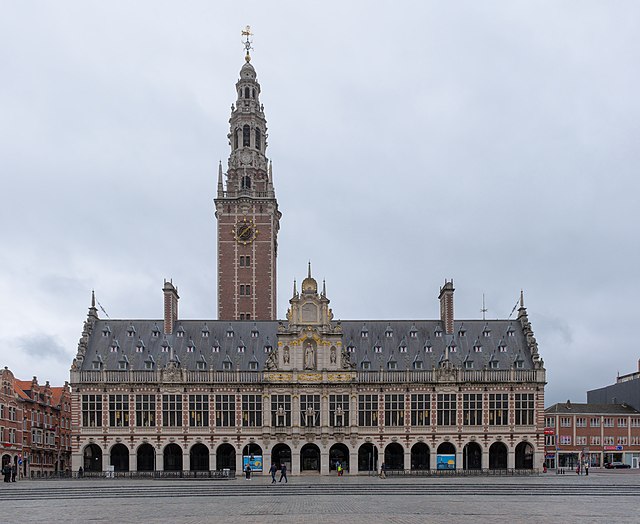
    The library of the University of Leuven [photo: Benoit Brummer/Wikimedia Commons]

    CRISPR’s targeted and circumscribed gene-editing techniques received the first European green light as a tool for crop improvement. Discussions on its use in food production are ongoing, with the Council finding the qualified majority needed to begin inter-institutional negotiations on March 14. Belgium wasted no time, and work is underway on the super-banana.

     “We alter a single letter in the DNA sequence,” Hervé Vanderschuren, professor of plant biotechnology, explained to the Belgian press, confident that an actual and recognized contribution can come from the university he works for. “This type of mutation could have occurred naturally,” he points out, hinting that human intervention would not turn out to be that decisive. Or rather, yes, but in a good way. “Climate change is making it even more difficult for farmers to protect their crops,” the university lecturer continues. From Leuven comes a proposal for a solution to the problem. Now, policy, especially European policy, is awaited.

    English version by the Translation Service of Withub
    Tags: agriculturebananasbelgiumnew genomic techniquesogm

    Related Posts

    Agrifood

    Harmful to health and environment: BeeLife’s warning over EU NGT proposal

    1 October 2024
    Nell'Ue l'agricoltura dà lavoro a 9,2 milioni di persone [foto: imagoeconomica]
    Director's Point of View

    GMOs, NGT, TEA, precautionary principle, food safety: how far can we go?

    8 February 2024
    ogm
    Agrifood

    Don’t call them GMOs anymore. EU Parliament to deregulate new genomic techniques

    7 February 2024
    map visualization
    Manifestazione di agricoltori, allevatori, ambientalisti e cittadini, che nella mattinata di ieri, si sono riuniti di fronte all’emiciclo di Strasburgo per chiedere il respingimento il provvedimento. [Foto: Eunews]

    EU Parliament gives the green light to new genomic techniques. Guarda (Greens): “Do we want farmers to be free or dependent on multinationals?”

    by Caterina Mazzantini
    17 June 2026

    A new classification system treats plants with limited genetic modifications in the same way as similar plants obtained using traditional...

    Un momento del summit UE-Russia del 2013 [foto: European Council]

    The EU is seeking channels of communication with Russia

    by Emanuele Bonini emanuelebonini
    17 June 2026

    EU sources reveal that contacts with Moscow were initiated several weeks ago in a bid to find diplomatic avenues for...

    Source: V

    Neither do-goodism nor extremism. The power of the rules defeats those who profit from the migration crisis

    by Mattia de Grassi
    17 June 2026

    Under the new Pact, Europe is adopting a more resolute approach to tackling illegal immigration. It will be easier to...

    PROVINCIA DI PAVIA PONTE DELLE BARCHE FIUME TICINO IN SECCA SICCITA DESERTIFICAZIONE

    ECB warning: “Drought and extreme heat pose risks to inflation and access to credit”

    by Emanuele Bonini emanuelebonini
    17 June 2026

    A thematic study by the European Central Bank warns of extreme weather events caused by climate change: "A single crop...

    • Director’s Point of View
    • Opinions
    • About us
    • Contacts
    • Privacy Policy
    • Cookie policy

    Eunews is a registered newspaper
    Press Register of the Court of Turin n° 27


    Copyright © 2025 - WITHUB S.p.a., Via Rubens 19 - 20148 Milan
    VAT number: 10067080969 - ROC registration number n.30628
    Fully paid-up share capital 50.000,00€


    No Result
    View All Result
    • it ITA
    • en ENG
    • Politics
    • Newsletter
    • World politics
    • Business
    • General News
    • Defence & Security
    • Health
    • Agrifood
    • Altre sezioni
      • Culture
      • Diritti
      • Energy
      • Green Economy
      • Gallery
      • Finance & Insurance
      • Industry & Markets
      • Media
      • Mobility & Logistics
      • Net & Tech
      • News
      • Opinions
      • Sports
    • Director’s Point of View
    • Draghi Report
    • Eunews Newsletter

    No Result
    View All Result
    • it ITA
    • en ENG
    • Politics
    • Newsletter
    • World politics
    • Business
    • General News
    • Defence & Security
    • Health
    • Agrifood
    • Altre sezioni
      • Culture
      • Diritti
      • Energy
      • Green Economy
      • Gallery
      • Finance & Insurance
      • Industry & Markets
      • Media
      • Mobility & Logistics
      • Net & Tech
      • News
      • Opinions
      • Sports
    • Director’s Point of View
    • Draghi Report
    • Eunews Newsletter

    Attention