Brussels – The rabbit out of the hat with which the EU High Representative for Foreign Affairs, Kaja Kallas, spared Brussels the embarrassment of failing to impose sanctions against Israel risks embarrassing the European institutions even more in the medium term. The terms of the agreement—or rather, the understanding—reached on 10 July with Tel Aviv to commit to a ‘substantial’ increase in humanitarian aid to Gaza have not been disclosed, and the 27 will not return to the subject until at least the end of August. Between 9 and 16 July, according to the figures reported by the UN Office for the Coordination of Humanitarian Affairs (OCHA), more than 600 Palestinian citizens were killed in the Strip.
Kallas reportedly started discussions with his Israeli counterparts as soon as the European External Action Service report was released on 23 June, certifying Israel’s non-compliance with the Association Agreement with the EU due to human rights violations in Gaza. A team of experts, coordinated by the EU Special Representative for the Middle East Peace Process, Cristophe Bigot, reportedly visited Israel twice. The aim was to reach an agreement that would enable Brussels to demonstrate its influence and, at the same time, avoid the path of sanctions against its Middle Eastern ally.
The EU is said to have put on the table requests received from various UN agencies (UNDP, WFP, UNICEF) and humanitarian partners. First of all, the exclusion of the controversial Gaza Humanitarian Foundation from the operations. Then, the reopening of several crossings—especially in the north—and corridors for distribution, the massive increase in the entry of convoys with humanitarian aid and food, the resumption of fuel supplies, the repair of vital infrastructure, and the protection of humanitarian workers.

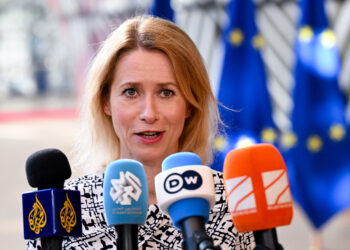
Kallas herself, on the sidelines of the Foreign Affairs Council on 15 July, appealed to the “positive signals” coming from the Strip to explain the freezing of all ten measures, both economic and political, presented to the ministers to follow up on the revision of the Association Agreement. “We see more trucks and supplies coming in, more open crossings and repairs to power lines,” the EU diplomacy chief had said.
Brussels is monitoring the implementation of the agreement and actively working with UN agencies on the ground. As it is not present either at the border crossings or inside the Strip, it has to rely on their reports, the Egyptian and Jordanian ones, and what Israel itself claims to have done. The intention is to report numbers and progress in implementation to Member States every two weeks. The first update is reportedly scheduled for next week.
However, the terms of the agreement remain off-limits. Before 10 July, the number of UN and NGO humanitarian aid trucks entering Gaza each day was less than 20. These days, the average would be around 80. The agreement between Kallas and his Israeli counterpart, Gideon Sa’ar, would provide for a larger number. Before 7 October, around 500 trucks loaded with food, fuel, and humanitarian aid entered Gaza every day.

According to the latest report published by OCHA, covering the week of 9 to 16 July, the Israeli authorities “allowed two fuel trucks a day to enter five days a week, through the Kerem Shalom crossing” in the south of the Strip, while the Zikim crossing in the north was reopened, from where on 11 and 12 July, 20 trucks a day carrying foodstuffs would have left.
On 12 July, several UN agencies and the World Health Organisation issued a joint statement claiming that fuel shortages have “reached critical levels that threaten the continued functioning of all services essential for survival.” And of the 40 trucks that have crossed Zikim, most have been “intercepted by desperate crowds.” Since 13 July, OCHA claims, “cargo collection has again been suspended.”
Drops of water in the desert, this seems to be the maximum pressure the EU can exert on Israel. Because, to tell the truth, none of the measures presented by Kallas to sanction Tel Aviv would have gathered the necessary support among the member states in any case. Faced with the insistence of national public opinion demanding a firm stand for respect of international law, European governments have agreed to take a small step: revising the Association Agreement. However, the next step, that of imposing economic sanctions, is prohibitive: the interests of European capitals are substantial, and the citizens are unaware of this.
According to the Centre for Multinational Research SOMO, the European Union is the world’s largest investor in Israel, with a volume almost double that of the United States. In 2023, EU Member States held €72.1 billion in foreign investments in Israel, compared to €39.2 billion by the US. And in 2024, despite the crimes committed in Gaza and the violence in the occupied Palestinian territories, the EU even increased its exports to Israel by €1 billion, reaching a value of €26.7 billion.
English version by the Translation Service of Withub