Brussels – Viktor Orbán’s new challenge to the European Union. Despite clear indications from Brussels, which only a month ago put on the table a tight timetable to achieve independence from Russian gas and oil by 2027, Hungary is ready to finance the construction of a new pipeline that could supply Serbia with Moscow’s crude. “We are proceeding with Serbian and Russian partners,” Budapest’s Foreign Minister, Péter Szijjártó, announced today (July 21). At the other end of the pipeline, Belgrade would further compromise the EU accession process, which is already a decidedly uphill task.
It will be more than 100 kilometres long and will connect the Druzhba, the so-called ‘friendship pipeline’, to the Serbian city of Novi Sad. It is expected to have a capacity of 4-5 million tonnes per year and is scheduled to be in operation by 2027. Just when the other European countries, except for Slovakia, which stands by Hungary in the battle to maintain Russian supplies, are expected to turn off the taps from the Kremlin for good. Moscow supplies Budapest with 80 per cent of its domestic oil imports, while Bratislava is heavily dependent on Russian gas, about 3.5 billion cubic metres per year.
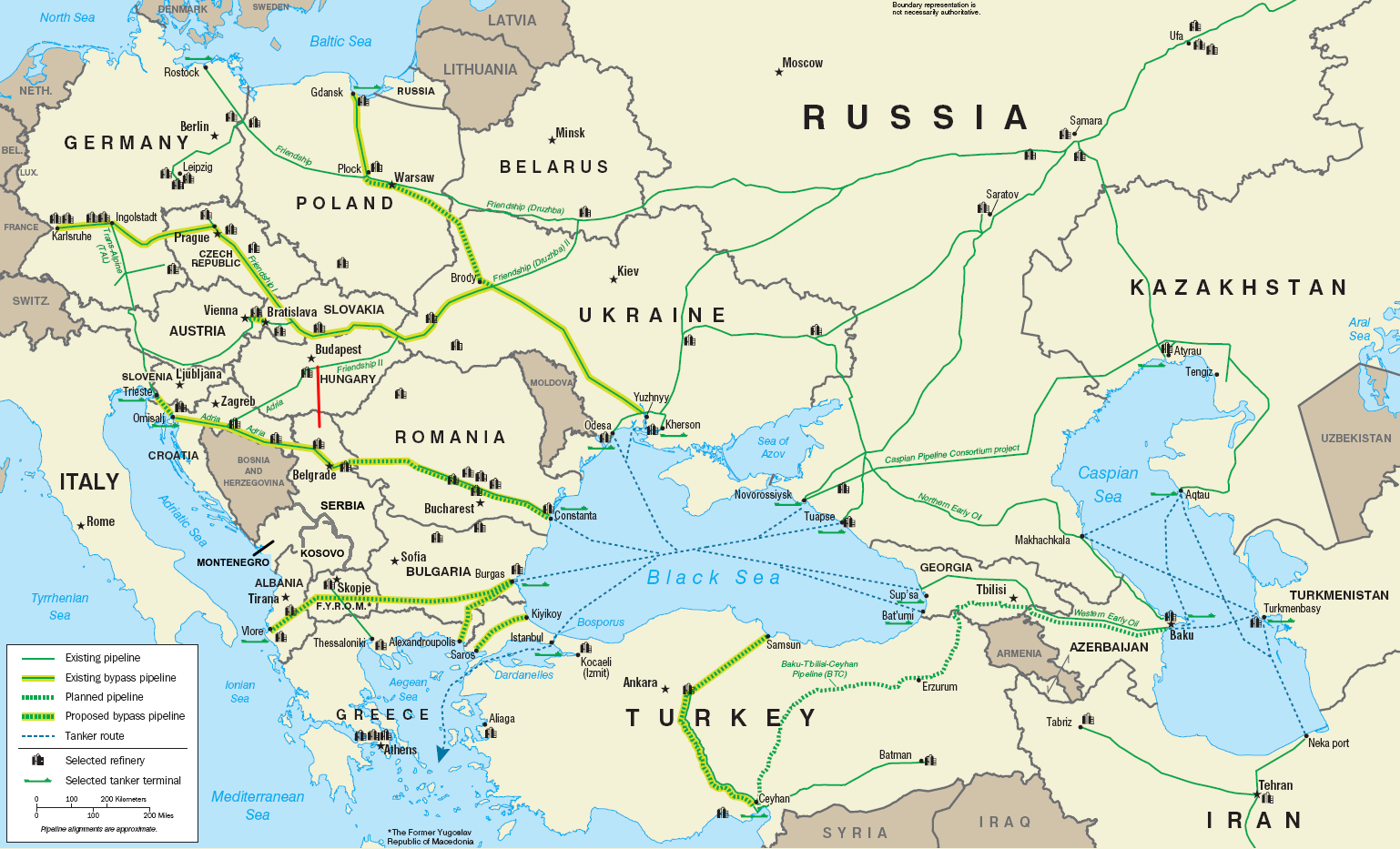
[In red, the oil pipeline project connecting Hungary and Serbia. Photo: Wikimedia Commons]
The Serbian-Hungarian project had already been announced in the spring. In June, Russian Deputy Prime Minister Alexander Novak confirmed the Federation’s readiness to supply oil to a project that “will help diversify Serbia’s oil supply routes.” Today, Szijjarto openly attacked the EU, which, with its energy strategy—this is the criticism—”will force Hungarian families to pay two to four times more.” Hungary “will not fall victim to these disastrous decisions,” promised Orbán’s loyal minister.

Russian President Vladimir Putin (left) and his Serbian counterpart Aleksandar Vučić (photo: Alexander Zemlianichenko/Afp)
From Budapest’s perspective, besides protecting households from energy price increases caused by EU policies, the infrastructure project is fundamental to national energy security and regional cooperation with Serbia. Belgrade, in turn, continues to walk a delicate line, with one foot towards Brussels and the other anchored to deep historical, cultural, economic, and energy ties with Moscow. The country’s main oil company, NIS, is controlled by Russia’s Gazprom and is already the target of sanctions by the United States—so far, always postponed. The authoritarian and hotly contested president, Aleksandar Vučić, travelled to Moscow to celebrate the 80th anniversary of the Soviet victory over Nazi Germany on 9 May.
EU Commissioner for Enlargement, Marta Kos, reiterated today, as a guest of a Slovenian television station, that Belgrade’s accession to the 27 is becoming “complicated”. The European Commission’s priority is for Serbia to “remain on the European path”, but it is also up to Vučić and the government led by Đuro Macut to “prove through reforms that they deserve EU membership.”
Not exactly the message sent out by an initiative that not only speaks of energy security, but also carries a strong geopolitical connotation, reinforcing the pro-Russian axis in Europe led by Orbán, Putin’s real Trojan horse within the EU.
English version by the Translation Service of Withub