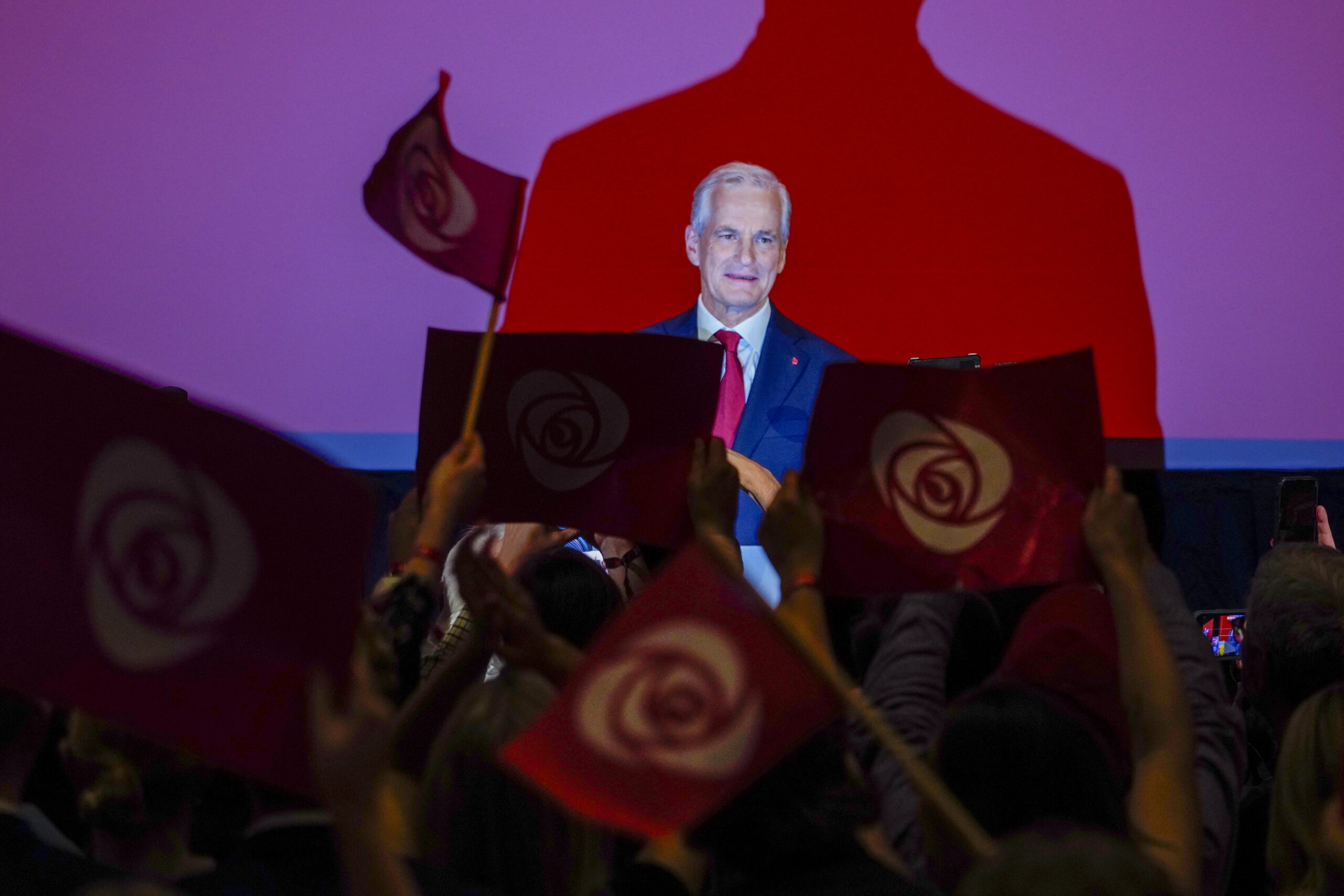
Brussels – Norway’s Labour Party won elections, but the right advanced more than expected. The centre-left of outgoing Prime Minister Jonas Gahr Støre won enough seats in yesterday’s parliamentary elections in Norway to continue governing. On the other side, the right-wing populist party of Silvy Listhaug exceeded expectations, getting 24 percent of the votes, the best result ever. The right wing failed to break through, as Erna Solberg’s conservatives reduced their support.
Labour received the most significant number of votes, at 28 percent, a slight increase from previous polls. The government coalition that emerges will consist of 53 Labour MPs, 10 from the centre party, 18 from two left-wing parties, and eight from the Greens. It is precisely the Greens that could be the thorn in the Prime Minister’s side. Their opposition to oil extraction activities is at odds with the Prime Minister’s wishes.
After the Russian invasion of Ukraine, Norway increased its energy exports to EU countries. Its economy remains strongly oil-driven: a sector that has made the country one of the richest in the world. To ensure stability, Jonas Gahr Støre’s government will give a prominent role to former NATO Secretary Jens Stoltenberg, who has been the economy minister in previous months. Despite their success, the Labour Party will have to contend with weaker allies: the centrists were halved by the vote, while the right-wing opposition is stronger. Silvy Listhaug’s Progress Party has achieved a strong consensus among young people, proving that she will also count in the future.
English version by the Translation Service of Withub


![Da sinistra: il presidente del Consiglio europeo, Antonio Costa; il presidente dell'Ucraina, Volodymir Zelensky: la presidente della Commissione europea, Ursula von der Leyen [Bruxelles, 18 giugno 2024. Foto: European Council]](https://www.eunews.it/wp-content/uploads/2026/06/euco_ua260618-120x86.jpg)
![[foto: Saverio De Giglio/imagoeconomica]](https://www.eunews.it/wp-content/uploads/2026/10/cpt-120x86.png)