- Europe, like you've never read before -
Sunday, 18 January 2026
No Result
View All Result
  • it ITA
  • en ENG
Eunews
  • Politics
  • World
  • Business
  • News
  • Defence
  • Net & Tech
  • Agrifood
  • Other sections
    • Culture
    • Diritti
    • Energy
    • Green Economy
    • Finance & Insurance
    • Industry & Markets
    • Media
    • Mobility & Logistics
    • Sports
  • Newsletter
  • European 2024
    Eunews
    • Politics
    • World
    • Business
    • News
    • Defence
    • Net & Tech
    • Agrifood
    • Other sections
      • Culture
      • Diritti
      • Energy
      • Green Economy
      • Finance & Insurance
      • Industry & Markets
      • Media
      • Mobility & Logistics
      • Sports
    No Result
    View All Result
    Eunews
    No Result
    View All Result

    Home » Defence & Security » In Copenhagen, European leaders (except Orbán) verbally renewed their support for Kyiv. But they decided nothing

    In Copenhagen, European leaders (except Orbán) verbally renewed their support for Kyiv. But they decided nothing

    The seventh EPC meeting once again closes with a commitment to defend both Ukraine and the rest of the continent. The Hungarian prime minister did not back down on his stance regarding enlargement and the frozen Russian assets.

    Francesco Bortoletto</a> <a class="social twitter" href="https://twitter.com/bortoletto_f" target="_blank">bortoletto_f</a> by Francesco Bortoletto bortoletto_f
    2 October 2025
    in Defence & Security, Politics
    Volodymyr Zelensky

    Ukrainian President Volodymyr Zelensky arrives prior to a meeting of the European Political Community (EPC) in Copenhagen, Denmark, Thursday, October 2, 2025 (Photo by Thomas Traasdahl / Ritzau Scanpix via AFP)

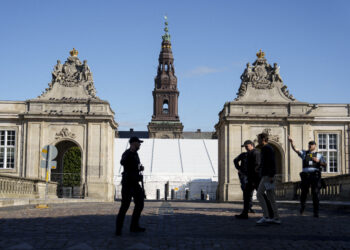
    Brussels – Another day, another summit in Copenhagen. In a heavily guarded Danish capital for fear of attacks by Russian drones from the sky, the European Political Community (EPC), the assembly of leaders from the Old Continent – excluding Russia and Belarus – who gather every six months to discuss the most pressing common challenges, met today (October 2) for the seventh time. 

    As in the previous session (the last one, held in Tirana in May), the table of heads of state and government from the 47 participating countries – all members of the EU, plus some 20 other European nations – featured two crucial, inextricably linked topics. The support for the aggrieved Ukraine on the one hand and, on the other, the defense and security of the Old Continent. 

    The host, Danish Prime Minister Mette Frederiksen, opened the proceedings by defining the “important task” to which, she says, the chancelleries are being called upon to face: ‘We must make our common Europe so strong that a war against us becomes unthinkable, and we must do it now,” she stressed, flanked by the President of the European Council, António Costa, and Ukrainian leader Volodymyr Zelensky.

    The #EPC is the demonstration of a shared political will.

    Those who are in the European Union, those who are not, those who wish to join, and even those who have left – together, we form Europe.

    And together, we want to work for peace, development, and the prosperity of our… pic.twitter.com/5O1Dzd3rs3

    – António Costa (@eucopresident) October 2, 2025

    Frederiksen urged even countries more distant from the Federation – such as Giorgia Meloni‘s Italy, which expressed skepticism  on the ‘drone wall‘ initiative that EU leaders proposed to protect its eastern borders – to seriously consider the existential threat posed by Moscow, made clear by the increasing number of violations of European airspace in recent weeks. “Russia is testing us more than ever,” she reiterated, listing the “hybrid attacks” conducted by the Kremlin, including through the instrumentalization of migrants and election interference campaigns. 

    She added that the war unleashed by Vladimir Putin “has never been about Ukraine alone, it is about Europe.” And “we have to move much faster,” she argues, to build “an incredible defense industry in just a couple of years” following the example of Kyiv. “Every euro, dollar, or Danish krone we send to Ukraine is a direct investment in European security,” she reasons. There were speeches along the same lines from, among others, the British Prime Minister, Keir Starmer, the Polish Prime Minister, Donald Tusk, and the French President, Emmanuel Macron.

    Donald Tusk
    Polish prime minister Donald Tusk (photo: European Council)

    The Polish leader believes that a “new type of war, very complex,” is underway, unlike those of the past. However, he adds, “it is our war and if Ukraine loses, it means we have failed.” More optimistic is the occupant of the Élysée Palace, who claims the “rapprochement with the United States” as a success of the Coalition of the Willing, explicitly created to provide Kyiv with the security guarantees needed to maintain post-war stability. 

    From the EPC podium, Zelensky called for European allies to provide new military aid and urged the leaders of the Twelve-Star Club to expedite the 19th sanctions package (currently
    being discussed by the Twenty-Seven member states) and to open accession negotiations with Ukraine and Moldova. He also congratulated President Maia Sandu after her party’s recent victory in elections. 

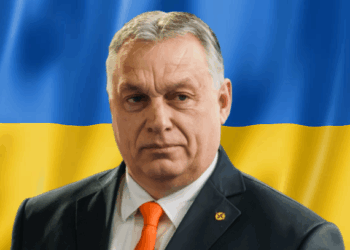
    The Ukrainian president echoed Donald Trump‘s call to stop buying Russian oil, lashing out at Viktor Orbán’s Hungary in particular. But the Hungarian prime minister – who hopes to broaden the sovereignist front in the EU with thethe possible return to power of his ally Andrej Babiš in the Czech Republic – defended his autonomy in deciding on the national energy mix and put his foot down yet again on Kyiv’s entry into the Union, dismissing the proposal from Costa to revise the rules on the opening of negotiations with candidate countries, which would allow Brussels to circumvent Budapest’s veto.

    Viktor Orban Mette Frederiksen
    Hungarian prime minister Viktor Orbán and Danish premier Mette Frederiksen (photo via Imagoeconomica)

    On his part, the Hungarian Prime Minister highlighted the differences in approach among the participants regarding Moscow, arguing that EU leaders would develop a “war plan” rather than a peace plan. Together with his Belgian counterpart Bart De Wever, he led the opposition to the idea—supported by, among others, German Chancellor Friedrich Merz and described by Orbán as “not very promising”—of using frozen Russian assets as collateral for reconstruction spending in support of Ukraine.

    Other topics addressed by leaders today included economic security, competitiveness, and managing migration flows. On the practical side, as has long been evident, the EPC represents little more than a platform, a catwalk for leaders to discuss the most pressing common challenges. Lots of talk – not even too much, really, given the absence of one of the hottest topics of the day, namely the genocide perpetrated by Israel (as
    certified by the UN) against the Palestinian people – and minimal concrete action.
    English version by the Translation Service of Withub
    Tags: accession of ukraineCopenaghendronieuropean political community

    Related Posts

    uDER // Christiansborg Palace // Informal EUCO 1-10-2025
    Defence & Security

    EU leaders give defence ministers expanded role in common security

    2 October 2025
    World politics

    Orban rejects Ukraine’s EU path (again): ‘Respect the rules to begin talks’

    1 October 2025
    Copenaghen Danimarca
    Defence & Security

    Copenhagen on high alert for the double European summit: six countries send personnel and equipment to protect leaders from drones

    30 September 2025
    drone Russia Ucraina
    Defence & Security

    EU’s security linked to that of Ukraine. And both (also) depend on drones

    29 September 2025
    map visualization

    Mercosur reshapes Italy’s alliances in Europe: PD with FdI and FI, League with M5S

    by Emanuele Bonini emanuelebonini
    16 January 2026

    The plenary session of the European Parliament has the free trade agreement with South American countries as the main item...

    Defence: Commission approves first SAFE disbursements to eight Member States

    by Emanuele Bonini emanuelebonini
    16 January 2026

    The Council has been asked to authorise disbursement for Belgium, Bulgaria, Cyprus, Croatia, Denmark, Portugal, Romania, and Spain. Von der...

    Migrazione frontiere pushback

    EU, decline in asylum applications continues, down 28 per cent in October compared to 2024

    by Enrico Pascarella
    15 January 2026

    The countries that received the most requests in October were Spain and Italy, but with lower figures than in the...

    Air Canada flights show as cancelled at Pearson International Airport as flight attendants go on strike in Toronto on Saturday, August 16, 2025. Photo by Sammy Kogan/CP/ABACAPRESS.COM

    Flight cancelled, airlines must also reimburse commission costs

    by Ezio Baldari @eziobaldari
    15 January 2026

    This has been established by the Court of Justice of the European Union. When purchasing from a travel agency or...

    • Director’s Point of View
    • Letters to the Editor
    • Opinions
    • About us
    • Contacts
    • Privacy Policy
    • Cookie policy

    Eunews is a registered newspaper
    Press Register of the Court of Turin n° 27


    Copyright © 2025 - WITHUB S.p.a., Via Rubens 19 - 20148 Milan
    VAT number: 10067080969 - ROC registration number n.30628
    Fully paid-up share capital 50.000,00€


    No Result
    View All Result
    • it ITA
    • en ENG
    • Politics
    • Newsletter
    • World politics
    • Business
    • General News
    • Defence & Security
    • Net & Tech
    • Agrifood
    • Altre sezioni
      • European Agenda
      • Culture
      • Diritti
      • Energy
      • Green Economy
      • Gallery
      • Finance & Insurance
      • Industry & Markets
      • Letters to the Editor
      • Media
      • Mobility & Logistics
      • News
      • Opinions
      • Sports
    • Director's Point of View
    • L’Europa come non l’avete mai ascoltata
    • Draghi Report
    • Eventi
    • Eunews Newsletter

    No Result
    View All Result
    • it ITA
    • en ENG
    • Politics
    • Newsletter
    • World politics
    • Business
    • General News
    • Defence & Security
    • Net & Tech
    • Agrifood
    • Altre sezioni
      • European Agenda
      • Culture
      • Diritti
      • Energy
      • Green Economy
      • Gallery
      • Finance & Insurance
      • Industry & Markets
      • Letters to the Editor
      • Media
      • Mobility & Logistics
      • News
      • Opinions
      • Sports
    • Director's Point of View
    • L’Europa come non l’avete mai ascoltata
    • Draghi Report
    • Eventi
    • Eunews Newsletter

    Attention