Brussels – There is a new flotilla sailing towards Gaza. While the activists kidnapped and deported by Israel in recent days are returning to their respective countries, a smaller expedition is sailing in the eastern Mediterranean to pick up the baton left by the sailboats intercepted in this relay race of transnational solidarity. The objective remains the same: to reach the shores of the Palestinian exclave, break the illegal naval blockade imposed by Tel Aviv in 2009 and deliver humanitarian aid to the Strip to offer relief to the population exhausted by the systematic slaughter that has been going on, in its most blatant version, for almost two years.
The nine boats, which are currently (6 October) off Egypt, were put to sea by the Thousand Madleens initiative, affiliated with the Global Sumud Flotilla, the international civil society mission that in recent weeks
has contributed significantly to keep the world’s media and political attention focused on the genocide of Palestinians perpetrated by the Jewish state in Gaza (as documented by the United Nations and by the Israeli NGOs themselves).
The first expedition hosted a large number of public figures (above all, activists Greta Thunberg and Thiago Ávila) and politicians of various nationalities, including four Italians, on board the more than 40 ships, stopped by pirate-like methods from Israel in international waters between 2 and 3 October: Marco Croatti (M5s senator), Arturo Scotto (PD representative), Benedetta Scuderi (AVS MEP) and Annalisa Corrado (PD MEP). This time, the crews are smaller and do not include any famous names. This does not bode well for the treatment of the sailors, considering the one used by the Israeli security apparatus so far.

According to the testimonies of several activists released by Tel Aviv in the last few hours, including Italian journalist Saverio Tommasi, the authorities of the Jewish State allegedly practised torture against them from the interception of the ships until the end of their detention. Reports mention physical, verbal, and psychological violence to humiliate them, resorting to inhuman and degrading treatment, especially during their stay in detention facilities. Thunberg, for example, was allegedly wrapped in an Israeli flag and carried in triumph by the Tel Aviv military as a hunting trophy, only to end up in a cell infested with bedbugs. Tommasi himself claimed to have been repeatedly beaten and exposed to public ridicule by the soldiers.
The Farnesina announced in the afternoon the return home of the last 15 Italians still detained in Israel. According to Foreign Minister Antonio Tajani, they are all “in excellent physical condition.” Tel Aviv said it had today expelled 171 European nationals (including Thunberg and our compatriots) to Greece and Slovakia, while at least 138 others were still in custody. On 3 October, the four parliamentarians who had taken part in the mission had already returned to Italy, while over the weekend it was the turn of 26 other citizens of the Republic.
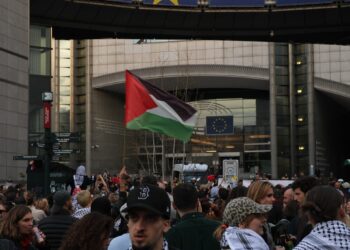
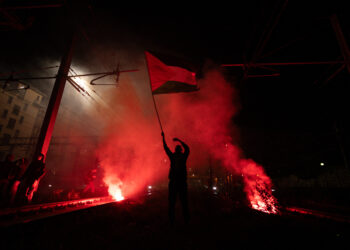
The actions in Tel Aviv, moreover, triggered a transversal response from global civil society of unexpected proportions. Over the past few days, millions of people
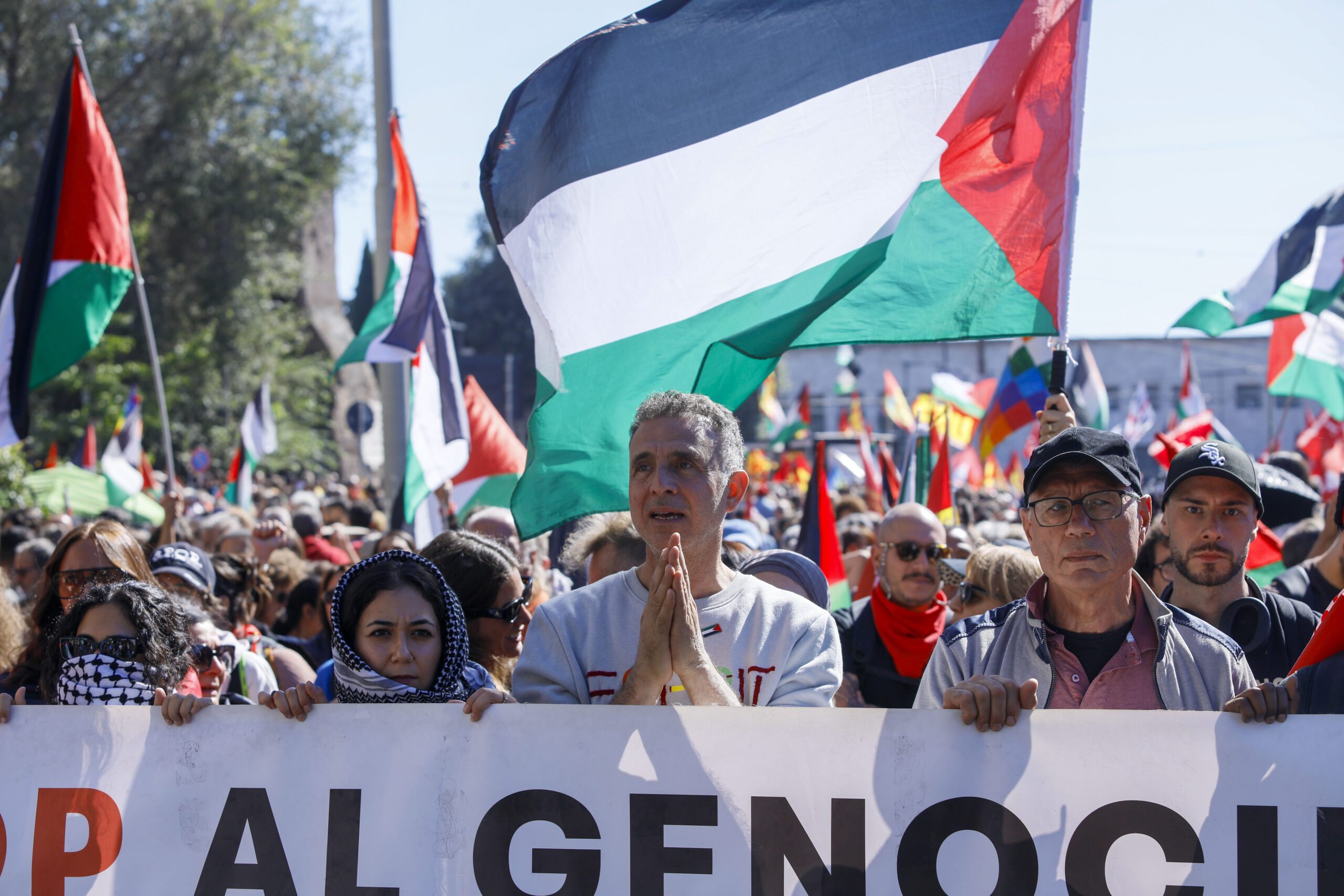
took to the streets, in Europe and around the world, occupying public space with their bodies through participatory protests that carried a double message of solidarity: both towards the Palestinian people, slaughtered live in the deafening silence of world governments, and towards the Flotilla activists. From Berlin to Mexico City, from Madrid to Montreal, from Istanbul to Melbourne, from Stockholm to Buenos Aires, from Amsterdam to Kuala Lumpur.

In an unprecedented historical twist, Italy was the epicentre of this spontaneous transnational movement. The peak of the national mobilisation was recorded in Rome last Saturday (4 October), when hundreds of thousands of demonstrators (the organisers speak of over a million in attendance) literally flooded the streets of the capital in an immense, colourful, and plural procession, to peacefully demand an end to the genocide in Gaza, the unconditional recognition of Palestine, diplomatic protection for the activists of the Flotilla, and an end to the complicity of the Italian government with the war crimes committed by Tel Aviv with total impunity and in absolute disregard of international law.
The head of the Democratic Party delegation to the EU Parliament, Nicola Zingaretti, expressed his support for the weekend’s demonstrations, calling them “an extraordinary signal of vitality of our democracy.” Net of party positioning, it seems that civil society is beginning to take charge, with a intergenerational push from below such as we have not seen since the G8 in Genoa in 2001, the defence of that international law considered valid “up to a point” by the very people who—like Tajani himself—should instead, at least theoretically, uphold it and keep it safe from violations and abuses, even if committed by allied powers.

Meanwhile, in Strasbourg, where the European Parliament’s plenary session has just begun, two motions presented by two groups in the chamber (the Greens and the Left) to include a debate on the fate of the flotilla in today’s agenda were rejected. However, a debate on Gaza (including on diplomatic efforts to reach a negotiated solution to the conflict) is set for tomorrow, on the second anniversary of the Hamas attack in 2023.
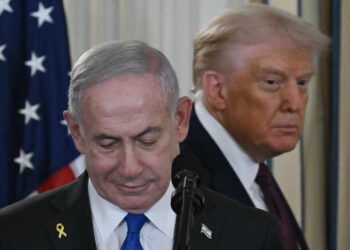
At this very moment, in Egypt, the emissaries of Israel and Hamas are meeting to indirectly negotiate the terms of the 20-point peace plan drawn up by Donald Trump with the help of former British Prime Minister Tony Blair and made public at the end of September by the US president during the visit of Israeli Prime Minister Benjamin Netanyahu to Washington. In principle, both sides would have accepted the draft agreement, but a number of crucial details remain to be worked out, such as, among others, the withdrawal of the Israeli army from the Strip, the disarmament of the Palestinian organisation, the release of hostages and the distribution of humanitarian aid in the coastal exclave.
English version by the Translation Service of Withub