Brussels – Regular checks with six-monthly inspections together with Member States, and the possibility of re-introducing import tariffs as soon as imports rise sharply or prices for European producers fall too low: the European Commission introduces the “emergency brake” to reassure farmers and secure the free trade agreement with the Mercosur countries (the Latin American trade bloc comprising of Argentina, Brazil, Paraguay, and Uruguay, with Venezuela suspended) signed at the end of last year and from the outset the object of fear and controversy.
The EU executive aims to secure an agreement it considers strategic; the announced measures aim to overcome the opposition that remains to the deal and its ratification process. The structure of the corrective measures to the EU-Mercosur agreement revolves around two elements: measures and controls. In the event of an unforeseen and damaging surge in imports from Mercosur countries or an excessive drop in prices for EU producers, rapid and effective safeguards would come into force, to the extent of temporarily withdrawing preferential tariff regimes, to counteract the possible negative impacts of cost overruns on goods and products. In essence: reintroduction of import tariffs.
These measures assume systematic monitoring of the market and its development. In this sense, the European Commission plans to launch investigations in three cases: if import prices from Mercosur are at least 10 percent lower than prices of the same or competing EU products; if there is an over 10 percent increase in annual imports of a product from Mercosur under preferential terms; or a 10 percent decrease in the import prices of that given product from Mercosur, all compared to the preceding yea. If the investigation concludes that there is a serious injury or a threat thereof, the EU could temporarily withdraw tariff preferences on products causing injury.

In this activity of checks and controls, the European Commission will send a report every six months to the European Council and Parliament to assess the impact of these imports on the EU markets. These special reports will cover both the EU market as a whole and the dynamics of individual national markets.
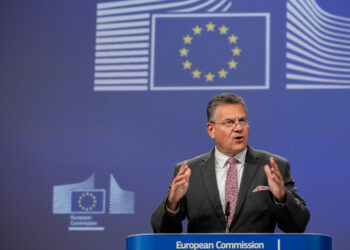
“We believe that with this cast-iron legal guarantee, our farmers can now support the Mercosur deal with confidence, and we trust the co-legislators will now treat this proposal as a priority,” said Trade Commissioner Maros Sefcovic. “We have listened to our farmers, we have reflected, and now we have acted – in their interest,” he added, wanting to emphasize that the European Commission is not deaf to the demands of the sector.
The EU executive also supports the “made in EU” agribusiness, with Agriculture Commissioner Christophe Hansen traveling to Brazil at the end of October with a delegation of EU producers “to promote our exports in this great market,” the commissioner announced. “We want our producers to benefit from this deal as much as all other sectors in our economies, without feeling threatened by it.” In Brussels, they aim to save the EU-Mercosur agreement and are willing to do whatever it takes to achieve this goal. The pro-farmer emergency brake is a testament to this.
English version by the Translation Service of Withub