Brussels – Another EU partner in Africa shows its illiberal face in the presidential elections. In Tanzania, President Samia Suluhu Hassan was reelected with 98 percent of the vote, after excluding the leaders of the main opposition parties. Since the day of the vote on October 29, there have been reports from the country, where Internet connection has been suspended, of hundreds of casualties in clashes with security forces. In a statement on behalf of the member states, the EU High Representative for Foreign Affairs, Kaja Kallas, said she was “very concerned” and called for “the release of all detained politicians” and “swift and thorough investigations into all reported incidents of abductions, disappearances and violence.”
Suluhu Hassan has been in power since 2021. Still, her party, the Chama Cha Mapinduzi (Party of the Revolution, in Swahili), has been leading the country uninterruptedly for over half a century. The plebiscite that reconfirmed her was predictable. Already in April, the vice-president and candidate of the main opposition party, Tundu Lissu of Chadema (Party of Democracy and Development), was arrested and accused of treason and computer crimes. The candidate of the ACT-Wazalendo (Alliance for Change and Transparency), another opposition party, faced a similar fate last month: its leader, Luhaga Mpina, was disqualified from the electoral race due to formal flaws.
Chadema had launched a campaign to boycott the vote following the arrest of its leader. In recent months, there have been several cases of enforced disappearances of opponents and government critics. Following the announcement of Suluhu Hassan’s victory by the Independent National Electoral Commission (INEC), thousands of people protested for days in Dar es Salaam and in the country’s major cities. Chadema accused the security forces of killing between 500 and 800 people during the clashes. The government has imposed a curfew and suspended internet connections throughout the country, making it difficult to verify reports. As early as October 31, the UN High Commissioner for Human Rights (OHCHR) reported the deaths of at least 10 people in Dar es Salaam, Shinyanga, and Morogoro, following the use of “firearms and tear gas” by security forces to disperse protesters.
Yesterday, the European Union issued a statement underlining that “Reliable reports of a large number of fatalities and significant injuries are of extreme concern.” The EU diplomatic chief called for “release of all detained politicians and for a transparent and fair trial of those arrested on a sound legal basis and for swift and thorough investigations into all reported incidents of abductions, disappearances and violence.” Brussels is linked to the East African country by a long-standing partnership: Kallas reiterated that the EU “values” cooperation and dialogue with Tanzania, reinforced in 2021 with the inauguration of Suluhu Hassan, which revolves around three priorities: Green Deal, human capital, employment, and governance. The EU has allocated EUR 585 million in grants for the partnership with Tanzania over the period 2021-2027.
English version by the Translation Service of Withub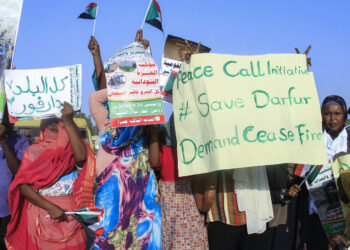

![Vista satellitare dell'Africa [foto: Wikimedia Commons]](https://www.eunews.it/wp-content/uploads/2024/08/Africa_topic_image_Satellite_image-350x250.jpg)
![[foto: imagoeconomica]](https://www.eunews.it/wp-content/uploads/2025/09/ue-cina-350x250.png)


![[Copyright: European Union]](https://www.eunews.it/wp-content/uploads/2026/10/euco-261015-120x86.png)