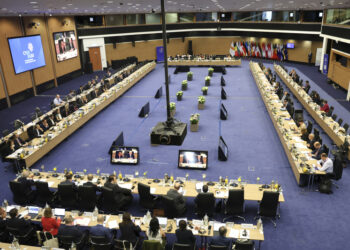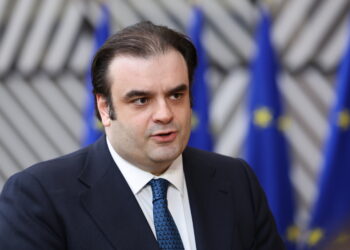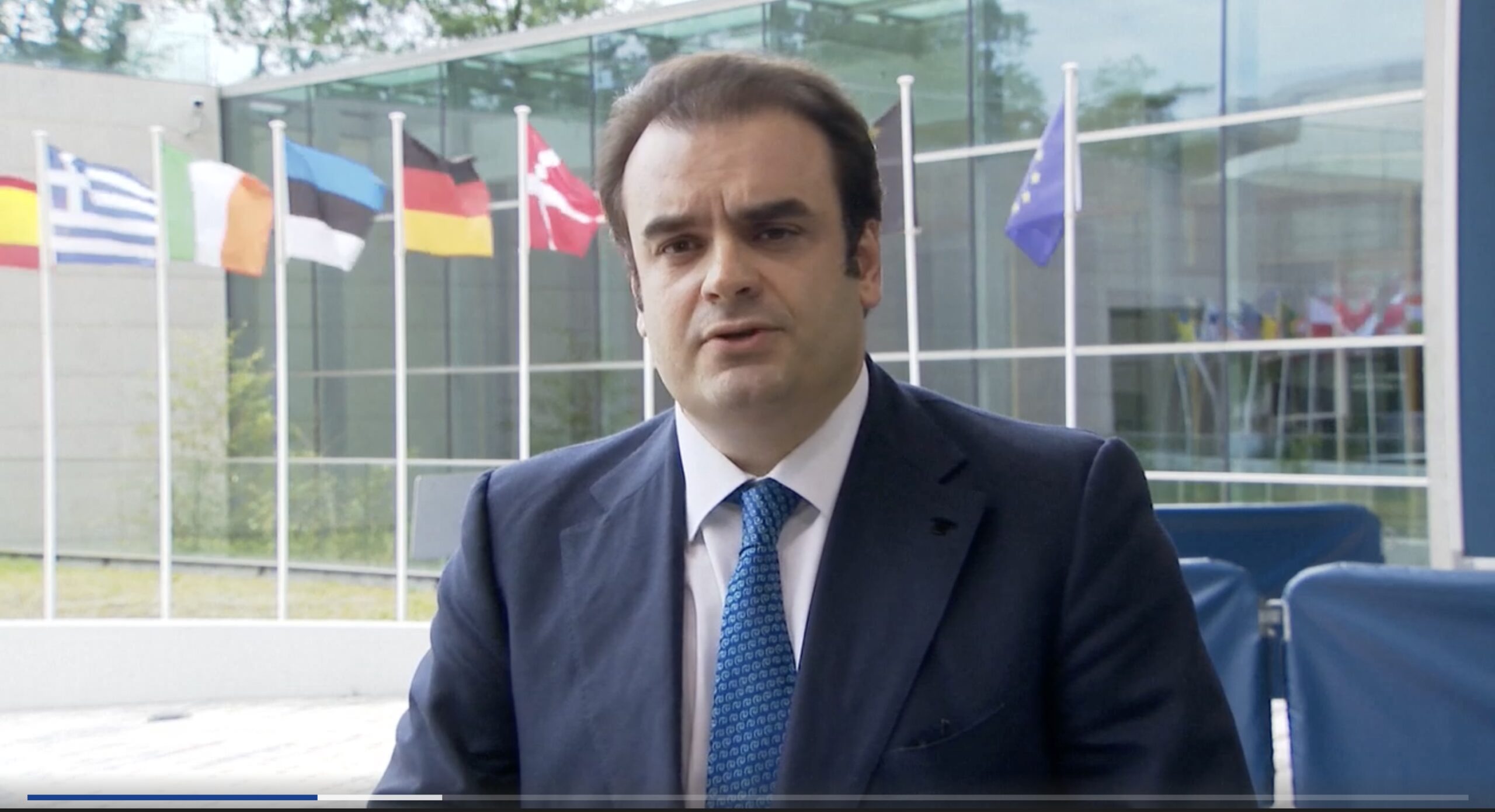
Brussels – “Affordable and sustainable energy is the raw material of European competitiveness.” With these words, spoken before attending today’s (11 June) Eurogroup meeting, the group’s chair, Kyriakos Pierrakakis, gave his blessing to the European Commission’s recent proposal to extend the exemption from budgetary constraints to the energy sector measures set out in the Stability Pact.
More specifically, the new flexibility mechanism is based on the so-called national safeguard clause provided for the defence sector. Under the national escape clause, Member States are authorised to run a deficit in excess of the limits set by the Pact, up to 1.5 per cent of national GDP per year for four years. The only condition is that these investments must be dedicated to defence programmes.
In the face of the worsening energy crisis caused by the war in Iran, on 3 June, the European Commissioner for the Economy, Valdis Dombrovskis, announced the extension of this clause to the energy sector. Governments will therefore be able to allocate 0.3 per cent of the 1.5 per cent set by the national escape clause to investments aimed at strengthening their energy infrastructure, accelerating the transition to clean energy sources and reducing dependence on fossil fuels. The proposal welcomes, albeit very limitedly, a request by Giorgia Meloni’s Italian government in mid-May.
At the previous Eurogroup meeting in early May, Pierrakakis had expressed scepticism regarding the possibility of the EU executive granting further exemptions from the fiscal rules. “Aid must be targeted, temporary, and in line with agreed fiscal rules,” he had warned.
Yet, things now seem to have changed for the Greek Finance Minister. “The Commission’s proposal shows that we have now reached the stage where further flexibility is needed,” he said to justify his U-turn. According to Pierrakakis, the mechanism envisaged by the Berlaymont is “fully justified” because it allows for flexibility that simply adds to that already provided for defence. Above all, concluded the Eurogroup President, this is a “highly targeted flexibility, which directly addresses our infrastructure needs.”
Announcing the attendance of the Managing Director of the International Monetary Fund (IMF), Kristalina Georgieva, at today’s meeting, Pierrakakis took the opportunity to point out that “the IMF’s recent assessment of EU policies states that, thanks to energy investments made since 2022, the impact of the Middle East crisis has been reduced by 12 per cent.” According to the Greek politician, “this factor also played a role in the Commission’s proposal to allow for greater flexibility.”
During today’s meeting, in addition to Pierrakakis, the German Finance Minister, Lars Klingbeil, also joined the ranks of those who have come round to the idea of the Berlaymont’s proposed exemption. Germany is traditionally one of the most uncompromising Member States when it comes to compliance with EU budget rules, but Klingbeil today described the German position as a “constructive dialogue.” While pointing out that he does not yet have “a final assessment” of the Commission’s proposals, Klingbeil confirmed that Germany is ready to evaluate the concrete plan.
The Nordic countries, however, are not backing down from their role as “austerity hawks“. Speaking to journalists, the Finnish Minister of Finance, Riikka Purra, emphasised that “while energy security may be a strategic priority, the new exemption must not undermine the credibility of the European fiscal framework.” Furthermore, according to the Scandinavian official, “to truly combat high energy prices, we must accelerate the green transition and reduce our dependence on fossil fuels.
A compromise between these positions, which do not yet fully align, will have to be reached within the EU Council. In all likelihood, the Berlaymont’s proposal will be discussed and voted on in the coming months, by which time the Cypriot government will have already handed over the six-month presidency of the body representing the Member States to Ireland. Aware of the future role of mediator that awaits him, Dublin’s Finance Minister, Simon Harris, is urging caution. “I am reluctant to express a national position, as Ireland will have to play an impartial role, listening to all parties and seeking to find common ground,” he said on the sidelines of today’s meeting.
English version by the Translation Service of Withub