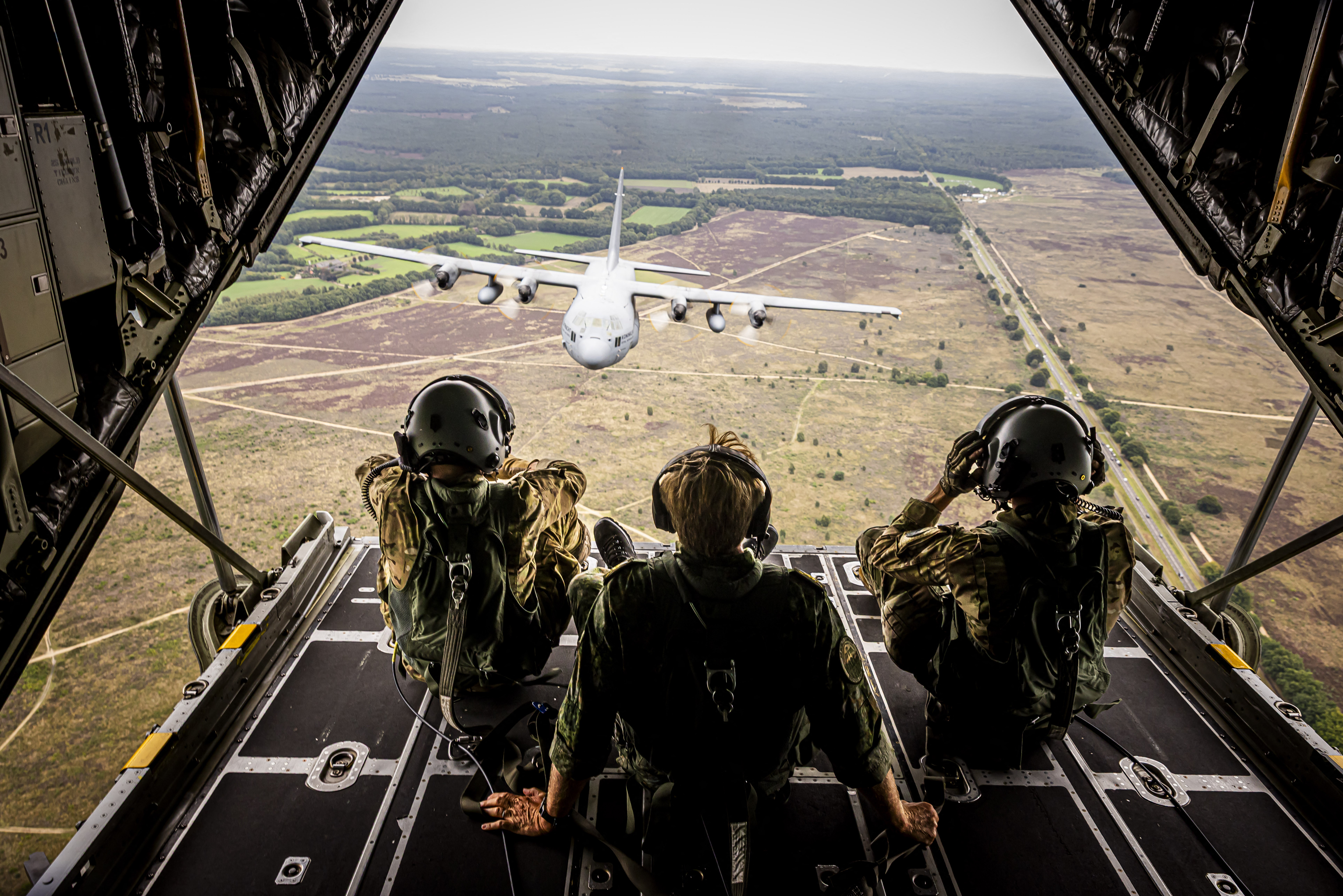
Brussels – One month after the presentation of the roadmap for an EU defence capable of withstanding external aggression by 2030, the European Commission takes a quantum leap in the military mobility of the Union, which today faces the reality of 27 nation states restricting in every way the crossings of troops and means on their territories. The goal is to create a “military Schengen” by 2027, because—as the EU Commissioner for Defence, Andrius Kubilius, borrowing the words of a US general, put it—”infantry wins battles, logistics wins wars.”
The fact that Brussels is serious about this is evident from the presence of European Commissioners at the presentation of the package of measures on military mobility: in addition to Kubilius, Executive Vice-President Henna Virkkunen, High Representative for Foreign Affairs Kaja Kallas, and Transport Commissioner Apostolos Tzitzikostas. The starting point is inexorable: some member states “still require a 45-day notice before troops from other countries can cross their territory to carry out exercises,” said Kallas. “Eleven years after Russia annexed Crimea, this is simply not good enough,” she remarked.

The Commission’s proposed regulation aims to reduce bureaucratic delays to a maximum of three days. By removing regulatory barriers and simplifying customs procedures, Brussels wants to introduce the first EU-wide harmonised rules for cross-border military movements. Tzitzikostas gave some practical examples: “Simplify rules on the transport of dangerous goods,” or “allow military movements on weekends and public holidays.”
Then, through the establishment of an emergency framework, priority access to infrastructure would be dedicated to military apparatus, and procedures for the displacement of contingents could be further accelerated. It would be up to the Commission, with the approval of the member states, to formalise emergency situations.
On a parallel track to the simplification of regulations runs the strengthening of infrastructure. “If a bridge is not able to support a 60-tonne tank, if a runway is too short for a cargo plane, we have a problem,” emphasised the EU High Representative. The skeleton already exists; it is the infrastructure of the TEN-T network. On that, the European Commission identified four main military corridors and 500 crucial points to be strengthened. “In most cases,” confirmed Tzitzikostas, “it will be a matter of upgrading existing infrastructure. In a dual-use, civil-military perspective, because “in 99.9 per cent of the cases” the network will serve citizens and goods.

That 0.1 per cent chance, however, must be contemplated, because “the time to prepare is not when the crisis occurs, but now.” For those 500 construction sites to be developed along the network, “we will need around €100 billion,” Tzitzikostas estimated. The European Commission proposed to dedicate €17 billion to civil-military mobility in the next multiannual financial framework 2028–2034. Until then, funds can be found “in different ways”: by redirecting Cohesion resources, or by using SAFE, the EU Defence Loan Facility. And then, national and private sector resources.
The EU executive would also like to introduce a solidarity fund and a set of mechanisms to share capabilities and best practices between member states. The idea is to establish a new Military Mobility Transport Group and an “enhanced” TEN-T Committee to guide the implementation of the plan, supported by national cross-border military transport coordinators for each capital city.
The European Commission wants to proceed at a fast pace: next week it will discuss the plan with the European Parliament, and in early December it will start discussing it with the Member States. “2030 is very close, the threats are real. Europe has no time to lose,” warned Tzitzikostas. From the EU Parliament, the 5 Star Movement delegation reacted immediately: Danilo Della Valle denounced “yet another step towards a dangerous military confrontation with Russia that European citizens do not want,” and Valentina Palmisano asked the Italian government to “reject the proposal” and “defend cohesion policies from military Schengen.” She was echoed by Cecilia Strada, of the Democratic Party, who said the Commission has been “using for months” the cohesion funds “as a piggy bank good for any occasion, too often linked to defence.”
The Renew liberals, on the other hand, “warmly welcomed” the military mobility package because “Russia’s war of aggression against Ukraine has highlighted the urgent need to facilitate the rapid cross-border movement of troops and equipment across the Union to strengthen deterrence and defence.”
English version by the Translation Service of Withub
![[foto: imagoeconomica]](https://www.eunews.it/wp-content/uploads/2025/11/soldi-ue-350x250.png)