



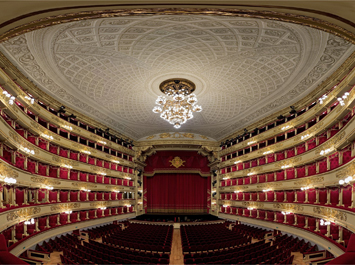
Brussels – The Court of Justice of the European Union (CJEU) reprimands La Scala Theatre and overturns the Supreme Court ruling. The court clarified, in an interpretative ruling, that Italian law only partially protects performing artists. In this specific case, the judges in Luxembourg refer to a series of abusive fixed-term contracts by the Milanese theatre, in relation to the continuous performance of the dancer Eliz Duygu.
The precarious dancer
The issue is technical and dates back to 2020. The dancer Eliz Duygu worked at La Scala from 2014 to 2019, first on a fixed-term contract and then as a self-employed worker. During those five years, she was never offered a permanent contract, despite being continuously engaged in the theatre’s ballet company. Her case moved from the Court of Milan to the courts in Luxembourg, which issued an opinion on the matter yesterday (29 January).
The rulings of the Court of Cassation on a similar case
To better understand the situation, however, it is important to realise that this kind of treatment is nothing new in the entertainment world. For this very reason, the choristers and orchestra professionals of the Teatro dell’Opera di Roma also complained in the same years about the abuse of fixed-term contracts. The outcome of their trial had reached the joint divisions of the Court of Cassation. At the highest level of jurisdiction, however, it was a “Pyrrhic victory”. The twin rulings (5542 and 5556) of 2023 set the maximum compensation limit at 12 months’ salary, even in cases of several years of precarious employment.
This is where the stories of exploitation of the two theatres intertwine. In accordance with the ruling of the Court of Cassation, the Court of Milan decided to seek the opinion of European Union jurists before making a decision. The aim of the labour section of the Palace of Justice was to understand how to interpret European legislation that appeared to conflict with the 2023 decisions of the Court of Cassation.
The Court’s decision
The interpretative ruling upheld the doubts of the Milanese judges. In the document, the CJEU clarified that “the imposition of a cap on compensation cannot allow for either proportionate and effective compensation […] or adequate and full compensation” if the abuse exceeds a certain duration. The Court’s ruling is based on the UE (1999/70/CE) directive and, in general terms, establishes that the illegality of precarious employment “must not be convenient.” In essence, the European judges considered the “cap” imposed by the Court of Cassation to be unlawful.
Now the decision rests with the Court of Milan
In its conclusions, the Court of Justice urges the Court of Milan to “do its utmost within the limits of its power to ensure the full effectiveness of European Directive 1999/70″ and therefore to “duly sanction the abusive appeal […] and eliminate the consequences of the violation of Union law.”
Leaving aside the pompous language of legal jargon, the Court has been given the green light to override the rules of the Italian Court of Cassation and either grant truly compensatory damages (without a maximum limit) or convert the La Scala dancer’s contract from fixed-term to permanent. The ball is now in the court of the Milanese Palace of Justice, now backed by the CJEU’s opinion.










![La video riunione dell'Eurogruppo [27 marzo 2026. Foto: European Council]](https://www.eunews.it/wp-content/uploads/2026/03/eurogruppo-260327-120x86.jpg)
