Brussels – As of this morning, Israel has allowed the partial reopening of the Rafah crossing between Gaza and Egypt. This step is part of the peace plan agreed upon in October 2025 and eagerly awaited by thousands of wounded Palestinians in need of evacuation. By 28 February, Médecins Sans Frontières will also have to leave the Strip due to the heavy restrictions on NGO activities imposed by Tel Aviv. Meanwhile, the Israeli army continues to bomb: over the weekend, at least 30 people were killed in Khan Younis and Gaza City.
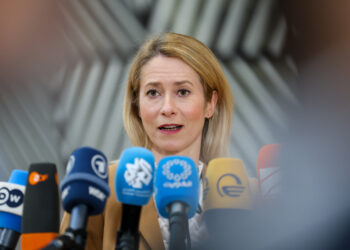
In Brussels, there are those who want to see the glass half full. The EU High Representative for Foreign Affairs, Kaja Kallas, said that “the opening of the Rafah crossing marks a concrete and positive step in the peace plan,” emphasising that “the EU civilian mission is on the ground to monitor crossing operations” and omitting any reference to Israeli raids further north. The glass half empty is highlighted by Hadja Lahbib, Commissioner for Crisis Management: “We condemn the repeated violations of the ceasefire in Gaza, where hundreds of Palestinians have been killed and injured by Israeli attacks over the weekend.”
For now, the border crossing between Gaza and Egypt will remain open on a limited basis. Six hours a day, with a maximum of 150 people leaving and 50 entering. According to the Gaza Ministry of Health, there are 20,000 patients in need of urgent care. Those receiving assistance in the Strip, on the other hand, will also have to do without Médecins Sans Frontières from the end of February: in a statement, the Israeli authorities announced that they are “proceeding to terminate the activities” of the NGO, which has been active in the area since 1989, due to “MSF’s failure to submit lists of local employees, a requirement applicable to all humanitarian organisations in the region.”
According to MSF, Tel Aviv is “forcing humanitarian organisations to make an impossible choice between exposing staff to risk or interrupting essential medical care for people in desperate need.” A “pretext for hindering humanitarian assistance.” With the new year, Israel has banned 37 humanitarian organisations from operating in the Strip. As if that were not enough, a few weeks ago, Israel unilaterally moved the yellow line agreed in the peace plan, which allows the Jewish state to maintain control of 58 per cent of the Gaza Strip.
This morning, more than 400 former senior European diplomats and officials urged the European Union to increase pressure on Israel to end its “continuous violations of international law” in Gaza and the West Bank. The victims of the Israeli “targeted” operations since the start of the ceasefire are more than 500. According to UNICEF, more than 100 were children. Heavy restrictions on humanitarian aid remain in place. Violence and plans for new Israeli settlements in the West Bank continue. The signatories call for a “time-bound dialogue with Israel” on the implementation of the EU-Israel Association Agreement, which includes a commitment to human rights.
In September, the European Commission proposed suspending certain trade preferences with Tel Aviv and imposing sanctions on two of the most extremist ministers in Benjamin Netanyahu’s government, but the proposal was immediately shelved. It would have been difficult for member states to reach an agreement on approving the measures, and Donald Trump’s peace plan announced in October came to their rescue.
Today, the EU executive’s spokesperson for Foreign Affairs, Anouar El Anouni, stated that “the EU rejects any attempt to change the demographic or territorial composition of the Gaza Strip” and that “the registration process required by Israel for NGOs constitutes a significant obstacle to the provision of humanitarian aid to Gaza.” El Anouni added that the European Commission has “actively engaged” with the Israeli government on the issue. With little success, judging by the ban imposed on Médecins Sans Frontières. For everyone, phase 2 of the peace plan has begun, the one that will lay the foundations for the future administration of Gaza. But one wonders whether Israel has ever implemented phase 1.
English version by the Translation Service of Withub




![[Copyright: European Union]](https://www.eunews.it/wp-content/uploads/2026/10/euco-261015-120x86.png)