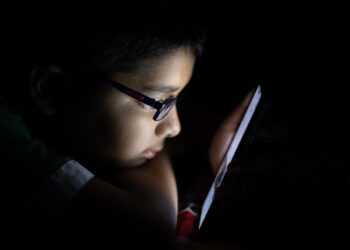
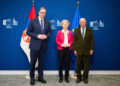
Brussels – “One in four young people have been bullied online and more than a third have witnessed it”: with these figures, the European Commission’s Executive Vice-President for Technological Sovereignty, Security and Democracy, Henna Virkkunen, today (10 February) presented the Action Plan to Combat Cyberbullying adopted by the College of Commissioners. At her side at the press conference in Strasbourg—where the European executive team meets during the European Parliament’s plenary weeks—was the Commissioner for Intergenerational Equity, Youth, Culture and Sport, Glenn Micallef. “More and more Member States are imposing age limits on access to social networks, and I fully agree with this. Spain and France are the most recent examples. Our position is that it is up to parents, not algorithms, to raise their children,” Micallef pointed out.
The text drafted by the EU Commission is divided into three main pillars. The first provides for coordination among Member States to strengthen protection against digital threats, while maintaining the Digital Services Act as a regulatory reference. The second focuses on prevention, with training programmes for teachers and courses in schools, to raise awareness among young people and make digital literacy a basic skill. The third pillar concerns reporting abuse and supporting victims, through the introduction of an app for online safety in all EU countries, inspired by models already in use, such as the French app 3018.
“Today, 97 per cent of young Europeans use the internet daily, and young people aged between 15 and 24 consider social media to be their primary source of information,” explained Virkkunen, highlighting the exposure of the younger generation to digital technology and also to the “serious risks” that it entails. The Action Plan was also based on responses from 6,343 people aged 12 to 17 to a European Union survey on the subject. The results are clear: one in four young people has personally experienced cyberbullying, and more than a third of those interviewed have witnessed it. “Behind each of these numbers is a young person, which is why we are presenting an Action Plan against cyberbullying today: based on their feedback, we now have a way forward,” said the Vice-President of the European Commission.
The Action Plan states that cyberbullying is rapidly increasing among children and adolescents, but disproportionately affects certain vulnerable groups. Girls and young women are often victims of sexist and misogynistic attacks, including the non-consensual sharing of intimate images and sexual deepfakes. Children from low-income families are more exposed than their peers. Children and young people with disabilities are also particularly affected, experiencing higher levels of online violence, including forms of sexual and gender-based abuse, to the extent that some are driven to abandon digital spaces. Ethnic and religious minorities, as well as migrants and refugees, face high levels of racist and discriminatory bullying: 90 per cent of European Jews report having experienced online anti-Semitism in the last year. Among LGBTIQ+ people, 63 per cent report frequent exposure to violent content against their community, 11 per cent have been directly targeted with offensive or threatening comments online, and two-thirds have experienced ridicule or harassment during their school years.
As announced in the 2025 State of the Union address, European Commission President Ursula von der Leyen is seeking expert advice on age restrictions for social media in Europe in light of online risks, with recommendations expected by summer 2026. Micallef pointed out that, “in Europe, the number of young victims of cyberbullying has increased by around 25%, among both boys and girls, between 2018 and 2022,” and that, “over the last five years, cyberbullying has been the main reason for contacting the EU’s
Safer Internet Centre
helpline, which informs, advises and assists children, parents, teachers and guardians on digital issues and combats online child sexual abuse. “In Europe, about 1 in 6 children aged 11 to 15 say they have been victims of cyberbullying. Behind every number or call to our helpline, there is a name, a face, a person who is suffering,” he pointed out. “Cyberbullying has serious consequences. It hurts and sometimes kills, taking away people we love. Fighting cyberbullying, therefore, means saving lives. At a social level, cyberbullying is a pandemic that we must tackle. We must respond with determination,” Micallef concluded.
English version by the Translation Service of Withub