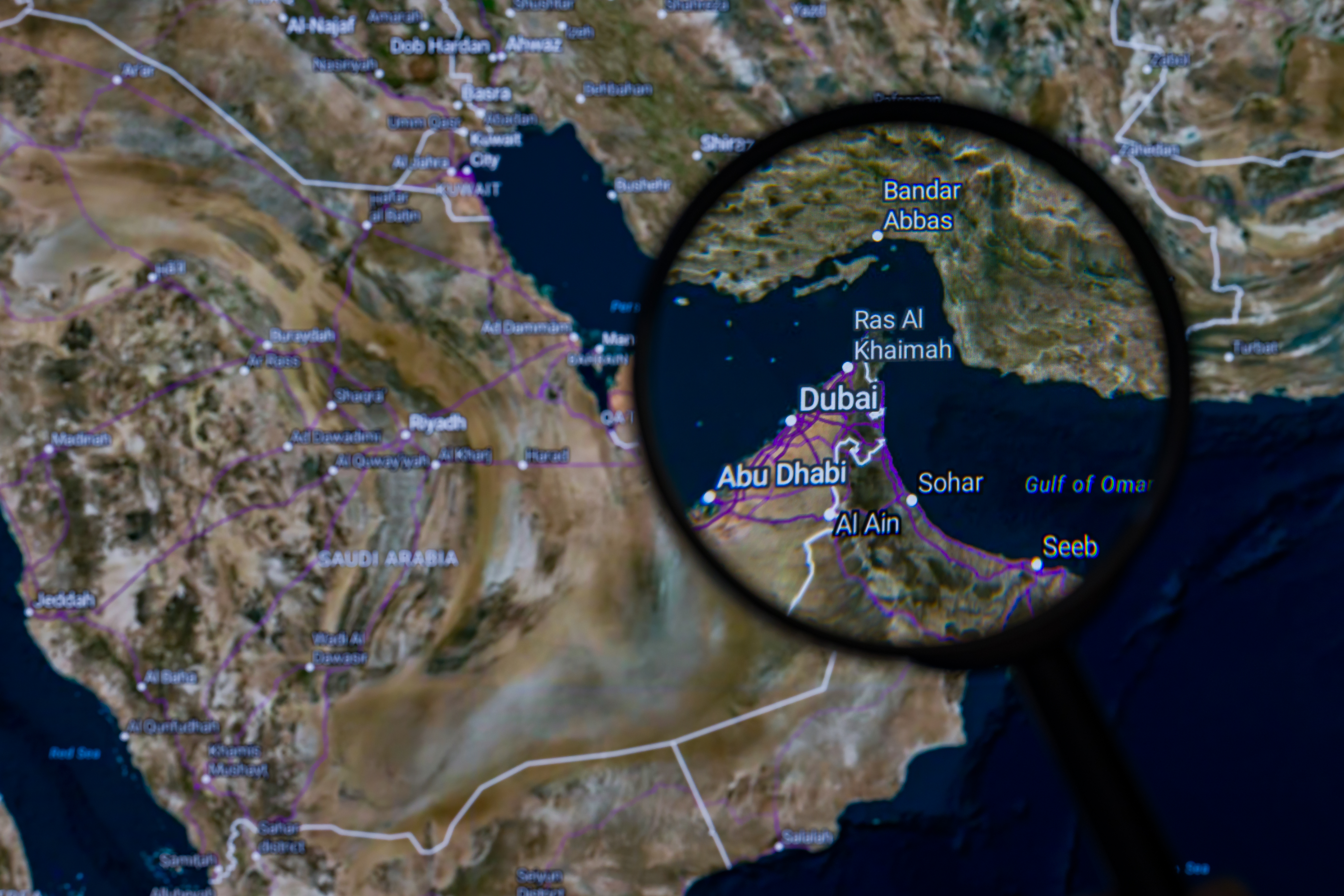
Brussels – No attacks. US President Donald Trump has had a change of heart: there will be no all-out offensive against Iran. Instead, a two-week truce was called to seek a solution to the conflict. The White House is reported to have accepted a 10-point plan presented by Tehran, brokered by Pakistan, which Trump described as “a good starting point” for an agreement to be reached within these 14 days, based on principles that are yet to be verified.
10 points on which to build peace
Iran is calling, first and foremost, for a definitive end to hostilities, which means lasting peace rather than a ceasefire. It is also demanding a guarantee that it will no longer be attacked militarily by anyone, including Israel. Israel itself is included in the negotiations that will unfold from here on: the 10-point plan stipulates that the Jewish state must put an end once and for all to its operations in Lebanon as well. This measure forms part of the broader call for regional stability, aimed at resolving all conflicts.
Iran’s sovereignty over the Strait of Hormuz and Tehran’s control of it are reaffirmed, with a commitment to ensure the safe passage of ships. This is one of the most sensitive points of the agreement: Iran would impose 2 million dollar fee on every ship passing through the strait, sharing the revenue from this toll with Oman and using the proceeds from Hormuz for reconstruction, rather than seeking reparations for damages. Meanwhile, the strait is being opened to traffic for these two weeks.
Furthermore, a request to lift all primary sanctions (on foreign assets containing at least 10 percent US components) and secondary sanctions (all measures of an extraterritorial nature imposed by the US). The Islamic Republic also includes, among its conditions, the international community’s acceptance of its right to enrich uranium.
The Hezbollah issue and nuclear weapons
The United States has agreed to begin considering the proposals, though these raise concerns, starting with the uranium enrichment programme. It is understandable that Iran should seek to assert its rights, but the international community’s long-standing fear that uranium enrichment will lead Tehran to acquire nuclear weapons is the reason for its intransigence and rigidity towards the Islamic Republic. It is difficult to imagine concessions being made in this regard. “Israel also supports the US commitment to ensuring that Iran no longer poses a nuclear, missile, or terrorist threat”, according to the positions expressed by the Israeli government.
The real sticking point in this agreement is tied precisely to the State of Israel and its role. Israeli Prime Minister Benjamin Netanyahu has made it clear that he supports efforts to reach a peace agreement with Iran, but not with Lebanon. Not for now, at least. “The two-week ceasefire does not include Lebanon,” the Israeli head of government said, determined to use this period to continue his offensive against Hezbollah, the group branded as “terrorist” (and recognised as such by the EU) and which, according to Tel Aviv, is funded by Iran itself.
Markets rally
Meanwhile, markets are celebrating the announcement of the truce and the prospect of a deal, which pushes back — or at least postpones — the specter of a deep crisis: oil has fallen back below 100 dollars a barrel, with Brent crude down 14 percent to 93.90 dollars a barrel. Gas prices are also plummeting: TTF contracts in Amsterdam, the benchmark market, are down 19 percent to 43 euros per megawatt-hour. Stock markets around the world are also buoyant: in Milan, the FTSE MIB index gains 3.74 percent, with rises also recorded in London (+2.67 percent), Paris (+4.34 percent), and Frankfurt (+5.09 percent). Asian stock markets are also up: Tokyo gained 5.42 percent, and Hong Kong 3.1 percent.
There is also good news regarding government bonds: the spread — the yield differential with the benchmark German Bund — is narrowing. For Italy, this means that the 10-year BTP stands at 3.67 percent (down from 3.99 percent yesterday). The narrowing of the spread is a sign of confidence: investors appear less concerned about economic trends, particularly those linked to inflation.
English version by the Translation Service of Withub
![La presidente della Commissione europea, Ursula von der Leyen, insignita della medaglia del Land della Bassa Sassonia [Hannover, 7 aprile 2026]. Fonte: Servizio Audiovisivo della Commissione UE](https://www.eunews.it/wp-content/uploads/2026/04/vdl-bassa-sassonia-350x250.png)
![La video riunione dell'Eurogruppo [27 marzo 2026. Foto: European Council]](https://www.eunews.it/wp-content/uploads/2026/03/eurogruppo-260327-350x250.jpg)