Brussels – Greenhouse gas emissions in the European Union are falling: according to the latest official data submitted to the United Nations Framework Convention on Climate Change and analyzed by the European Environment Agency (EEA), between 2023 and 2024, emissions fell by a further 3 percent, bringing the overall reduction for the European Union to 40 percent since 1990.
The analysis highlights how, over the last 34 years, the decline in emissions has been driven mainly by four factors: the increase in the share of renewable energy, the reduction in the use of fossil fuels, improvements in energy efficiency, and structural changes in the European economy. Furthermore, almost all Member States have contributed to this result.
The most significant progress has been made in electricity and heat generation, industry and construction, residential combustion, and iron and steel production. In particular, emissions linked to energy production have fallen by 58 percent since 1990, thanks to a mix of greater efficiency and the transition to low-carbon sources. At the same time, between 1990 and 2024, the use of solid and liquid fuels in thermal power stations fell by 68 percent and 86 percent, respectively, while natural gas saw a 44 percent increase, albeit with a 17.8 percent decline in gas emissions since 2022. “Coal consumption in 1990 was more than three times the 2024 level,” the EEA points out. The residential sector also contributed significantly to the overall reduction: improved building insulation standards, greater efficiency, and milder winters have reduced heating demand, thereby lowering emissions. Furthermore, the substantial growth of renewable energy in electricity and heat production has led to a decrease in CO2 per unit of fossil fuel energy produced.
However, there are still significant challenges. The road transport sector is one of the main exceptions, with emissions rising for both passenger and freight transport. This is happening despite technological advances and the widespread adoption of more efficient electric vehicles. The growth in demand for transport has, in fact, outweighed the benefits achieved. Another area of concern relates to European forests. Net carbon removals are declining, mainly due to the aging of forests, increased harvesting, and the impacts of climate change. Conversely, emissions of hydrofluorocarbons (HFCs), linked to refrigeration and air conditioning, show a positive trend: after a long period of growth up to 2014, they have been declining for 10 consecutive years thanks to European policies aimed at reducing and phasing them out.
Overall, the data confirms that the European Union is moving in the right direction, but it also highlights the challenges that remain. The path towards climate neutrality will require further efforts, particularly in sectors that are more difficult to decarbonize, such as transport and natural resource management.
English version by the Translation Service of Withub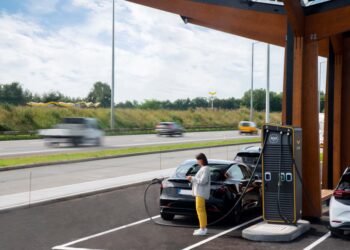



![Da sinistra: il presidente del Consiglio europeo, Antonio Costa; il presidente dell'Ucraina, Volodymir Zelensky: la presidente della Commissione europea, Ursula von der Leyen [Bruxelles, 18 giugno 2024. Foto: European Council]](https://www.eunews.it/wp-content/uploads/2026/06/euco_ua260618-120x86.jpg)
![[foto: Saverio De Giglio/imagoeconomica]](https://www.eunews.it/wp-content/uploads/2026/10/cpt-120x86.png)