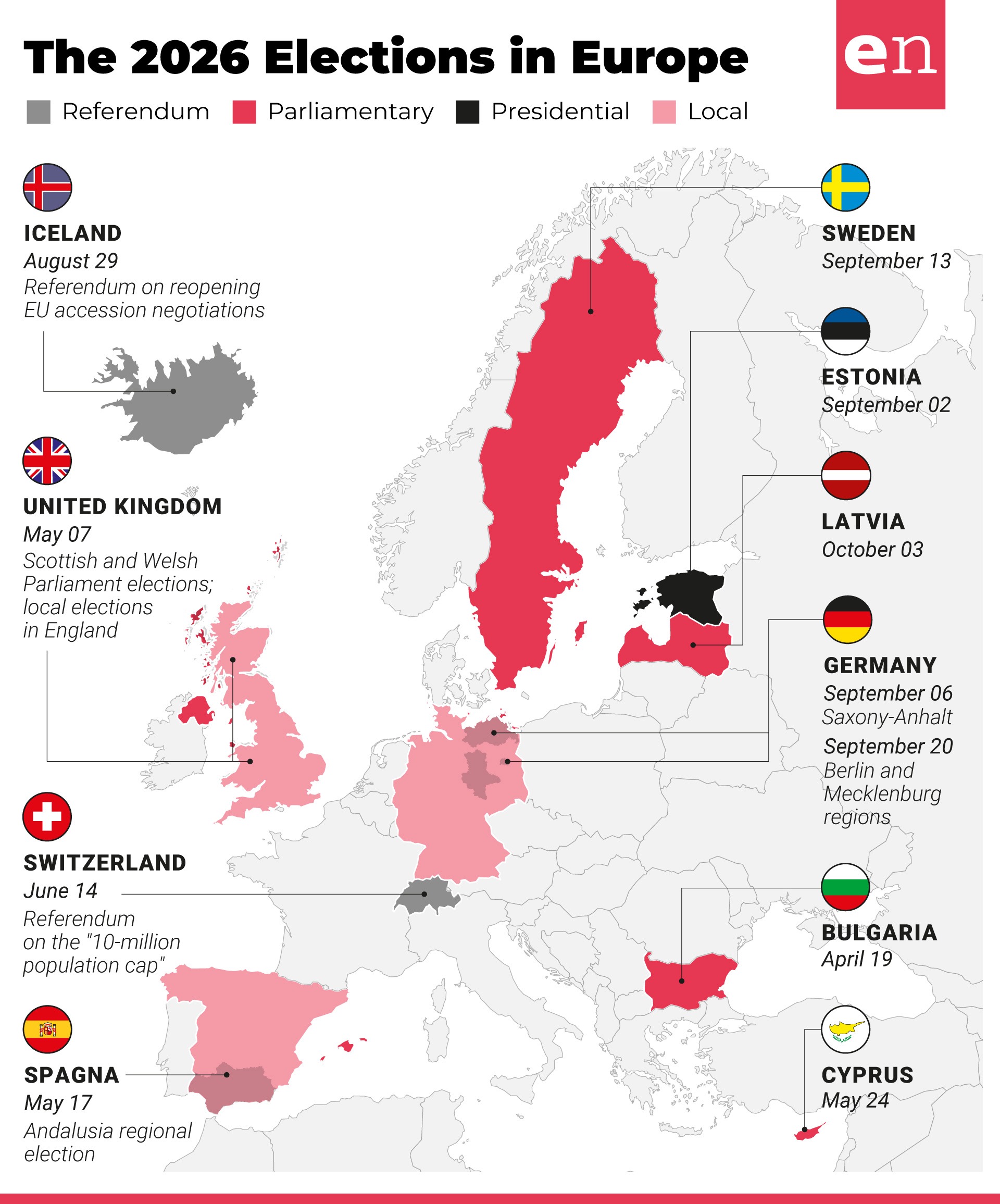
Brussels – A week on since the electoral defeat of the Hungarian Prime Minister, Viktor Orbán, another country on the European Union’s sensitive eastern flank will go to the polls. On Sunday, early parliamentary elections will be held in Bulgaria, called for in February following the resignation of the former head of government, Rosen Zeljazkov. Furthermore, there will be other important elections in the coming months, as shown on the map produced by Eunews. In May, it will be Cyprus’s turn, whilst Sweden and Latvia will go to the polls in the autumn. Also worth keeping an eye on are the Andalusian elections in Spain and those in certain regions of eastern Germany in September, which are important for gauging support for the far right.
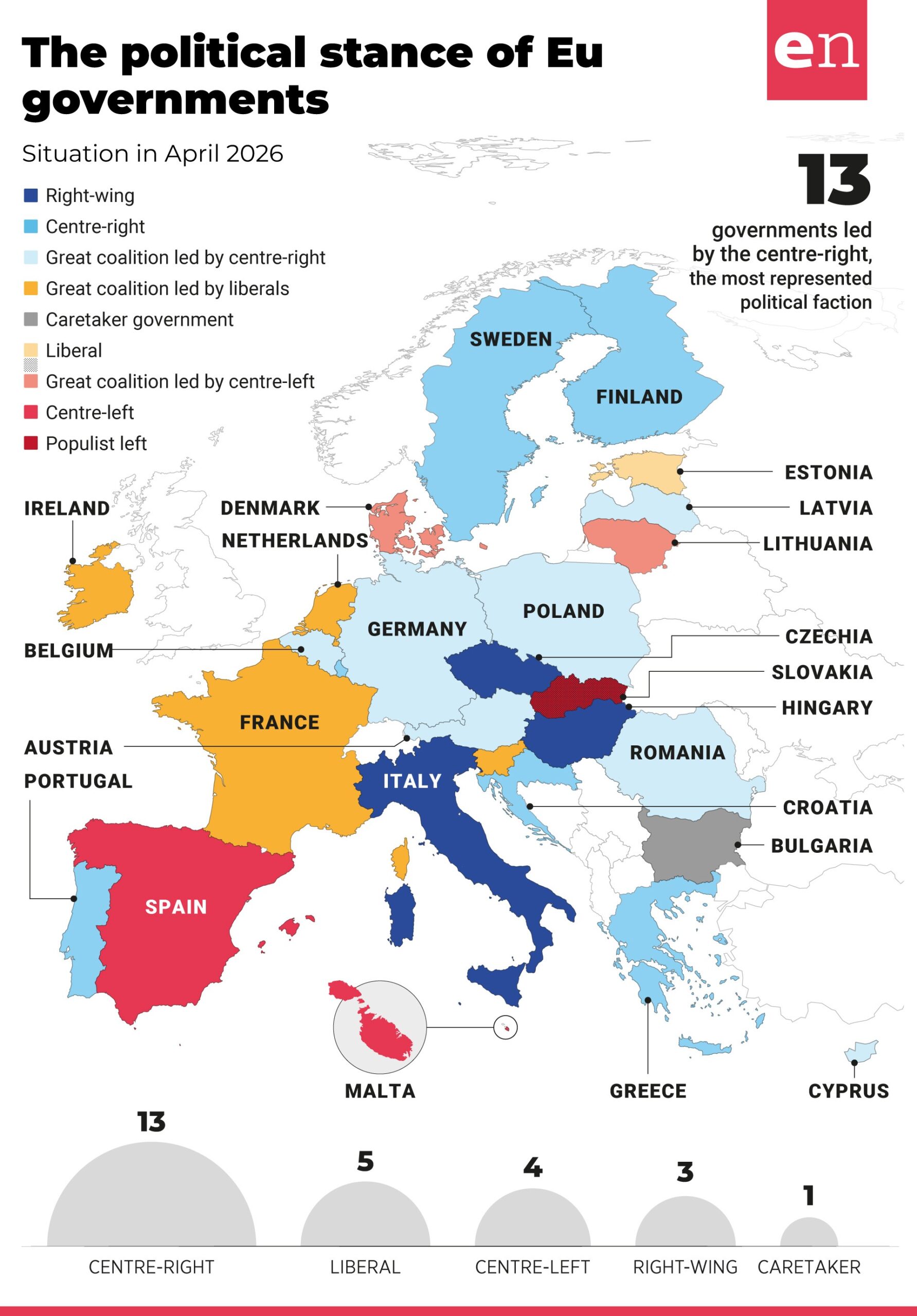
In 2027, the leadership of the three main countries in Southern Europe will be renewed. France will hold presidential elections as Emmanuel Macron’s second and final term comes to an end. In Italy, meanwhile, the parliamentary term will conclude under the leadership of Giorgia Meloni, while in Spain, the term of Pedro Sánchez’s government will end. But which political forces are leading the governments of the European Union’s member states? The centre-right, as of April 2026, leads 13 of 27 governments, with three right-wing governments (such as Giorgia Meloni’s in Italy). The centre-left stands at 4.
English version by the Translation Service of Withub




![Da sinistra: il presidente del Consiglio europeo, Antonio Costa; il presidente dell'Ucraina, Volodymir Zelensky: la presidente della Commissione europea, Ursula von der Leyen [Bruxelles, 18 giugno 2024. Foto: European Council]](https://www.eunews.it/wp-content/uploads/2026/06/euco_ua260618-120x86.jpg)
![[foto: Saverio De Giglio/imagoeconomica]](https://www.eunews.it/wp-content/uploads/2026/10/cpt-120x86.png)