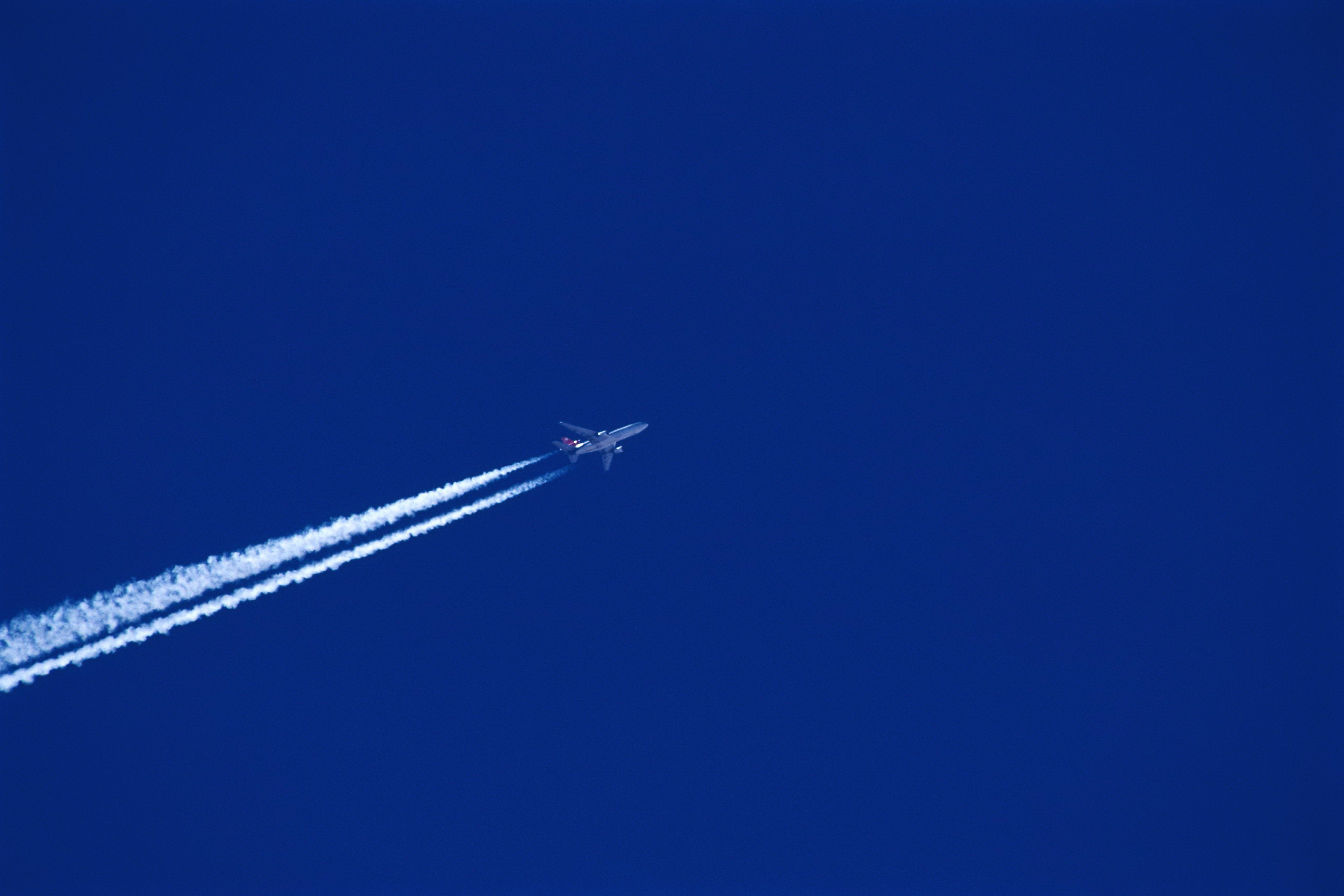
Brussels – Europe has risen to third place among the world’s most polluting regions in terms of aviation emissions, accounting for 23 per cent of the sector’s global emissions in 2025, behind Asia (31 per cent) and North America (25 per cent). But there is an even more alarming figure: the Old Continent is the only one of the world’s top three regions to have already exceeded pre-pandemic emission levels. This is according to a new analysis by Transport & Environment (T&E), Europe’s leading transport decarbonisation group, which finds that the aviation sector continues to move in the opposite direction to much of the European economy. Whilst agriculture, manufacturing, and many transport sectors have reduced their greenhouse gas emissions, those from aviation have risen by over 30 per cent since 2005.
The main drivers of rising emissions are low-cost airlines, which have played a key role in the full recovery of European air traffic. At the top of the list is Ryanair, which recorded a 50 per cent increase in CO₂ emissions compared to 2019, reaching 16.6 million tonnes from flights departing from Europe. According to T&E, the low-cost airline model, based on a high number of intra-European flights at reduced prices, has contributed significantly to the rise in emissions across the continent.
The situation is further exacerbated by the operation of the European ETS, the European Union’s emissions trading scheme. Today, around two-thirds of aviation emissions are not covered by the scheme, because the system applies almost exclusively to short-haul flights within the European Economic Area, leaving out the majority of intercontinental routes.
The result is a significant distortion of the market. Airlines such as Ryanair, which operate mainly within Europe, pay an average of around €50 per tonne of CO₂. In contrast, traditional carriers, such as Lufthansa, that are more focused on non-EU flights incur much lower costs, at around €20 per tonne. For airlines operating almost exclusively on non-European routes, such as
Emirates, the cost of emissions within European carbon markets is, however, practically zero.
The rise in aviation emissions in Italy was second only to Spain’s. In Italy, too, this trend is driven primarily by the strong recovery of low-cost airlines. Once again, Ryanair is the most polluting airline in the country, emitting 3.5 million tonnes of CO₂, an increase of over 60 per cent compared to 2019. It is followed by
ITA Airways
with 1.8 million tonnes, whilst
easyJet e Wizz Air
both stand at 0.9 million tonnes. As the majority of flights departing from Italy are bound for domestic or intra-EU destinations, just over half of emissions currently fall outside the ETS. Airlines operating mainly intercontinental flights, such as
Delta Air Lines, United Airlines, or American Airlines, have not, however, paid any emissions allowances for flights departing from the peninsula.
To tackle rising emissions, T&E proposes, first and foremost, to extend the ETS scheme from 2027 to cover all flights departing from Europe, including long-haul flights. According to the group, this measure would eliminate the current imbalance between airlines and generate new resources to finance the sector’s green transition. In 2025, the European carbon market had already generated around €4.1 billion in revenue for Member States. With the scheme fully extended, the EU could raise nearly €17 billion a year by 2030.
T&E’s Head of Sustainable Fuels,
Carlo Tritto, described the new emissions record as “an extremely worrying sign,” highlighting how airlines have so far avoided “over €8.5 billion in costs” linked to emissions. Among the proposals put forward by the group is the strengthening of the so-called European Hydrogen Bank, the programme created by the EU to support the production of clean hydrogen. The aim is to transform it into a European auction system capable of incentivising the e-SAF, i.e. synthetic sustainable aviation fuels produced using renewable energy.
Finally, T&E proposes a system of financial incentives for airlines that adopt strategies to reduce contrails, which are considered a major contributor to global warming. The idea is to use part of the ETS revenue to reward airlines that adjust their flight paths or altitudes to limit the formation of contrails that have the greatest impact on the climate.
English version by the Translation Service of Withub![Da sinistra: il presidente del Consiglio europeo, Antonio Costa; il presidente dell'Ucraina, Volodymir Zelensky: la presidente della Commissione europea, Ursula von der Leyen [Bruxelles, 18 giugno 2024. Foto: European Council]](https://www.eunews.it/wp-content/uploads/2026/06/euco_ua260618-350x250.jpg)



![Da sinistra: il presidente del Consiglio europeo, Antonio Costa; il presidente dell'Ucraina, Volodymir Zelensky: la presidente della Commissione europea, Ursula von der Leyen [Bruxelles, 18 giugno 2024. Foto: European Council]](https://www.eunews.it/wp-content/uploads/2026/06/euco_ua260618-120x86.jpg)
![[foto: Saverio De Giglio/imagoeconomica]](https://www.eunews.it/wp-content/uploads/2026/10/cpt-120x86.png)