Brussels – “Is Britain’s two-party system finally breaking down?” This is the main question most Anglo-Saxon political commentators have been asking themselves in the run-up to the local elections in the United Kingdom, which took place yesterday (7 May). Judging by the initial results announced this morning, the answer appears to be yes.
Voters across the Channel cast their ballots to elect new members to 136 local councils (similar to Italian municipal councils), with over 5,000 seats up for grabs, and to directly elect the mayors of 5 boroughs in London and the town of Watford, in Hertfordshire. Furthermore, in Scotland and Wales, people went to the polls to elect members of their respective devolved parliaments: 129 seats for the Holyrood in Edinburgh and 96 seats for the Senedd in Cardiff.
The results are still partial – only 34 per cent of local constituencies have been counted, and no votes have yet been counted in Scotland and Wales – but the picture emerging is already quite clear and in line with pre-election forecasts. Prime Minister Keir Starmer’s Labour Party risks suffering one of the heaviest defeats in its recent history, but its traditional rivals, the Conservative Party, also continue to face a crisis following the blow it took in the 2024 general election.
Deepening rifts are appearing in what was once considered the quintessential two-party system, into which outsiders are making inroads: foremost among them the far-right party Reform UK, followed by the Liberal Democrats and the Greens.
Labour and Tories lose ground, Reform on the rise
When the count was completed in 51 out of 136 councils, Labour managed to elect just 259 local representatives, losing 286 compared to 2022. The result for the Tories was only slightly better, with 270 councillors marking a loss of 192 compared to four years ago. The party to benefit most from the collapse of the UK’s two oldest political forces is Reform, the far-right party founded by former MEP and Brexit architect Nigel Farage in 2019. By focusing entirely on anti-immigration rhetoric and criticism of Starmer’s economic policy, the party has so far won 439 seats: 437 more than in the last local elections, when Reform had virtually no representatives. “I believe what we are witnessing is a historic shift in British politics. We are achieving extraordinary percentages that far exceed all my expectations,” Farage said immediately after the results and urged voters to “forget the distinction between right and left: it no longer exists, it’s over.”
The Lib Dems and the Greens, on the other hand, have so far made only limited gains from the breakdown of the two-party system: the former secured 278 elected councillors (+32) and the latter secured 64 (+37). The Greens also wrested the mayoralty of the London borough of Hackney from Labour.
Labour’s losses are spread across the country, but what is particularly striking are the defeats in numerous municipalities in the north of England. In an area known as the Red Wall, the country’s main centre-left party lost many seats, and has done so spectacularly, to the benefit of the far-right Reform party. In this regard, one of the most symbolic results is that of Hartlepool, the historic north-eastern stronghold of Labour: Reform won all 12 available seats, taking 7 from Labour, 4 from the Conservatives, and 1 from an independent. The figures from Tameside, a town near Manchester and Starmer’s former deputy, Angela Rayner’s home turf, are also striking. Labour held 17 seats, 16 of which were won by Reform. Finally, there was also a heavy defeat in one of the major cities holding elections, Southampton, on the south coast. Here, Labour lost 10 out of 12 seats to Reform, the Lib Dems, and the Greens.
Regarding the number of councils controlled by each party, the count is still too far behind to draw any overall conclusions, and in many cases, no party has secured an absolute majority. Despite this, signs of the Labour crisis are clearly emerging from this perspective too. Starmer’s party has already lost control of 8 councils, retaining power in only 11. The Conservatives follow with 6 councils, two fewer than in 2022, and the Lib Dems with 5 (+1).
As for Reform, it has so far secured an absolute majority in only three local councils. This figure highlights the pitfall lurking behind Farage’s apparent triumph: electing large numbers of councillors does not automatically mean controlling the councils and, therefore, governing. To do so, the ancient art of forging alliances is often required, and at present, no one seems genuinely willing to form a coalition with the far right. The Conservatives themselves – Reform’s seemingly most natural ally – have ruled out the possibility through the words of James Cleverly. Speaking to Sky News, the former party chairman asked rhetorically, “Why on earth would we want to work with a party that wants to destroy us?”
Starmer and the spectre of resignation
What gave yesterday’s local election a strong national political significance was, above all, the rumours, which have been circulating in recent weeks, regarding a possible step back by Keir Starmer in the event of a heavy defeat. For example, according to a behind-the-scenes report in the Times, in recent days Ed Miliband, Secretary of State for Energy and one of the Prime Minister’s key aides, reportedly suggested to Sir Keir that he draw up a roadmap for an orderly exit from the political scene.
The pressure on the Prime Minister – led primarily by the party’s most left-wing faction – intensified further in the early hours of this morning, once the vote-count had begun. “There is genuine personal hostility towards the Prime Minister among voters,” MP John McDonnell told the BBC. “The party should finally have that conversation,” he added, referring to the possibility of a change of tenant at Downing Street.
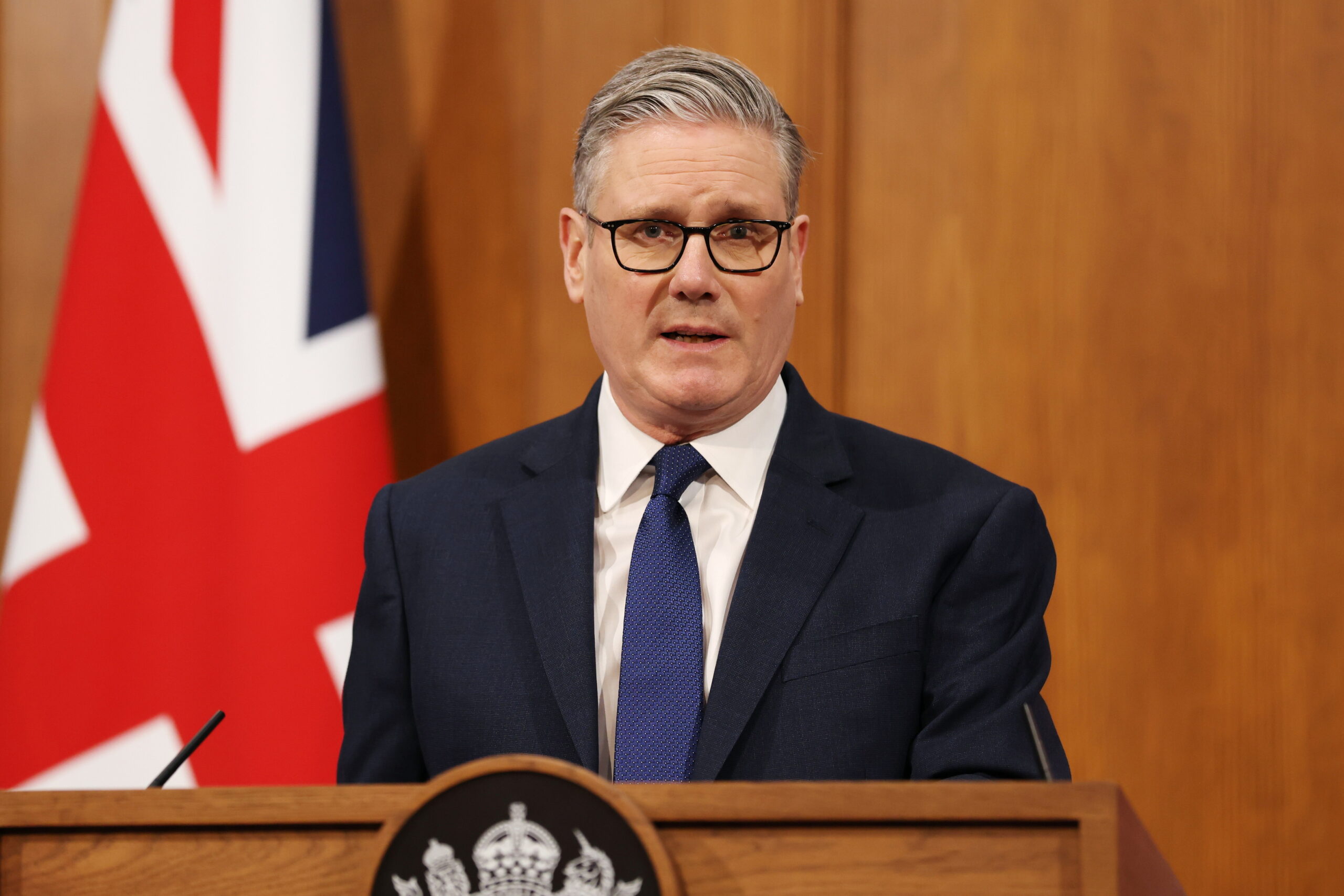
Yet, the Labour leader does not appear willing to step aside. After putting forward two prominent members of his cabinet in his defence, the Deputy Prime Minister with responsibility for Justice, David Lammy, and the Secretary of State for Defence, John Healey, Starmer appeared in person before the press at around 9 am. Acknowledging that “there is no way to sugar the pill,” and that “we have lost brilliant Labour representatives across the country, and I take responsibility for that,” the Prime Minister rejected the call for his resignation. “Difficult days like this will not weaken my determination to bring about the change I have promised: on the contrary, they strengthen it,” he said.
The feeling, however, is that the war of attrition against Sir Keir has only just begun. On the sidelines, the main contenders to replace him are already gearing up: in addition to Angela Rayner and the Health Secretary Wes Streeting, the clear favourite is Andy Burnham. Currently, the mayor of Greater Manchester is considered the right person to bridge the two wings of the party that have been in perpetual conflict: the neo‑Blairite and the Corbynite camps. There is just one problem: before standing for the leadership, Burnham must first be elected to Parliament. However, according to The Guardian, he already has a plan to achieve this.
English version by the Translation Service of Withub