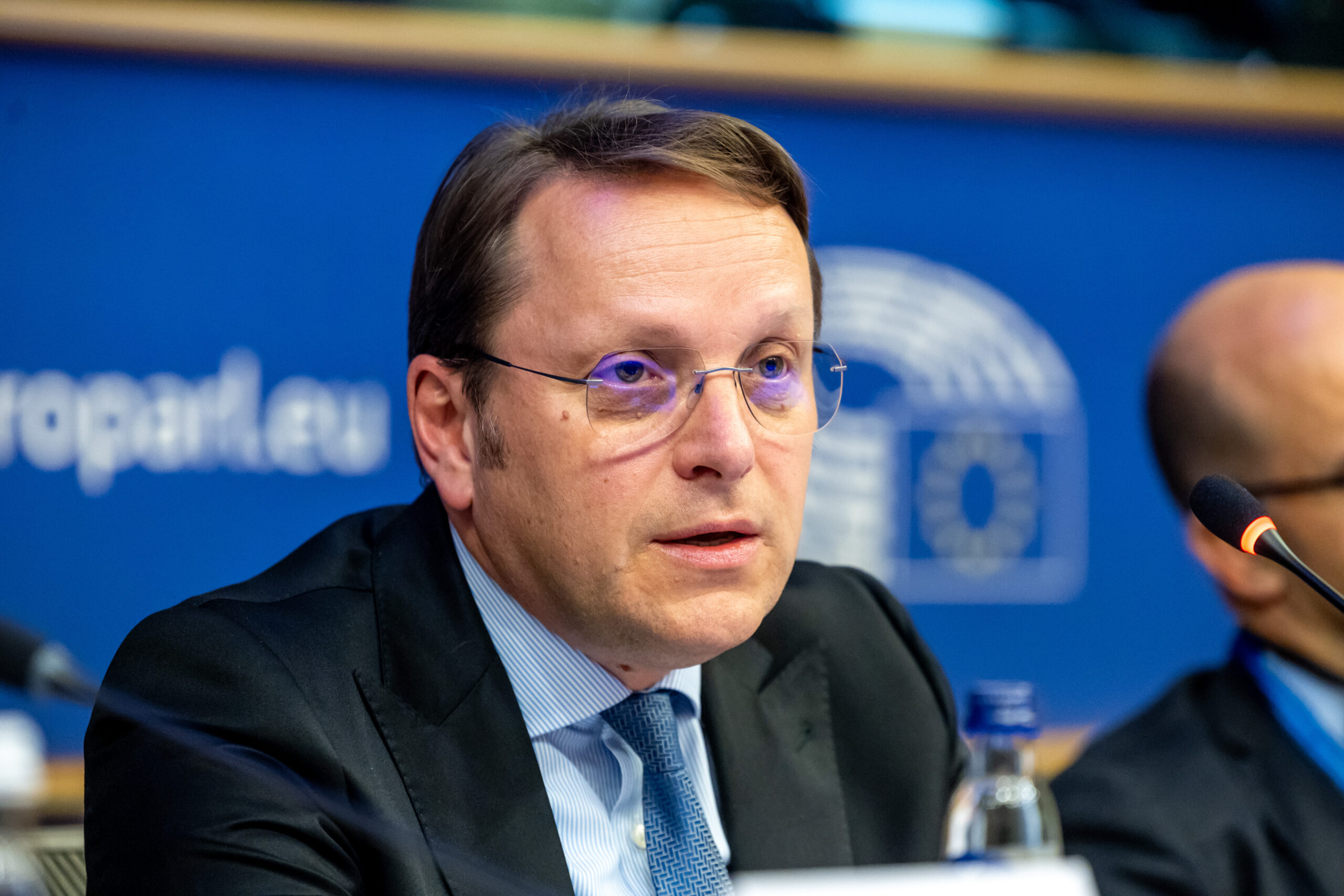
Brussels – The strategic dialogue with MEPs did not leave the European Commissioner for Health, Olivér Várhelyi, in a stronger position — quite the opposite. Among the concerns raised in the chamber, the most prominent were the role of Health in the next Multiannual Financial Framework (MFF) for 2028–2034 and the regulation of tobacco products (TPD). In both cases, the commissioner had to face a chamber that was sceptical of his performance, even though he described himself as “more seasoned” on budget matters — this being his second term in the European Commission — and “fully focused on citizens’ well‑being” when it comes to the tobacco dossier. All this within a completely new political landscape, in which Várhelyi’s own future is also being called into question: Péter Magyar’s election victory in Hungary could, in fact, lead to a call for the Commissioner’s resignation.
For the next European budget, the European Commission has proposed allocating €121.1 billion to health and social cohesion. However, out of a total of €2 trillion, many MEPs consider the fund earmarked for healthcare to be “too low.” Bringing this to the floor was the MEP from the European Left, Catarina Martins, who said: “We are faced with an EU Commission that does not care about health. Does it believe that healthcare is not important for the Union?” In response, Várhelyi admits: “Do I agree with the European Commission’s proposal on the MFF? Of course I do, it is a collective decision,” but he assures that “we will continue with all health programmes,” starting with EU4Health, the European financial plan with an initial budget of €5.3 billion adopted to respond to the COVID-19 pandemic. “The EU budget is a huge and complex beast; I don’t decide alone,” the Commissioner reiterated. “Each of us contributes to the proposal.”
Várhelyi then reiterated his position on alternative products compared to traditional cigarettes: “They must be considered to pose the same level of risk as normal tobacco. It is clear that we want identical taxation.” A stance that raised concerns among several MEPs, including the Swedish EPP MEP Jessica Polfjärd, who pointed out that “snus is a culturally important part of Sweden and a key tool in our effective fight against smoking, as its harmful effects are significantly lower.” According to Polfjärd, “common European standards would be positive, but they must be based on scientific data and the relevant harmful effects, without interfering with the successful Swedish model for reducing smoking.”
The issue continues to deeply divide even industry experts. According to Smoke Free Partnership, “no product is harmless” and “the growing popularity of e-cigarettes, nicotine pouches, and heated tobacco products among young people demonstrates the clear knock-on effect these products can have.” Hence the call for “equal taxation and regulation”, deemed essential “to prevent the tobacco industry from simply shifting consumers — especially young people — from one form of addiction to another.”
Heino Stöver, a lecturer in Applied Sciences at the University of Frankfurt, takes a completely different view, arguing that “there has been a complete misunderstanding on the part of the Commission” regarding alternative products. “The new products contain only nicotine and flavourings,” he maintains. “When it comes to risk comparison, I would strongly disagree with the European Commission’s position: products such as e-cigarettes, vapes, white snus, and other alternative nicotine delivery systems are far less harmful than any traditional cigarette.” For this reason, the professor concludes, “we need differentiation” in the taxation of tobacco products. Stöver was one of the main promoters of the letter sent to von der Leyen and Várhelyi on the tobacco product evaluation report. This letter, signed by 26 doctors and experts, criticizes the foundations on which the EU executive’s assessment rests, as it is “built on scientifically false premises,” it reads.
Commissioner Várhelyi has therefore had to weather more than one blow to his work. This criticism comes at a particularly delicate time, with Magyar’s electoral victory in Hungary raising questions about the political future of the European Commissioner nominated by Budapest. The Hungarian leader, in fact, made the replacement of senior officials linked to Fidesz, one of the cornerstones of his campaign, promising to free the country from all “puppets” who helped Viktor Orbán consolidate control over Hungary’s key institutions. It now remains to be seen whether, in Magyar’s eyes, Várhelyi also falls into this category.
English version by the Translation Service of Withub