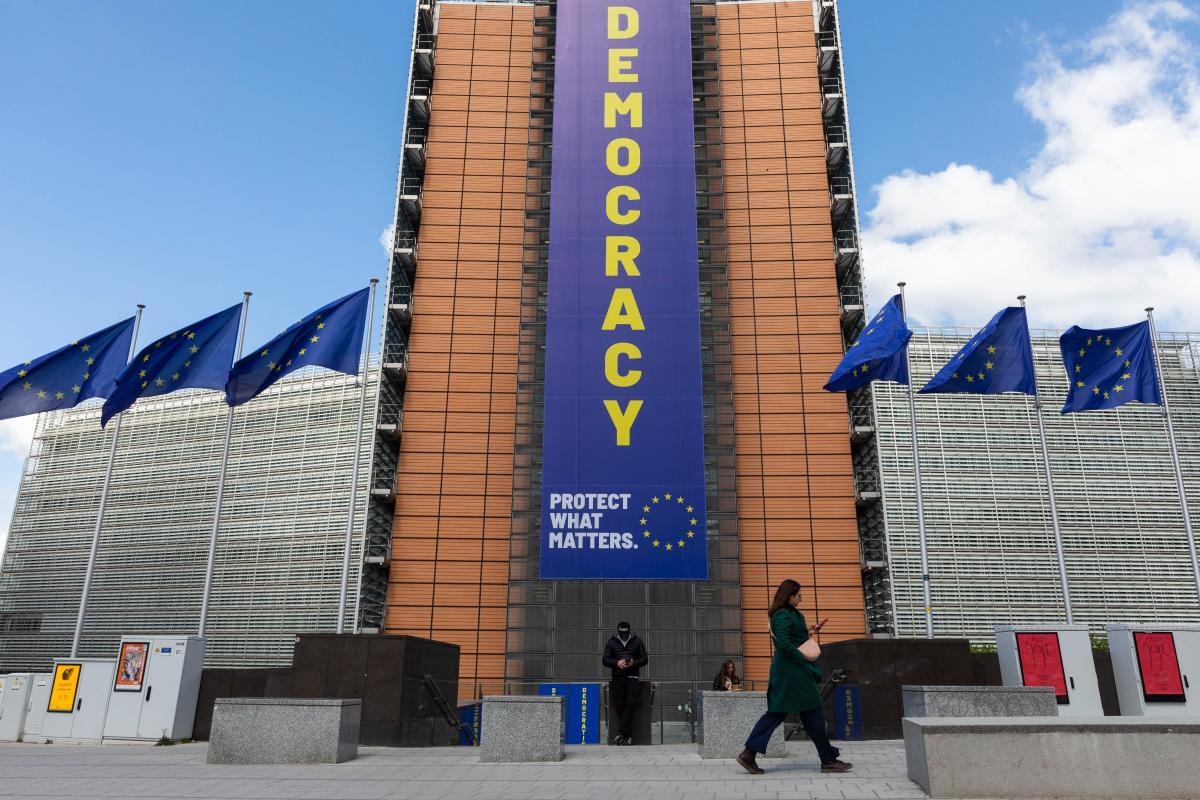
May 9, Europe Day, was the day symbolically chosen by Peter Magyar for the inauguration of his government, amidst a sea of European Union flags mingling with Hungarian ones.
Thus ended Viktor Orbán’s long reign over Hungary, but also his veto power within the European institutions, which had enabled him to influence European policy – either for his own benefit or on behalf of others – by blocking or endlessly delaying crucial decisions and subjecting any possibility of reaching a consensus to his veto.
The European Union has, in short, experienced its own “Liberation Day,” a moment it must cherish, before others seek to emulate the deeds of the defeated leader.
This made it possible, within a matter of days, to finalise the granting of a 90-billion-euro loan to Ukraine and to once again consider the possibility of a fast-track procedure for examining the negotiation chapters required for its potential accession to the European Union, as well as, most recently, to impose sanctions on “violent Israeli settlers” in the West Bank.
In addition, Orbán’s departure gave German Foreign Minister Johann Wadephul the opportunity to make a strong call for the abolition of the unanimity rule and increased use of enhanced cooperation schemes to enable the European Union to compete with the United States and China. “When it comes to security issues, the principle of unanimity can put us in existential danger,” said Wadephul: “It is a matter of life and death, as we can see every day in Ukraine.“
This view was echoed by Antonio Tajani, who, in an interview with Il Messaggero, responded to the question, “Is the EU stronger and more agile in its decision-making without Orbán?” by saying: “It is more responsive, but now we must insist on overcoming the veto right,” stressing that this has always been his personal position and adding, “I hope our government allies will be persuaded.”
These are not isolated statements, because Ursula von der Leyen and Kaja Kallas have also highlighted the issue, and because it is plain for all to see that repeating the same mistake is folly.
In the face of the geopolitical challenges the EU and its member states face, if not now, then when?
English version by the Translation Service of Withub![La riunione dei ministri degli Esteri dell'UE [Bruxelles, 11 maggio 2026. Foto: European Council]](https://www.eunews.it/wp-content/uploads/2026/05/fac-260511-350x250.jpg)