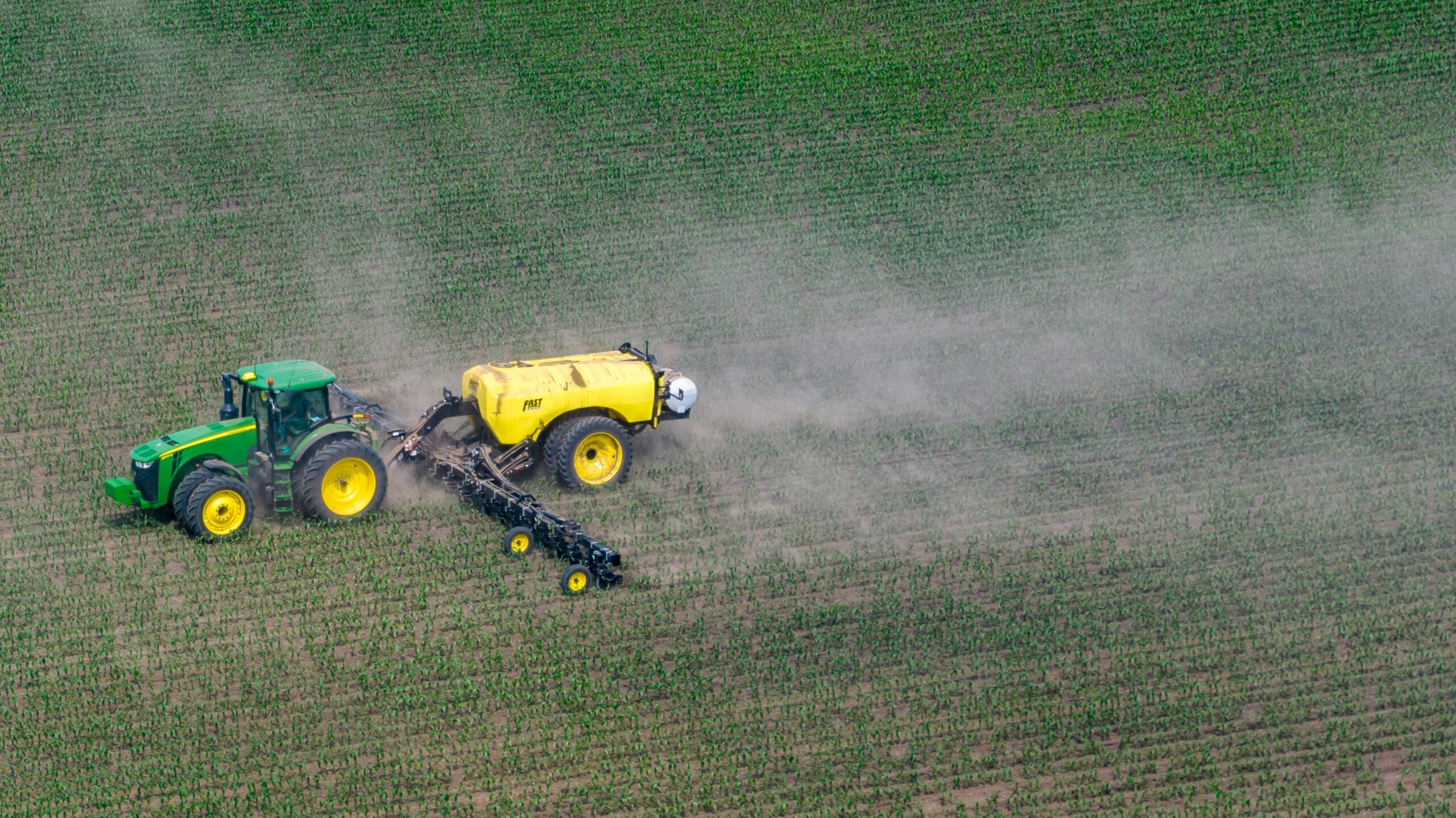
In 2024, pesticide sales in the European Union returned to growth after two consecutive years of decline. According to the data published today by Eurostat – the European Union’s statistical office – approximately 316,000 tonnes of plant protection products were sold in member states last year, representing an 8 per cent increase compared to 2023.
A reversal of the trend, which, according to the report, was primarily driven by climatic factors. In particular, the wetter weather conditions recorded across the continent encouraged the proliferation of pathogens and harmful organisms in agricultural land, prompting farmers to increase their use of fungicides and molluscicides. More favourable market dynamics compared to the previous year are also thought to have played a role, such as more competitive prices for plant protection products.
Despite the growth recorded in 2024, the picture changes when looking at the long-term trend. The 316,000 tonnes sold remain below the levels recorded between 2011 and 2021, years when total sales had almost always remained above 350,000 tonnes, with the sole exception of 2019. The 2024 figure also represents the second-lowest of the last fifteen years, surpassed only by the just under 300,000 tonnes recorded in 2023.
Overall, therefore, Eurostat highlights a gradual reduction in pesticide use across the European Union, albeit with significant differences between Member States: of the 21 countries for which comparable data are available throughout the period under review, 14 recorded a decline in sales.
The sharpest declines are seen in the Czech Republic, where sales fell by 44 per cent from the start of the period. Next come Italy (-43 per cent), Ireland (-42 per cent), and Portugal (-40 per cent). In seven Member States, however, sales rose compared with levels fifteen years ago. The most significant increases were recorded in Latvia (+68 per cent), Austria (+52 per cent), and Lithuania (+35 per cent). But the countries that recorded increases also include two of Europe’s major agricultural producers: Germany, with an increase of around 2 per cent, and France, where sales grew by around 15 per cent compared to the start of the period under review.
The Eurostat report also provides an overview of the various categories of pesticides sold in 2024. The largest share was fungicides and bactericides, which made up 40 per cent of total sales in the EU. These products are used to combat fungal, mould, and bacterial diseases in crops, and their use has been encouraged by the particularly wet weather conditions of the past year.
In second place are herbicides, haulm destructors and moss killers, which together account for 35 per cent of total sales. These are followed by insecticides and acaricides, accounting for 17 per cent of the total, while the remaining 10 per cent comprises molluscicides, plant growth regulators, and other plant protection products.
Another point highlighted by Eurostat concerns the geographical distribution of sales. The main European agricultural producers are also the largest users of pesticides. France remains the EU’s leading market, accounting for 22 per cent of total sales recorded in 2024. It is followed by Spain (19 per cent), Germany (14 per cent), and Italy (13 per cent).
Taken together, these four countries account for over half of the EU’s utilised agricultural area — around 52 per cent — and almost half of Europe’s arable land. According to Eurostat, this figure also helps explain their dominant position in the plant protection products market.
English version by the Translation Service of Withub