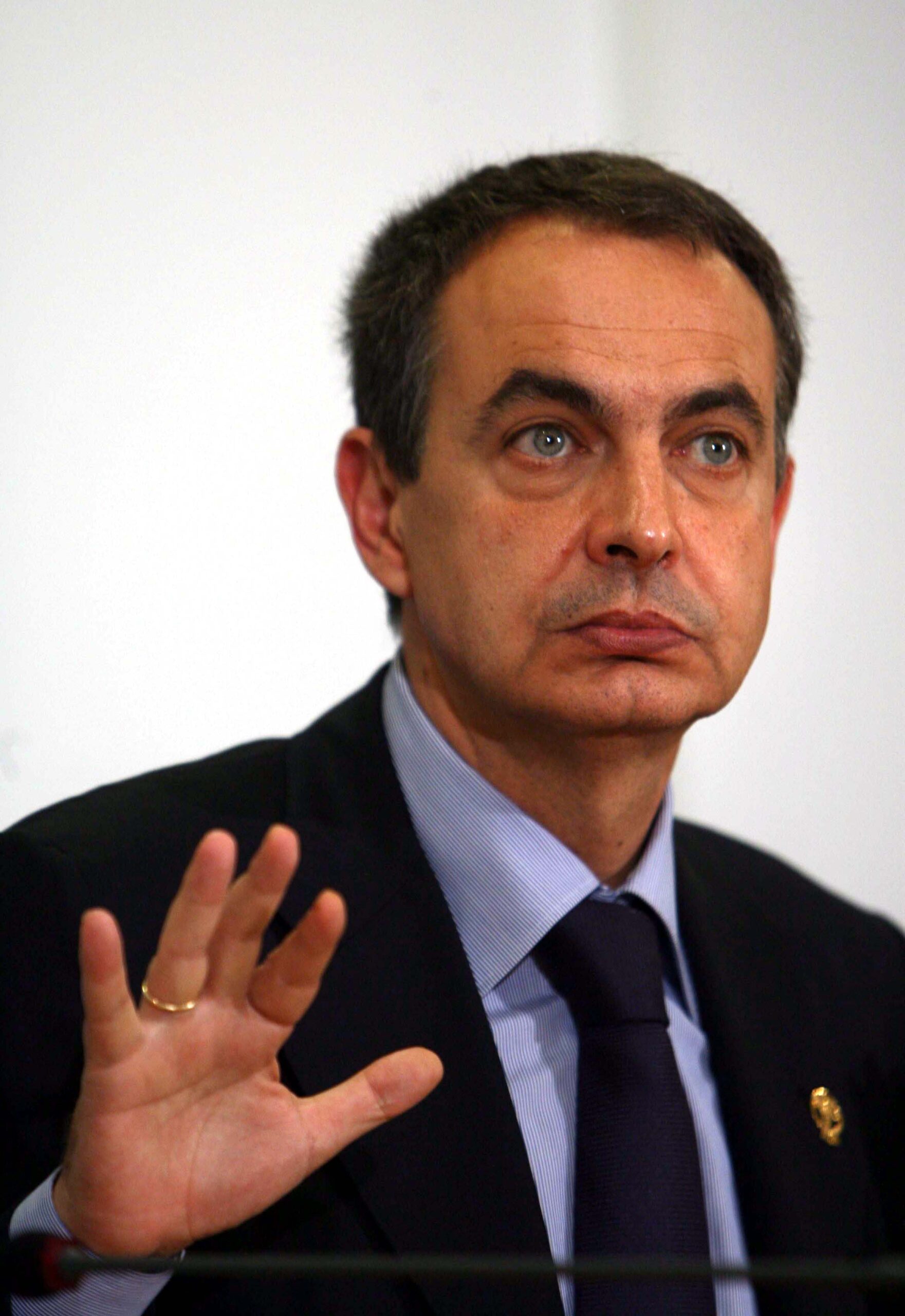
Brussels – At the very moment when the former German Chancellor, Angela Merkel, is receiving the European Order of Merit for “her contribution to the integration and values of the European Union”, there is another “grand old man” of European politics navigating far more turbulent waters. This is José Luis Rodríguez Zapatero, Prime Minister of Spain from 2004 to 2011, who today (19 May) was formally charged by the National Court in Madrid with money laundering, influence-peddling, membership of a criminal organisation, and forgery of documents.
The charges against Zapatero—the first of their kind to be brought against a former prime minister in the entire history of democratic Spain—are part of a broader line of inquiry, related to the controversial bailout of the airline Plus Ultra carried out by the government of the current Prime Minister, Pedro Sánchez, in 2021. And it may be the current government that pays the political price for this case: Zapatero is the latest in a series of prominent figures from the Socialist Party to find themselves at the centre of judicial investigations into corruption cases.
The court case
The so-called “Plus Ultra case” first made headlines six years ago. In the midst of the Covid-19 pandemic, the Spanish government drew up a support plan for companies deemed to be of “strategic importance”, and the list included the airline founded in 2011 by the Alicante-based entrepreneur, Julio Miguel Martinez Sola. The €53 million in public funding immediately drew investigators’ attention because of Plus Ultra’s size, which was deemed too small to justify such a substantial intervention. According to the fact-checking website Newtral, the company reportedly had only four aircraft operating between Spain and Latin America, and in 2020, the number of passengers carried was reportedly less than 50,000: a national market share of less than 0.1 per cent. Furthermore, the Public Prosecutor’s Office hypothesised links between the company’s board and the regime of the then-President of Venezuela, Nicolás Maduro.
The aim of the initial investigations six years ago, therefore, was to determine whether some of the public funds used for the bailout had ended up in the wrong hands, but the prosecution was unable to produce sufficient evidence to support its case. And the investigations came to nothing.
In 2024, however, the case was reopened following the discovery of suspicious money transfers from Plus Ultra to Analisis Relevante, a consultancy firm owned by Martinez himself. This company, according to the prosecution, allegedly acted as a “front company” in a large-scale operation to launder money and gold originating from Venezuela. More specifically, Plus Ultra is alleged to have moved the dirty money in two ways: by mixing it with public funds received from the government and by disguising it as payments for consultancy services provided through Analisis Relevante.
On this basis, Martinez was charged with money laundering and arrested in December 2025. Shortly afterwards, the CEO of Plus Ultra, the Venezuelan Robert Boselli, was also jailed on the same charges.
Zapatero’s alleged involvement
As the scope of the investigation rapidly expanded, Zapatero also came under the scrutiny of the Public Prosecutor’s Office. The former prime minister is a personal friend of Martinez and worked for six years as a consultant for Analisis Relevante. Based on these and other factors, the investigators’ theory is that Zapatero used his network of contacts and his political influence to facilitate the Sanchez government’s bailout of the company. Furthermore, the fees he is alleged to have received for his consultancy work—around €460,000 in total—are said to be among the payments Plus Ultra made to Analisis Relevante to facilitate the flow of dirty money.
According to the prosecution, Zapatero is alleged to be the head of “a well-established, hierarchical influence-peddling network” aimed at obtaining “financial gain through intermediation and the exertion of influence over public authorities on behalf of third parties.”
The former prime minister has always denied all allegations. At a Senate hearing on 2 March, he had described any involvement on his part in the Plus Ultra bailout as “completely false“, denying that he had received any money from the airline. And today he reiterated this point in a video message broadcast on the main national media: “I have never held any position in any public administration or in the public sector in relation to the rescue of Plus Ultra,” he explained, also emphasising that “my entire public and private life has always been conducted in full compliance with the law, and all my income and remuneration have been declared to the tax authorities with absolute transparency and legality.”
The politicisation of the court case
The Zapatero affair risks becoming a new thorn in the side of Pedro Sánchez’s government, which is already grappling with several legal cases involving members of the Socialist Party (PSOE) and figures close to the Prime Minister (from Sánchez’s own wife, Begona Gomez, to the former Transport Minister, José Luis Abalos, and the party’s former organisational secretary, Santos Cerdan).
The reason is that—having overcome the initial scepticism typical of the entire old guard of the PSOE—Zapatero has grown considerably closer to Sánchez in recent years. He has become a staunch supporter of his government, and, according to several observers, his active backing was one of the key factors enabling the Prime Minister to secure a (initially unexpected) re-election in the 2023 elections.
As expected, the opposition immediately pounced on the story, extending the purely political collusion between Sánchez and Zapatero to the judicial sphere. “Corruption is the very foundation of this government: Sánchez has remained in power thanks to Zapatero’s intervention“, the secretary of the People’s Party (PP), Alberto Núñez Feijóo, has pointed the finger via X. At this point, “he has only one dignified way out: to stop tarnishing the good name of politics, justice, and Spain for even a minute longer“, he remarked.
The Socialists, however, are holding their ground and—seizing on Feijoo’s attempt to “politicise the issue”—are pointing the finger at the source of the complaint that triggered the investigation. “This is an extremist organisation such as Manos Limpias,” explained the government spokesperson, Elma Saiz. In fact, what began as a trade union for Spanish civil servants is in fact regarded by many as an offshoot of the far right within civil society: its founder, Miguel Bernad, was a leading figure in the neo-Francoist party National Front, for which he stood as a candidate in the European elections of 1987 and 1989.
English version by the Translation Service of Withub