The Russian invasion of Ukraine, on 24 February 2022, was immediately condemned by the European Union as an act of aggression contrary to international law, as were, subsequently, the war crimes and crimes against humanity perpetrated against the Ukrainian population. Indeed, in recent days, the EU and many of its member states, alongside others, have taken a decisive step within the Council of Europe towards establishing a Special Court to try those responsible for the crime of aggression and other offences under international law.
After all, a European Union founded on respect for and the promotion of the rule of law and fundamental rights could do no less than to affirm, through the defence of international law, its own identity and the values shared by its Member States.
However, to be credible, such a stance should be maintained “erga omnes”: wherever there are clear violations of international law, regardless of their scale or the identity of the perpetrators.
This is how the European Union is expected to behave, condemning those who violate international law regardless of the relations it maintains with any given country. In short, there can be no “à la carte” application of international law based on expediency, complacency, geopolitical balances, the convergence of interests, or anything else.
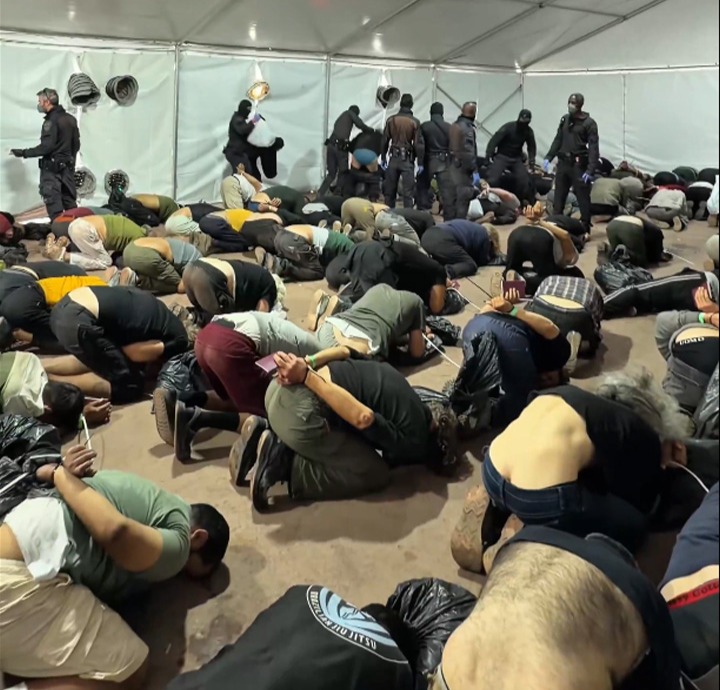
And yet, this is precisely what is happening in relation to the actual boarding operation carried out, in international waters, by the Israeli navy against the Global Sumud Flotilla and the detention of all members of the expedition, including around thirty Italians.
This latest instance of a flagrant violation of the freedom of navigation enshrined in international law—where vessels are outside a state’s territorial waters—even if viewed in isolation from the broader conduct of the Israeli armed forces on the ground in the theatres where they are currently operating, should be vigorously condemned by the European Union and result in consequences that underscore its gravity, all the more so as Israel is bound by an Association Agreement with the European Union.
No Member State should prevent, by exercising its right of veto, given that decisions of this kind require unanimity, the possibility of adopting a unified position in line with what has been done in similar situations.
One might object by discussing the aims of the initiative, which one may or may not approve of, without this serving as a basis for taking action or, conversely, for remaining silent; just as it is primarily the governments of the detainees’ countries of origin that should take the lead.
The very credibility of the European Union is at stake.
English version by the Translation Service of Withub
![La riunione dei ministri degli Esteri dell'UE [Bruxelles, 11 maggio 2026. Foto: European Council]](https://www.eunews.it/wp-content/uploads/2026/05/fac-260511-350x250.jpg)

![Da sinistra: il presidente del Consiglio europeo, Antonio Costa; il presidente dell'Ucraina, Volodymir Zelensky: la presidente della Commissione europea, Ursula von der Leyen [Bruxelles, 18 giugno 2024. Foto: European Council]](https://www.eunews.it/wp-content/uploads/2026/06/euco_ua260618-120x86.jpg)
![[foto: Saverio De Giglio/imagoeconomica]](https://www.eunews.it/wp-content/uploads/2026/10/cpt-120x86.png)