Brussels – The European Commission’s efforts to boost the Old Continent’s industrial competitiveness and strategic autonomy continue to infinity and beyond. Today (27 May), the European Commission has finalised its proposal for a new European regulation on mobile satellite services (MSS), with the aim of increasing the presence of European operators and reducing dependence on US companies, which have historically dominated this strategic market.
“Now more than ever, high-capacity and widely available satellite connectivity is essential to strengthening the resilience of the European Union’s communications networks,” emphasised the Commissioner for Digital Technologies, Henna Virkunnen, during the press conference presentation of the measure. The Finnish politician also added that “our proposal will enable satellite and terrestrial connectivity to be provided directly to mobile devices, particularly in areas where terrestrial networks are not available.”
What mobile satellite services are
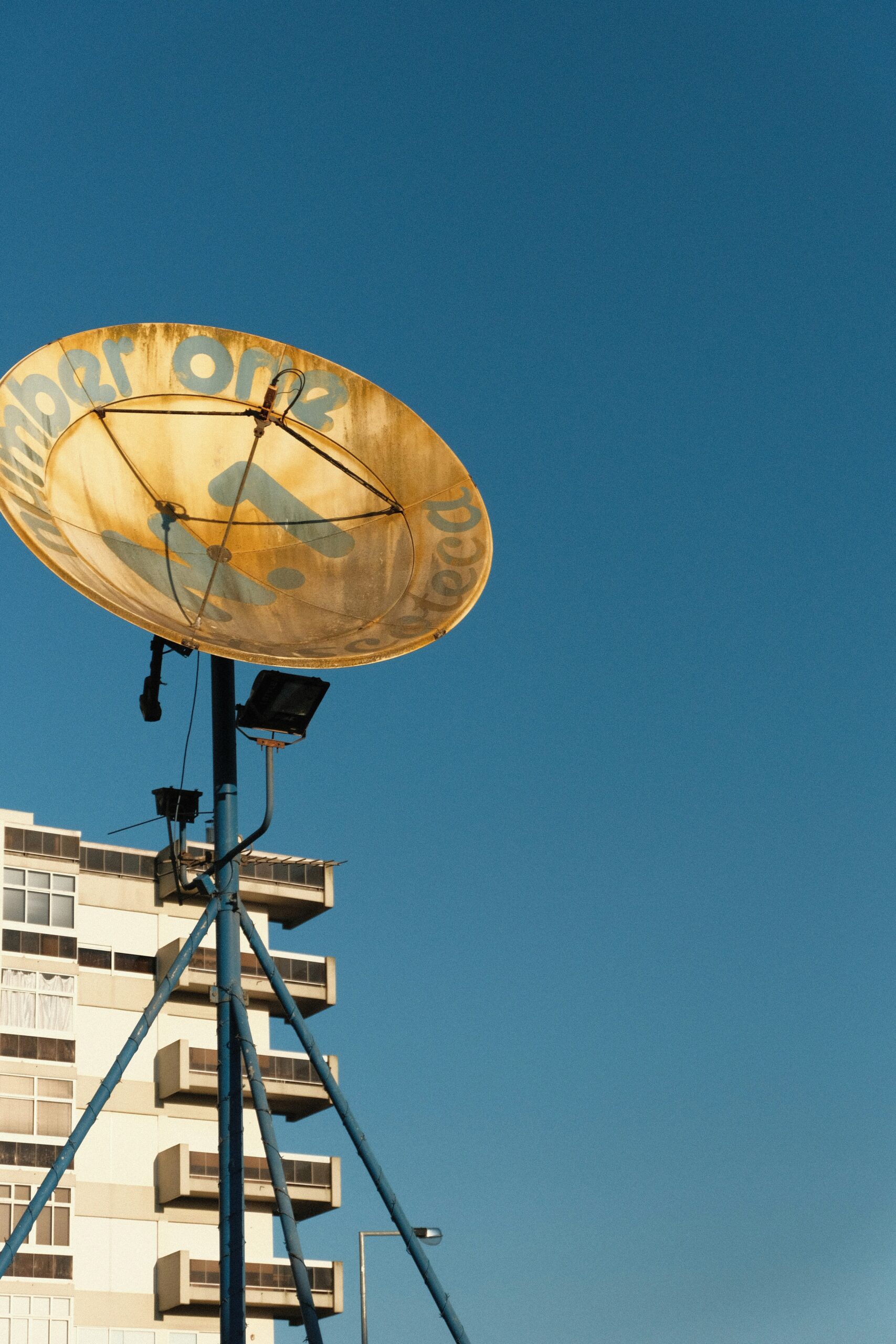
Mobile satellite services are systems that enable satellites to “communicate,” i.e., transmit voice, data, and internet connections, rather than relying on traditional terrestrial infrastructure based on antennas and cables. The frequencies required to operate MSS are a particularly valuable and limited resource, so companies that obtain the rights to use them find themselves in a position of great power.
Until recently, the use of these systems was limited to highly specialised contexts (such as maritime and air communications in areas without mobile coverage, for example), but the advent of so-called Low Earth Orbit satellites has brought about a veritable revolution. Thanks to their greater proximity to Earth, these systems—the best-known example being the Starlink network, controlled by Elon Musk—enable much faster signal transmission and therefore much faster and more stable internet connections.
The scope of application for these satellites is therefore expanding very rapidly. For example, they are increasingly being used to provide internet coverage in particularly remote areas or to offer connectivity in the event of a power cut or natural disaster.
The defence sector is also affected by the development of Low Earth Orbit constellations, as seen clearly in the context of the Russia-Ukraine conflict. When Moscow’s bombing struck ground infrastructure in Kyiv, it was Starlink satellites that ensured military communications could continue, and operational coordination was maintained.
At the same time, Ukraine’s dependence on Starlink has placed a potentially lethal weapon of blackmail in Musk’s hands: On several occasions, the South African-born entrepreneur has threatened to shut down his satellites in an attempt to push Kyiv towards a more conciliatory stance towards the Russian aggressor.
The Commission’s proposal
Indeed, it was precisely with the outbreak of the conflict in Ukraine that the EU began to adopt a more practical approach to achieving sufficient technological sovereignty in satellite technology.
The current situation is one of complete dependence on non-European suppliers. Since 2008, when Member States granted the Commission the power to license a specific band of satellite spectrum for the entire EU (the so-called 2GHz band), the sector has been dominated by just two companies: Viasat and Echostar, both US-owned.
In May 2027, however, these authorisations will expire, and the Commission would like to take this opportunity to free itself, at least in part, from its dependence on the US and neutralise the role of actors politically hostile to Brussels, with Musk at the forefront (Starlink recently purchased the valuable wireless spectrum licences from Echostar for $17 million).
“We have a rare opportunity to choose what to do for our future,” Virkunnen told reporters, “and we want to give a new boost to Europe’s competitiveness, strengthen its security and embrace new technological possibilities.”
More specifically, the EU Commission’s proposal to increase the presence of European satellite operators involves dividing the 2GHz band into three blocks of 10 megahertz (MHz) each.
The first block will be reserved exclusively for government use, such as security, critical communications, and military defence. In this case, the satellite communication service may be provided only by a European operator who, according to the official statement issued by the Berlaymont, “will have to integrate with the current and future capabilities of the IRIS2 programme”. This refers to Infrastructure for Resilience, Interconnectivity and Security by Satellite, the European project comprising around 290 satellites that Brussels has developed specifically in response to Starlink.
As for the remaining two-thirds of the EU spectrum, this will be allocated to more purely commercial uses (for example, energy monitoring services, emergency devices and internet coverage in remote areas). In this case, the Commission explains further, “the spectrum will be divided equally between one third for European operators and one third for both European and non-European operators.”
For Virkunnen, the aim remains to “encourage supplier diversification and incentivise the entry of EU companies into the market,” and there is a possibility that the list of European companies could also include firms from neighbouring countries, such as the United Kingdom and Norway: “they could be included via a delegated act, but these countries will have to align their rules with this new legislative proposal,” explained the former Finnish Minister for Education.
Indeed, the definition of the criteria used to determine whether an operator is European or not is one of the most sensitive issues in the proposal.
When questioned several times on the subject, Virkunnen remained vague. While emphasising that “the text sets out very precise criteria for defining what it means to be an EU company,” the Commissioner merely reiterated the obvious: “European entities must be controlled by Member States or by European private individuals,” she said.
Fears of a US reaction divide the EU
Ahead of today’s meeting, the daily newsletter Il Mattinale Europeo reported early this morning that several officials were expecting “a lively debate” during the board meeting on this proposal.
In fact, the division between two-thirds of the spectrum reserved exclusively for the EU and one-third open to all appears to be a compromise between two opposing, irreconcilable positions on the degree of openness the European satellite market should have in the future.
On the one hand, there are those who would have liked to completely close the sector to operators from third countries (the principle of the so-called Buy European in public procurement procedures, which countries such as France and Spain would like to apply to a much wider range of industrial sectors than just the satellite sector). On the other hand, those who would have preferred a less restricted application of the principle of free competition. According to reports from the British news agency Reuters, Virkunnen herself is said to belong to this second group. Precisely for this reason, she is said to have pushed for this compromise herself, fearing a negative reaction from the United States.
“We want to strengthen European capabilities in this sector, but we remain open to allocating a block to non-EU players as well,” the Commissioner reiterated at a press conference, also pointing out that “the US itself has recently decided that its MSS band should continue to be managed by a domestic operator.” “A European company was interested, but was denied access,” she concluded.
In any case, Virkunnen herself inadvertently suggested that this and many other issues (for example, will Brussels really be willing to open up part of its spectrum to Starlink?) are far from settled. Anticipating that negotiations between the Parliament and the Council on the text proposed today by the Berlaymont could take a long time, the Commissioner proposed to “extend the current licences of Echostar and Viasat by two years, so as to ensure that the new regulation is adopted within this timeframe.”
So, at least until 2028, EU airspace will remain firmly in the hands of the United States.
English version by the Translation Service of Withub



![Da sinistra: il presidente del Consiglio europeo, Antonio Costa; il presidente dell'Ucraina, Volodymir Zelensky: la presidente della Commissione europea, Ursula von der Leyen [Bruxelles, 18 giugno 2024. Foto: European Council]](https://www.eunews.it/wp-content/uploads/2026/06/euco_ua260618-120x86.jpg)
![[foto: Saverio De Giglio/imagoeconomica]](https://www.eunews.it/wp-content/uploads/2026/10/cpt-120x86.png)