In Dammam, on the Saudi coast north of Bahrain, in these April weeks, a blue-hulled vessel lies moored in the port named after King Abdulaziz: bow pointing north-northeast, motionless on a sea that engineers, financiers, diplomats and naval officers had calculated would become the planet’s new digital motorway. She is the Île de Batz, French-flagged, owned by Alcatel Submarine Networks, the only European cable-laying operator still standing in a trade now dominated by the Chinese and the Americans. Until some sixty days ago she was completing a section of 2Africa Pearls, the Persian Gulf extension of the forty-five-thousand-kilometre system in which the consortium led by Zuckerberg’s Meta has invested heavily, and which is designed to redraw the geography of global connectivity. Operating conditions in the Gulf no longer allow her to resume work.
On 28 February, with the American and Israeli strikes on Iran, the area was sealed off. On 3 March, the Revolutionary Guards unilaterally closed the Strait of Hormuz. The Île de Batz received a force majeure notification, the manoeuvre that protects anyone no longer in a position to honour agreed clauses from contractual consequences. A substantial portion of the cable has been laid on the seabed, but it is not connected to any landing station. It remains, for now, a filament awaiting that stable ceasefire which, according to many analysts, will in any case not be enough to cover the billions of dollars in damage to the Gulf’s energy infrastructure. Rystad Energy, a Norwegian renewables research centre, estimates no fewer than $26bn will be needed, a figure that could rise over the coming years to $48–50bn.
In the same days, on the other shore of the Persian Gulf, the Tasnim agency — the media voice of the Pasdaran — published a detailed map of the seven submarine cables crossing the strait, accompanied by what military diplomacy calls a thinly veiled warning: a threat that does not need to be spoken to be understood. FALCON, AAE-1, TGN-Gulf, SEA-ME-WE: names that a few months ago appeared only in the specialist pages of the telecoms industry, and which now feature in the briefings of the Pentagon, Downing Street, Place Vendôme and Palazzo Chigi. Tasnim, and here the Iranian source becomes almost candid, concedes the most revealing fact of recent internet history: the Gulf petromonarchies depend on those seven umbilical cords passing beneath American warships for more than 90 per cent of their digital traffic — including the financial and crypto business of the Emirates. Iran, by contrast, has alternative land routes through Turkey, the Caucasus and Russia. The asymmetry of vulnerability is structural.

At the Loui bar of the Steigenberger, the iconic hotel on Avenue Louise in Brussels, on the evening the Tasnim story broke from the wires, an officer in the uniform of a continental army, in the reassuring discretion of the place, picks his words but says: “Submarine cables are a civilian sector only on the company registers. In operational terms, they have been strategic infrastructure since 1858, when the first one was laid in the Atlantic.” No one wearing a uniform has ever forgotten this; in many chancelleries, perhaps, it has been forgotten.
Why, then, did a European policy institute based in Milan, in piazza Sraffa, behind Porta Romana and at the heart of Bocconi University’s new campus, directed by a German economist who studied in Rome, Daniel Gros, describe with such precision, two full months in advance, the structure of the vulnerability that today paralyses the Île de Batz?
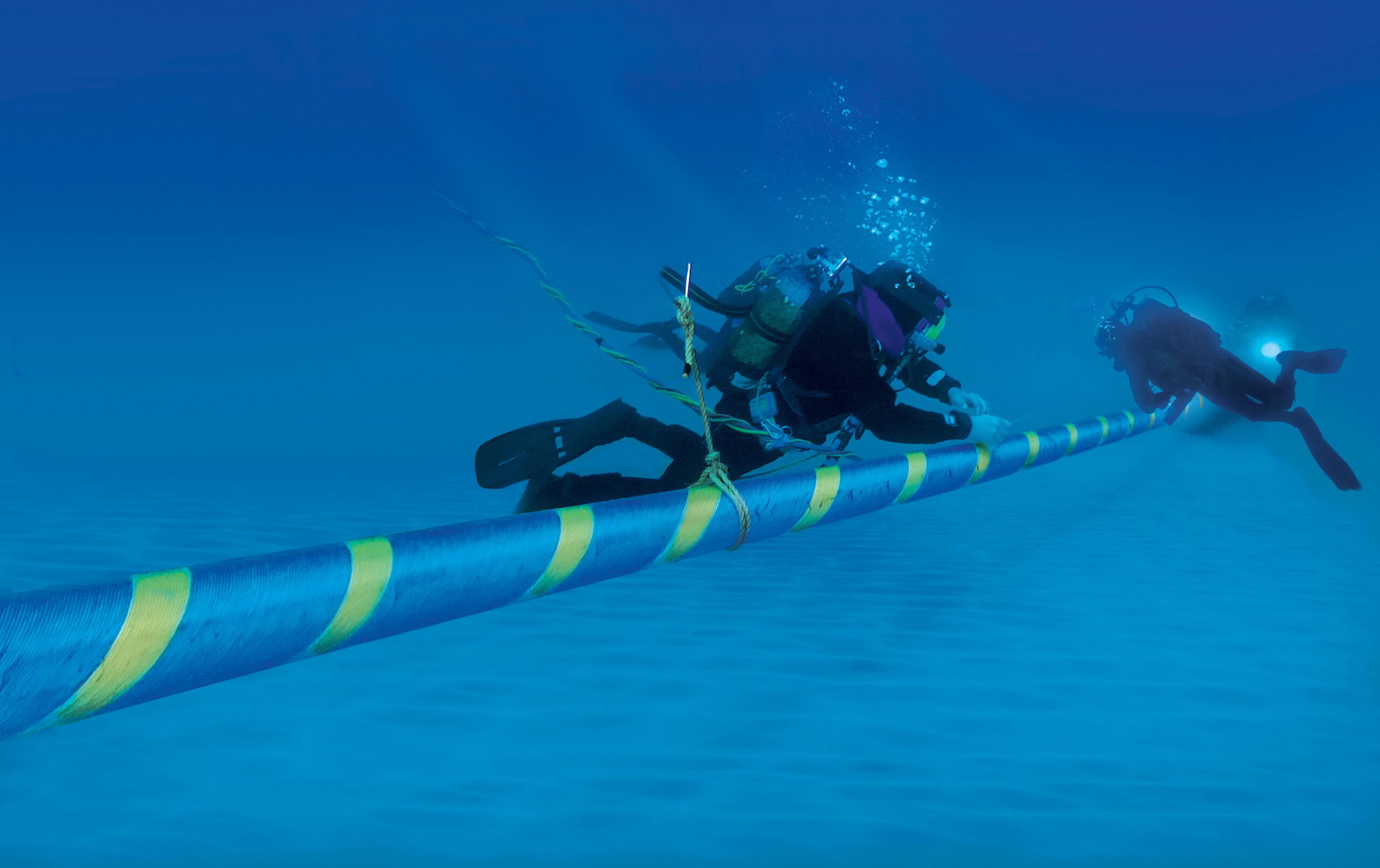
The answer lies in Policy Brief No. 52 of the Institute for European Policymaking at Bocconi University (IEP@BU), authored by Giovanni Cabroni and Andrea Gilli and published in January of this year. That paper, Per aspera ad astra: undersea cables, satellites for telecommunications and European strategic autonomy, was not about the Persian Gulf. It dealt with the Baltic, the North Sea, the Atlantic, the Mediterranean — but its analytical core was transferable. And it transferred itself: submarine cables, the authors wrote, are “the silent arteries of the digital economy”, carrying ninety-five per cent of intercontinental data traffic (15 per cent of the global flow runs through the area now at war), and they are protected, when they are protected at all, with diminishing returns that leave adversaries wide room for manoeuvre.
Cabroni and Gilli had done the sums, and done them well. A single break in an intercontinental cable can cause losses of up to $50m a day. Specialised repair ships number fewer than a hundred worldwide. Most incidents are accidental: dragged anchors, fishing nets, underwater landslides. Over the past two years, however, the malicious share has grown exponentially, and with it the difficulty of distinguishing sabotage from accident. When their Policy Brief was published, the operational reference was still the Baltic: NATO’s Operation Baltic Sentry, the cables severed in November 2024 by the Yi Peng 3 and the Eagle S, the shadow of Russia’s ghost fleet in the Gulf of Finland. Three months later, the same script is playing out in the Persian Gulf, with the same logic but a different actor. The geographical leap was instantaneous, and the analysis had already been written.
It would be reductive, however, to read the paper as a replicable scenario. The thesis was more ambitious. Cables are not defended by warships alone, and Europe’s satellite constellations — IRIS², OneWeb, the Italian and German national initiatives — have no chance of competing commercially with Elon Musk’s Starlink or with Amazon’s Leo, owned by the other transoceanic billionaire. They must change purpose. They must become governmental, military and crisis instruments. A hybrid cable–satellite architecture, on the model of the NATO HEIST project (long but clear: Hybrid Space/Submarine Architecture Ensuring Infosec of Telecommunications). In plain terms: when the cable fails, the satellite kicks in, critical applications reroute via blockchain, and government communications do not break down. It is a proposal that today, with Hormuz and the Red Sea simultaneously closed to cable traffic and to repair vessels — a circumstance unprecedented in recent history — sounds obvious and urgent. Three months ago it was a niche doctrine.
The cables-and-satellites question must be set within a geopolitical frame that has shifted beneath Europeans’ feet while the ministers of the Twenty-Seven debated taxonomies and omnibus directives. Again at the Institute for European Policymaking at Bocconi, this was the subject of another Policy Brief, No. 51, by Carlo Altomonte and Walter Rauti, also published in January 2026: The 2025 US National Security Strategy and the Strategic Repositioning of Europe. The authors — the first a long-standing Bocconi economist and one of the Italian voices most listened to in the Commission, the second an analyst trained at SDA Bocconi — offer a dry reading of a document that, though written in “MAGA dialect”, contains a proposition hard to refuse. Europe, they sum up, cannot go on being a consumer of security produced by others. It must, in fact, become, at least in its own region, a producer of it. The burden sharing of the past becomes burden shifting: from contributing to the costs to assuming them. With this, the illusion that American nuclear deterrence and strategic assets will remain forever available at a politically tolerable cost falls.
Altomonte and Rauti distinguish — and here lies their subtler contribution — between the two souls of the Washington document. There is the ideological one, which evokes the spectre of a civilisational erasure of Europe and winks at the Continent’s hard right: this should be rejected without hesitation, for it crosses the threshold of democratic interference. And there is the pragmatic one, of traditional conservative stamp, which observes the productive stagnation, political fragmentation and demographic fragility of the Old Continent and concludes, with brutal but comprehensible logic, that a weakened Europe plays into Beijing’s hands and obstructs the American strategic reallocation towards the Indo-Pacific. It is on this second reading, the two authors write, that the work must be done. Not to please Washington, but to avoid losing what remains of European sovereignty.
The operational question remains: with what tools? This is where Policy Brief No. 56 by Nathalie Tocci, published in March of this year and titled Towards a European Security Council, comes in. Tocci, director of Rome’s Istituto Affari Internazionali and an Associate Fellow of IEP@BU, has been one of the most listened-to voices in European strategic debate since the early 2010s, when she was among the architects of the Global Strategy of the then High Representative, the Renzi-era appointee Federica Mogherini. She conducts a merciless review of a quarter-century of rhetoric on strategic autonomy. She presented her paper at a small gathering organised in Brussels at the offices of GA Alliance, alongside two senior figures of the European Commission and of the European External Action Service, Stefano Grassi and Alexandros Yannis.
The diagnosis is severe: on submarine cables, on satellites, on conventional defence, Europe is today more capable but more dependent. The American share of European defence procurement budgets has risen, not fallen. The logic of PURL, the NATO programme that lets Europeans pay for American weapons destined for Kyiv, has financed the American withdrawal more than it has driven the consolidation of the continental industry. Even the SAFE programme — €150bn in joint loans, presented here in Brussels as the great breakthrough of 2025 — survives in an ecosystem where defence ministers sign bilateral contracts with major suppliers without asking anyone’s permission.
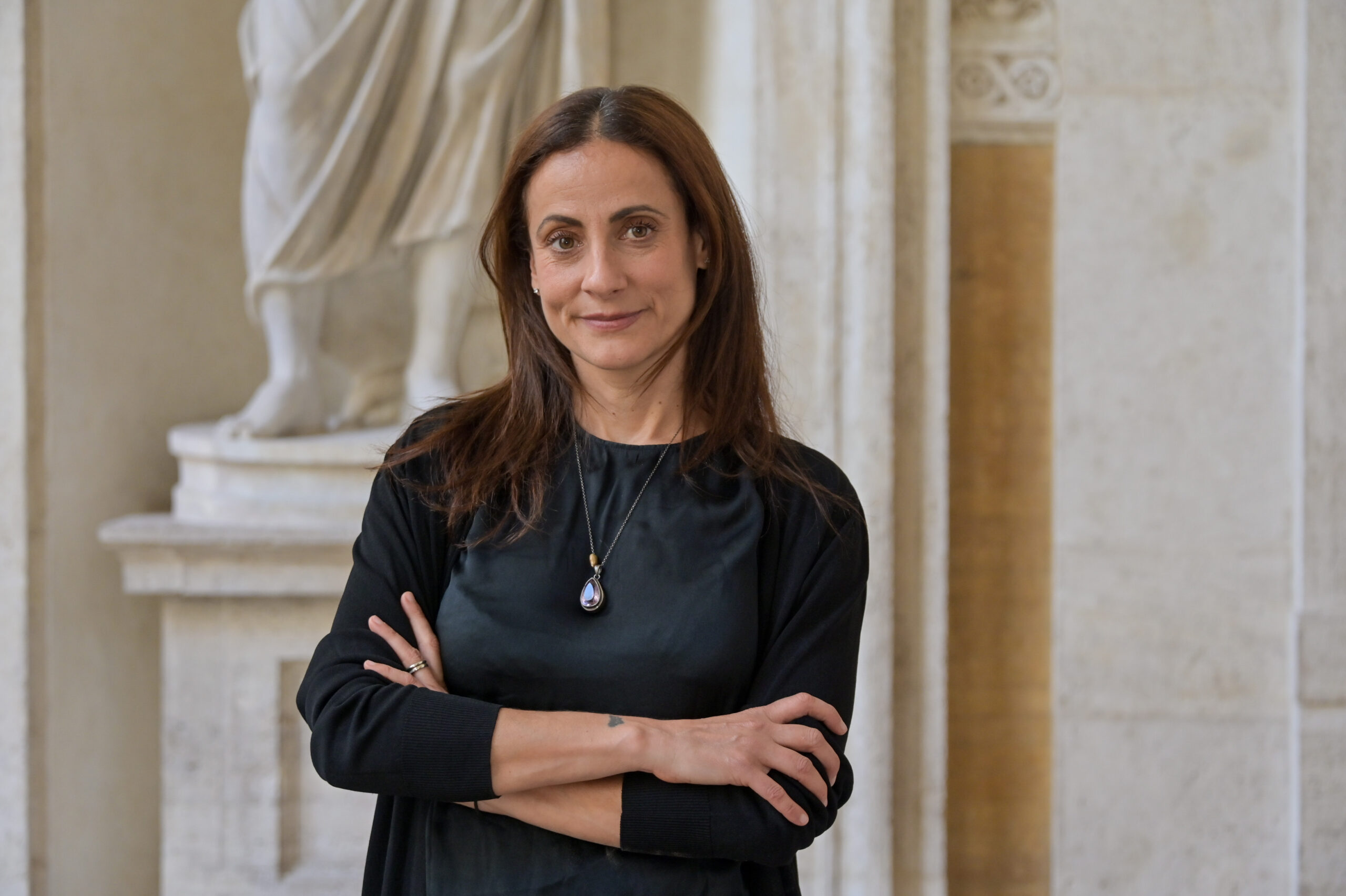
Nathalie Tocci recovers and lends substance to an idea already floated by Macron and Merkel between 2017 and 2019: that of a European Security Council, now forcefully relaunched by EU defence commissioner Andrius Kubilius in his January 2026 address at Sälen, the small Swedish town from which the Vasaloppet, the evocative cross-country ski marathon, sets out. The idea is gaining ground in these weeks of tension. A format of ten to twelve members, permanent and rotating, with a seat for the United Kingdom whenever the discussion is not strictly EU-bound, under the umbrella of the presidents of the Commission and the European Council. The logic is that of the coalitions of the willing seen at work on Ukraine and Greenland: groups of states that, sharing an analysis of the threat, act between one European Council meeting and the next. Without Orbán’s Hungary (now) putting on the brakes; without Trump’s United States interfering; and with a light secretariat keeping up the rhythm of work in the months when no one publishes summit photographs. It is an idea modest in means and ambitious in ends, Tocci writes: not a panacea, not a substitute for the Union, not the antithesis of NATO. It answers a concrete need — the same one the Île de Batz photographs off Dammam.
On the Security Council, of all the points touched on, the friend at the Loui bar spoke most candidly. “In an operational theatre, unanimity at twenty-seven is incompatible with the laws of physics. Missiles travel at the speed of sound and beyond, decisions in Brussels at that of simultaneous interpretation. If Tocci and Kubilius can get ten to twelve states genuinely speaking the same language on the threat, we are already halfway there. The other half, I’m sorry to say, is just a matter of political will. That is supplied by the civilians, not by us.”
A footnote on the common home of these ideas. IEP@BU is directed by Daniel Gros, the economist who arrived in Brussels young, stayed for more than three decades — most of them at the helm of CEPS, the most influential think-tank in the Belgian bulle — and brought to Milan, a few years ago, an intellectual compass that the Continent still struggles to find in its own few laboratories of strategic thought. The triangulation between Cabroni and Gilli on infrastructure, Altomonte and Rauti on strategic architecture, and Tocci on the missing institution is no editorial coincidence, nor a calendar tour de force. It is a working method that, one senses, links the present of the news to the economics underlying it and to the near future read off it. It is, today, the only serious way to do European policy without slipping into diplomatic anecdote or into rhetorical essay-writing as a substitute for decision-making.
While the Île de Batz waits at Dammam, with the more than 150 ships moored or anchored in the Gulf, for that ceasefire which is postponed week by week, and as the engineers of the telecom companies — the Saudi STC Group and the Qatari multinational Ooredoo — redirect their investments from the seabed to the land routes through Iraq, the Caucasus and Turkey (that “Middle Corridor” which has been studied in Brussels for at least three years without ever finding the time to fund it properly), Europe holds in its hands one small, precious thing: three maps, produced in piazza Sraffa between January and March. They do not guarantee a safe arrival in port. They might just be enough not to navigate in the dark, relying on others’ stars.
English version by the Translation Service of Withub