
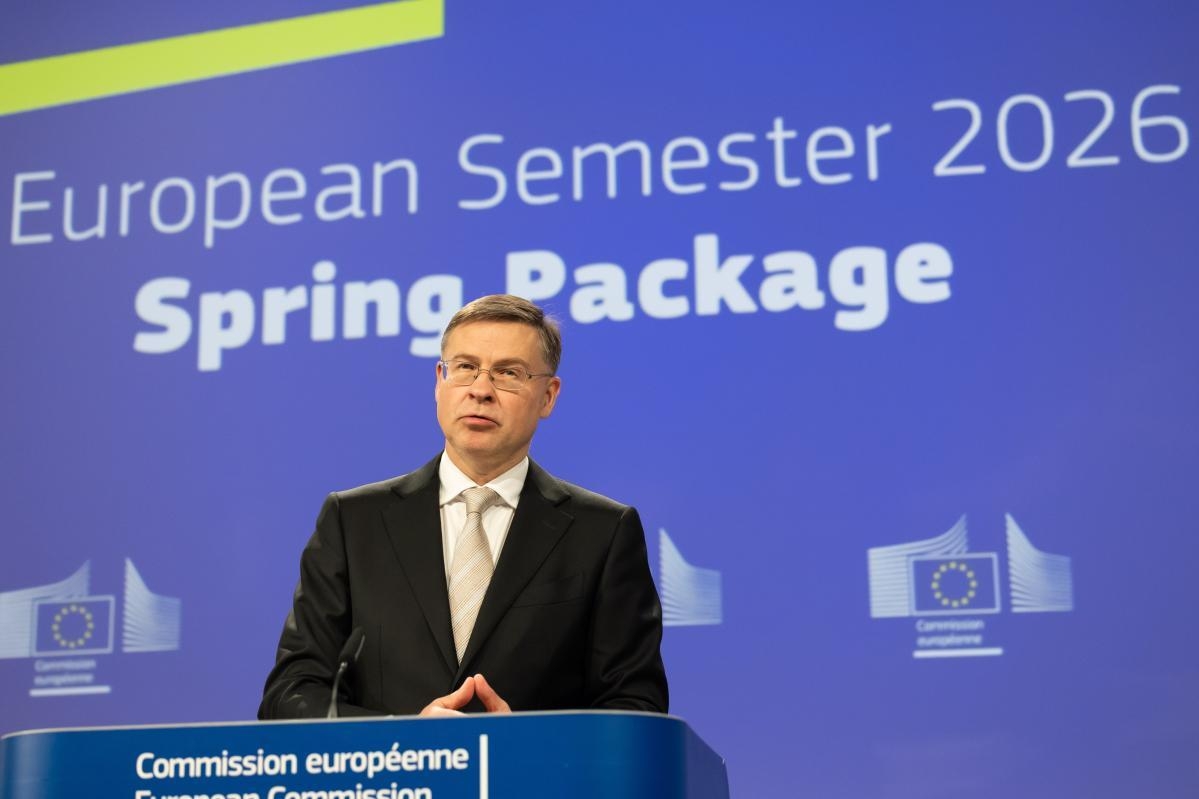
Brussels – Moving forward with reforms to improve economic and social conditions and thereby achieve greater competitiveness and sustainability. In the face of international tensions and challenges, the European Commission is finalising the policy agenda for all EU countries. These are the country-specific recommendations for the European Union, which are general in nature, apply to all, are therefore “targeted,” and are structured around 11 priorities for action.
The first useful recommendation concerns public finances and their oversight. Everyone is asked to “ensure fiscal sustainability and preserve macroeconomic stability,” which translates into reducing the deficit and debt. The other two recommendations call for “reducing barriers to the single market”, which translates into simplification: this involves limiting complex bureaucratic procedures, simplifying regulatory frameworks and reducing administrative burdens, “ensuring a clear and stable business environment.”
In the specific recommendations, governments are therefore called upon to accelerate the transition to clean and affordable energy, strengthen grids and storage systems, improve energy security and align with climate targets. This is the response to the energy shock triggered by the war in Iran, and it also entails a recommendation to close the innovation gap and increase investment in research and development — both essential for a successful transition. But it also calls for completing the second transition, the digital one, particularly through “simple, digital public services.”
Then there is the set of measures of a more social nature, which aims to “combat poverty, improve social protection and increase access to and affordability of healthcare and long-term care.” Added to this is the need to “enhance economic, social, and territorial cohesion and reduce disparities between regions,” and promote good-quality jobs. This recommendation aims to “make labour markets fairer and invest in human capital, aligning education, training and skills with the needs of the labour market.” Finally, governments are invited to “promote saving in supplementary pension schemes” and to work towards “increasing housing affordability.“
According to the Commissioner for Economic Affairs, Valdis Dombrovskis, “competitiveness and fiscal sustainability go hand-in-hand.” These are two dimensions “and “both are essential to securing Europe’s long-term prosperity, resilience, and sovereignty.” In this regard, he emphasises, “today’s recommendations outline a clear path towards these objectives.” He calls on all EU member states to show unwavering resolve. The road ahead, he stresses, will require “determination, adaptability, and a constant commitment from all of us.”
The Executive Vice-President for Prosperity and Industrial Strategy, Stéphane Séjourné, urged Member States to carry out reforms and maintain the momentum in implementing the agenda set by the European Commission: “The more our economies converge, the easier it becomes for businesses to expand, invest, and compete across borders,” that is to say, globally.
English version by the Translation Service of Withub