![Il bacino del mar Mediterraneo [foto: Wikimedia Commons]](https://www.eunews.it/wp-content/uploads/2025/05/mediterraneo.jpg)
Rome — With the High Seas Treaty (BBNJ Agreement) now in force, Mediterranean countries are being called on to seize a critical opportunity to strengthen sea protection and regional cooperation at a time of growing environmental pressure.
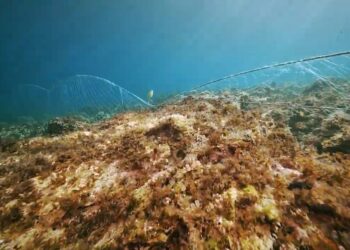
Although covering less than 1% of the global ocean, the Mediterranean hosts around 18% of known marine species, making it one of the world’s most important biodiversity hotspots. At the same time, it is under severe strain from pollution, overfishing, climate change and coastal development.
The BBNJ Agreement – adopted under the United Nations Convention on the Law of the Sea – provides, for the first time, a global framework to protect marine biodiversity in areas beyond national jurisdiction while improving coordination across sectors, institutions and countries.
As implementation begins, early decisions at the first Conference of the Parties (COP1) in January 2027 will shape how the treaty works in practice and determine its level of ambition. For the Mediterranean, these early decisions will be particularly important in determining how effectively the treaty can support cooperation across one of the world’s most environmentally and politically pressured seas.
A new WWF briefing – The High Seas Treaty and the Mediterranean. Why it matters, Why it matters, outlines the strategic importance of the region and the role countries can play in shaping effective implementation of the treaty.
“The Mediterranean does not need new commitments – it needs stronger tools to deliver on the ones already made. The High Seas Treaty offers exactly that: a practical framework to improve cooperation across our shared sea, close governance gaps and turn ambition into action for our shared sea” says Giuseppe Di Carlo, Director and CEO at WWF Mediterranean Marine Initiative.
However, participation in the Mediterranean remains incomplete: several countries have not yet ratified the agreement, limiting their ability to influence key decisions.
A practical tool to deliver existing commitments
The treaty does not create a new governance layer but strengthens the ability of countries to deliver on existing commitments. It helps bridge long‑standing gaps in ocean governance by promoting cooperation across frameworks such as the Barcelona Convention, regional fisheries bodies and maritime organisations. This is particularly important in the Mediterranean, where marine ecosystems are deeply interconnected while governance often remains divided across sectors and jurisdictions. Through tools such as marine protected areas, environmental impact assessments and capacity‑building mechanisms, the agreement enables countries to move from commitments to concrete action.
Why this matters for the Mediterranean
Marine ecosystems in the region are highly interconnected, while current governance remains fragmented across sectors. This makes it difficult to address cumulative impacts or manage shared resources effectively. The region is therefore not peripheral to the treaty’s relevance, but one of the clearest real-world applications for how effective BBNJ implementation can become.
The BBNJ Agreement offers a way forward by supporting integrated, ecosystem‑based approaches that better reflect the realities of the Mediterranean.
A window of opportunity
For countries that have not yet ratified the treaty, joining now means:
shaping implementation from the outset
ensuring Mediterranean priorities are reflected
accessing support for capacity‑building and technology
For those already party, active engagement is essential to ensure strong cooperation across regional frameworks and deliver real conservation outcomes.
At a time of intensifying pressure on marine biodiversity, the BBNJ Agreement represents a strategic opportunity to strengthen cooperation, improve policy coherence and accelerate progress towards global ocean goals – including the 30×30 target.
English version by the Translation Service of Withub



![Da sinistra: il presidente del Consiglio europeo, Antonio Costa; il presidente dell'Ucraina, Volodymir Zelensky: la presidente della Commissione europea, Ursula von der Leyen [Bruxelles, 18 giugno 2024. Foto: European Council]](https://www.eunews.it/wp-content/uploads/2026/06/euco_ua260618-120x86.jpg)
![[foto: Saverio De Giglio/imagoeconomica]](https://www.eunews.it/wp-content/uploads/2026/10/cpt-120x86.png)