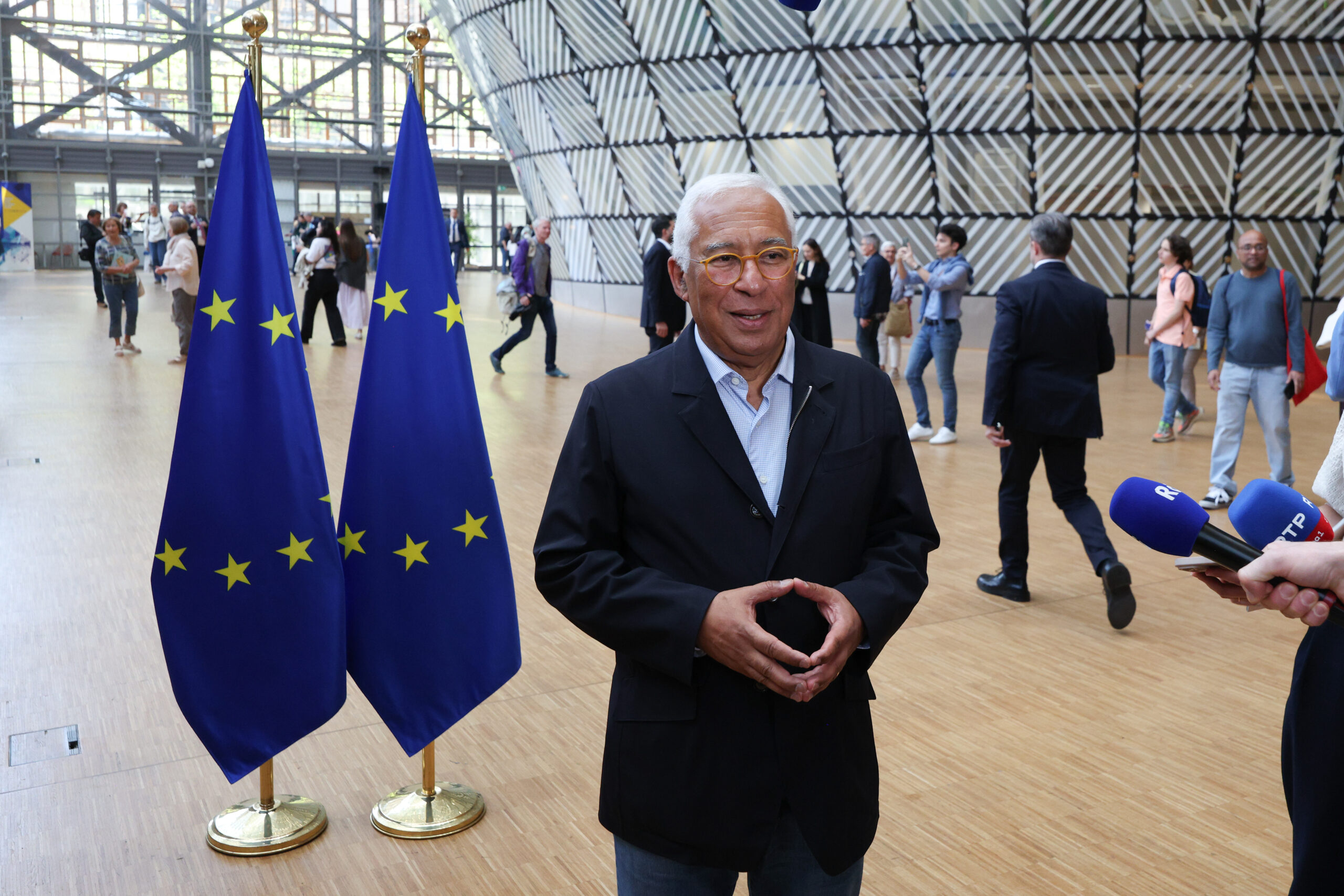
Brussels – The European Council is approaching and, as is customary, its president, António Costa, has sent an invitation letter to the heads of state and government of the European Union member states. Costa himself admits the current geopolitical context is challenging, and this is reflected in the agenda: “We will address several crucial issues for our citizens and our companies, including competitiveness and global economic challenges, the European Union’s Multiannual Financial Framework for 2028-2034, as well as Ukraine and the situation in the Middle East,” he wrote.
Next week, the European Council will address several crucial issues for our citizens and our companies, including competitiveness and global economic challenges, the EU’s next long term budget, as well as Ukraine and the situation in the Middle East.
My invitation letter to EU…
— António Costa (@eucopresident) 11 June 2026
The proceedings will begin on 18 June “by reviewing progress on the ‘One Europe, One Market’ agenda, together with the President of the European Parliament, the President of the European Commission, and as part of the presentation of the main results of the Cyprus Presidency by President Christodoulides.”
Costa went on to explain that he would like to focus on “global macroeconomic imbalances and their implications for Europe’s competitiveness and prosperity.” The aim is “to develop a common understanding of the challenges and to provide guidance to the Commission on the way forward.” Europe, Costa stressed, “must do its economic homework – but, at the same time, fair competition at the global level requires a level playing field.”
Moreover, the agenda, which foresees wrapping up work on 19 June, includes the Multiannual Financial Framework, for which “the Cyprus Presidency will present a first negotiating box with figures.” The mandate of the Cypriot Presidency of the Council of the EU expires at the end of June, when the presidency will pass to Ireland. To guide the work of the new mandate, according to Costa, the discussion must focus on “key elements to facilitate an agreement by the end of the year. This includes making progress on new own resources (the revenue with which the EU finances its budget; there are currently three main sources), which will be decisive for matching our ambitions with the necessary means.”
The situation in Ukraine also “remains high on the agenda.” For this reason, the discussion on the subject will begin by “hearing from President Zelensky.” Ukraine, Costa wrote, “has demonstrated renewed success on the battlefield, while Russia is failing to achieve its military and strategic objectives. Russia’s increasingly reckless and irresponsible behaviour towards EU Member States is unacceptable and signals the opposite of strength.” The President continues to support the Union’s “two-pronged approach – supporting Ukraine and increasing pressure on Russia,” which “is working.” The Council will be an opportunity “to send a signal of unity,” and Costa expects “to welcome the opening of the first cluster of chapters in the accession negotiations with Ukraine and Moldova, an important milestone on their EU path.” An end, therefore, “to a long impasse in the accession process of those two countries. Together with the momentum regarding the Western Balkans, as seen during our recent Summit in Tivat with partners of that region, there is a renewed impetus in the enlargement process.”
Costa also touched upon recent Russian incursions into EU airspace, such as the accident in Romania, which “underline the urgency of advancing our shared defence readiness agenda, including by strengthening the EU’s Eastern flank.” Despite progress on defence spending, “much more remains to be done.”
Another item on the agenda is “the Middle East,” Costa noted, “including the conflict in Iran and its broader implications, notably for energy prices”. Discussions will also cover the “dramatic situation in Gaza and the West Bank, as well as developments in Lebanon, including continued EU efforts to support the ceasefire and the Lebanese state and its people.”
The European Council will also revisit the issue of migration, a topic that is addressed at every summit. This is not a matter of starting a debate from scratch, but of reviewing the progress on decisions already made, “to ensure that work continues at a high pace in all priority areas.”
Finally, Costa has placed the “problem of illicit drugs” on the agenda, “an issue that directly impacts the lives of European citizens and our societies,” and which “requires a comprehensive, whole-of-government and whole-of-society approach.” Following the adoption of the EU Drugs Strategy, he concluded, “it is important to ensure its effective implementation.”
English version by the Translation Service of Withub
![[Foto: Unsplash]](https://www.eunews.it/wp-content/uploads/2026/06/daniel-schludi-e1RI3wRelqM-unsplash-350x250.jpg)