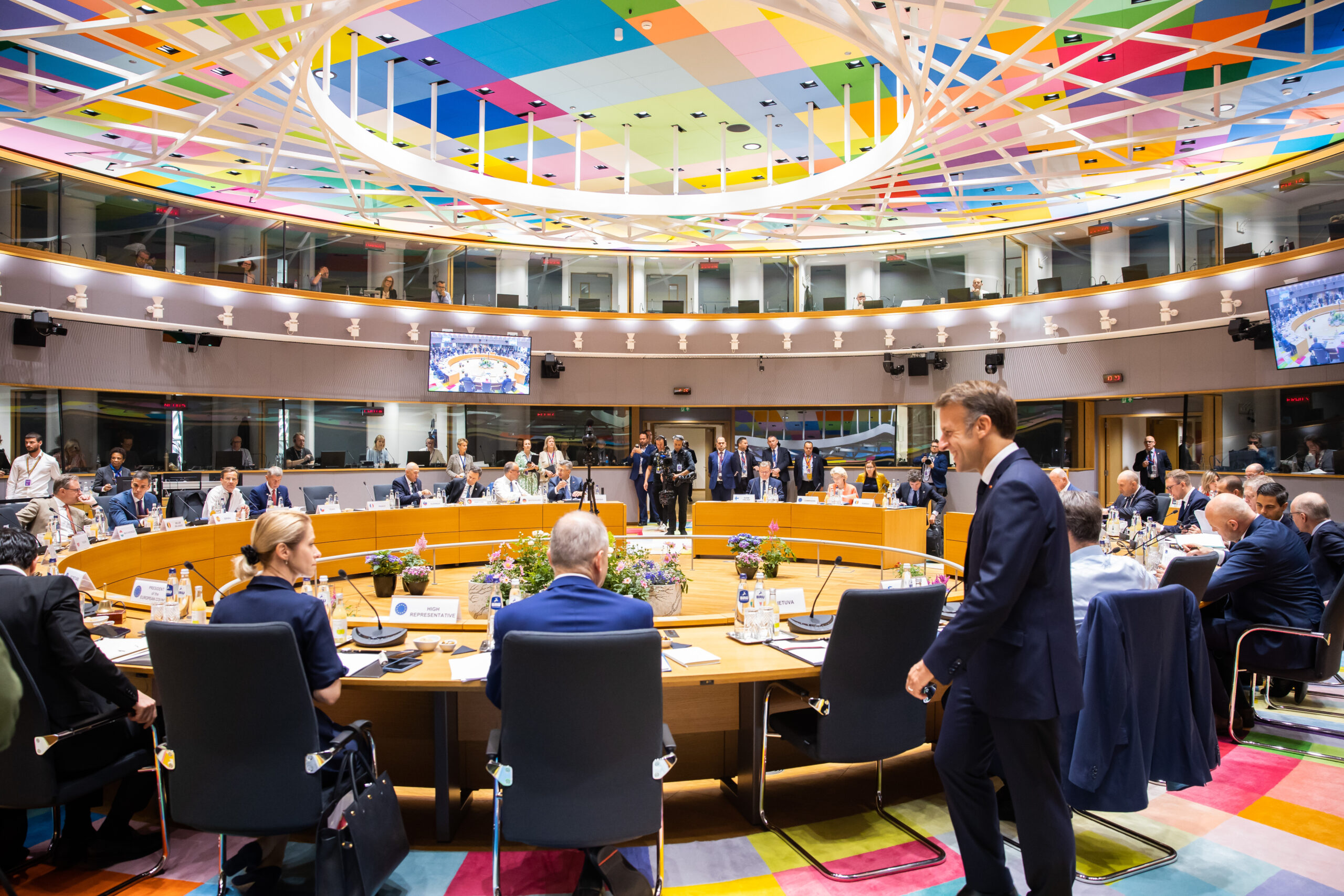
Brussels – The Western Balkans, enlargement, Ebola, and drug trafficking. These are the other issues, alongside macroeconomic imbalances, the European Union’s multiannual budget, and Ukraine, that were addressed and emerged in the final conclusions of the European Council held yesterday and today (18–19 June). “Accession negotiations with Ukraine, Moldova, Albania and Montenegro have made significant progress over the past six months,” stated Nikos Christodoulides, President of Cyprus, which holds the six-month presidency of the Council of the EU until 30 June, during the final press conference alongside President of the European Council, António Costa, and the President of the European Commission, Ursula von der Leyen. The final text states that “in light of the new impetus for enlargement and building on the 2023 Granada Declaration” (a strategic document setting out the political priorities for the EU’s future, focusing on strategic autonomy, competitiveness, and preparedness for enlargement), the discussions and possible reforms have been postponed until the next European Council meeting in October. However, the leaders welcomed the “Intergovernmental Conference on the Republic of Moldova’s accession to the EU and the launch of the thematic group on fundamental principles on 15 June 2026.” On this issue, Costa also reiterated that the aim is to complete the first cluster on the fundamentals for Ukraine and Moldova by the end of the year.
As regards the Western Balkans, the European Union’s commitment to enlargement “is based on the positive momentum generated by the progress made with Montenegro and Albania and by the success of the European Union summit on the Western Balkans in Tivat (Montenegro)” on 5 June, according to what was noted by the President of the European Council. Today’s European Council conclusions emphasise that it will now be necessary to continue “working closely” with the six countries concerned (Serbia, Montenegro, Albania, Bosnia and Herzegovina, North Macedonia, and Kosovo), as well as “supporting them in their reform efforts on the path to EU accession.” It will therefore be necessary to “promote the gradual integration between the European Union and the region during the enlargement process itself, in a meritocratic and reversible manner.”
The Summit’s conclusions also address Ebola and its spread in the Democratic Republic of the Congo and Uganda. The EU-27 have called for “the rapid allocation of emergency funds by the World Health Organisation (WHO) and other European and international partners.” According to the leaders, this will enable “an immediate response, including epidemiological surveillance, contact tracing, clinical preparedness, and increased laboratory capacity.” Furthermore, financial and logistical assistance has been arranged to support “the work of the WHO, the African Centres for Disease Control and Prevention, and other humanitarian and health workers on the front line in coordinating and implementing urgent containment and response measures.” Consequently, the European Council has called on “the Council and the Commission to monitor the situation and its development and, where appropriate, to define and coordinate the relevant operational priorities.”
On the subject of “the growing health, social, and security challenges linked to the use and trafficking of illicit drugs,” the European Council emphasised “the importance of tackling all aspects of the drug phenomenon with a comprehensive approach.” Costa noted that “this fight must be pursued at all levels: local, national, European, and international.”According to the final text, this includes “improving preparedness, safeguarding public health, strengthening security, preventing drug-related harm and promoting European and international partnerships and cooperation initiatives, such as the European Coalition against Drugs, as well as law enforcement cooperation with third countries.” The European Council also considers that “coherent action will be required vis-à-vis third countries that harbour drug traffickers and fail to fulfil their obligations under international law.” Accordingly, the European Council “takes note of the intention of the Commission and the High Representative to present a proposal for a new regime of horizontal sanctions targeting transnational criminal groups,” and calls for “the effective implementation of the EU drugs strategy, in line with the implementation framework agreed by the Council.” To this end, the European Council urges “the Council, the Commission, the Member States, and the relevant EU agencies to strengthen coordination across all relevant policy areas. “This issue has a direct impact on the health, safety, and security of our citizens,” Costa concluded at a press conference.
English version by the Translation Service of Withub

![[Foto: European Council]](https://www.eunews.it/wp-content/uploads/2026/06/ue-china-350x250.jpg)
![Il presidente del Consiglio europeo, Antonio Costa, e il presidente ucraino, Volodymr Zelensky [Bruxelles, 18 giugno 2026. Foto: European Council]](https://www.eunews.it/wp-content/uploads/2026/06/euco_zelensky-260618-350x250.jpg)