- Europe, like you've never read before -
Friday, 26 June 2026
No Result
View All Result
  • it ITA
  • en ENG
Eunews
  • Politics
  • World
  • Business
  • News
  • Defence
  • Health
  • Agrifood
  • Other sections
    • Culture
    • Diritti
    • Energy
    • Green Economy
    • Finance & Insurance
    • Industry & Markets
    • Media
    • Mobility & Logistics
    • Net & Tech
    • Sports
  • Newsletter
  • European 2024
    Eunews
    • Politics
    • World
    • Business
    • News
    • Defence
    • Health
    • Agrifood
    • Other sections
      • Culture
      • Diritti
      • Energy
      • Green Economy
      • Finance & Insurance
      • Industry & Markets
      • Media
      • Mobility & Logistics
      • Net & Tech
      • Sports
    No Result
    View All Result
    Eunews
    No Result
    View All Result

    Home » General News » Organised crime in the EU: Europol has identified 731 networks and 400,000 members

    Organised crime in the EU: Europol has identified 731 networks and 400,000 members

    According to Europol’s latest report, organised crime in the EU is constantly adapting. Drug trafficking remains the main area of activity, accounting for 36 per cent of networks. Fraud comes in second place

    Valeria Schröter by Valeria Schröter
    26 June 2026
    in General News
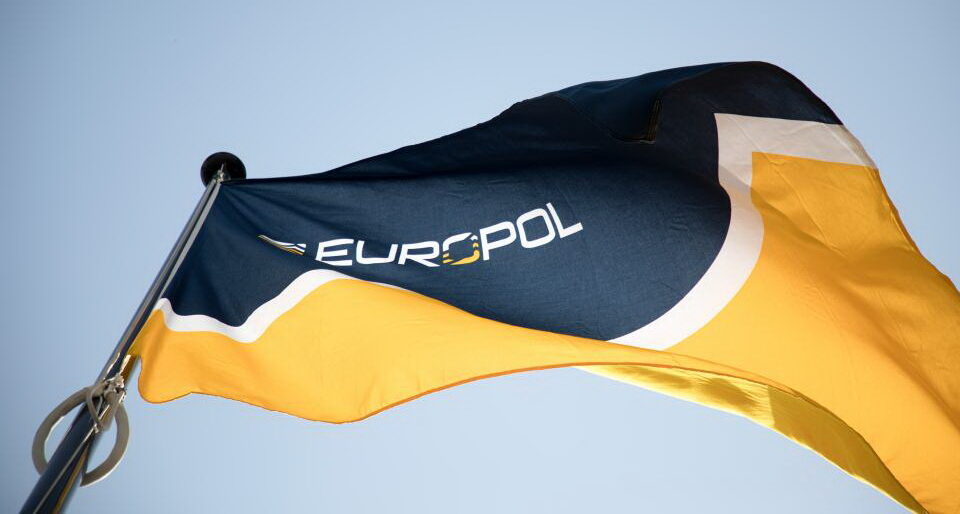
    CENTRALE OPERATIVA EUROPOL, L'AIA

    CENTRALE OPERATIVA EUROPOL, L'AIA

    Brussels – Organised crime in Europe is not on the decline; it is adapting. This is the key message of Europol’s new report, presented today (26 June) in Brussels, “Decoding the EU’s Most Threatening Criminal Networks“. Compiled with contributions from all 27 Member States and Europol’s international partners, the document provides an overview of 731 criminal networks active in the European Union, with over 400,000 members of 118 nationalities, accounting for 60 per cent of the global total. Compared with the 821 networks identified in 2024, 76 per cent no longer appear on the current list. 

    “This does not mean that organised crime has declined,” clarified Jürgen Ebner, Deputy Executive Director of Europol. “It simply reflects what Member States are seeing in their investigations.” In place of the dismantled networks, 533 new ones have emerged. There is, however, a positive and significant figure: around 80 per cent of the groups identified two years ago have been neutralised. This shows that “international cooperation is working and that our collective efforts are yielding results,” added Ebner. 

    The structural problem remains. “If a high-value criminal target is arrested, the demand does not disappear,” said the deputy director, “but the opportunity for profit remains, and someone else will step in.” These networks do not merely respond to the demand for illicit goods, but “proactively scan digital, financial, and geopolitical systems in search of vulnerabilities to exploit.” 

    The 200 most persistent networks—that is, those that have withstood investigative pressure—“share specific characteristics,” explains the report, “namely a hierarchical structure, often family-based, international reach, financial stability, and the systematic use of corruption and intimidation.” Furthermore, “when their leader is arrested, they are immediately replaced,” noted Ebner. 64 per cent of the networks are hierarchically structured, up from 57 per cent in 2024. Almost 80 per cent have been active for at least three years, and a third have been operating for over ten. 

    According to the Europol report, 85 per cent of these networks use legitimate business structures to facilitate or conceal their activities. “Our economies remain deeply vulnerable to infiltration by organised crime,” emphasised the European Commissioner for Home Affairs, Magnus Brunner. “We are not talking about street gangs, but about full-fledged multinational crime syndicates.” 

    Drug trafficking remains the main sector, accounting for 36 per cent of the networks. Fraud comes second, with online scams growing rapidly. One in five networks has direct links to Latin America, which is used as a hub for cocaine trafficking. The report also highlights the issue of child recruitment. Six per cent of the networks actively recruit “children aged between 8 and 17 for risky tasks, ranging from drug dealing to acts of extreme violence.” 

    The European response is “already underway,” said Brunner, “from the anti-drugs strategy to the fight against digital fraud, because while competences remain at the national level, the solutions can only be European.” On Wednesday, the Commission proposed updating Europol’s mandate to make support for Member States “stronger, faster, more efficient, and smarter.” Under the Commission’s proposal, Europol’s budget would be doubled to €3 billion in the 2028–2034 financial framework. Executive Vice-President Henna Virkkunen spoke of a “European law enforcement package” to close “the loopholes that criminals exploit.” 

    For Europol, the priorities for the future are to strengthen coordination in major European logistics hubs, starting with the Ports Alliance, working closely with the private sector, dismantling criminal digital infrastructure, and stepping up financial investigations to trace money and recover illicit proceeds. “As long as the vulnerability remains, as long as the business model survives,” concluded Ebner, “others will step in and replace them. We must target the ecosystem, not just individuals.”

    English version by the Translation Service of Withub
    Tags: alleanza portualecommissionedrug traffickingeuropolorganized crimetruffeue

    Related Posts

    [Foto: Unsplash]
    Diritti

    Stronger and more available drugs across the EU; Brunner: harm reduction and enforcement must go hand in hand

    9 June 2026
    tabacco
    Health

    The dark side of tobacco: around 10 per cent of cigarettes are illegal in Europe

    31 March 2026
    Il porto di Genova
    Business

    The EU bets—again—on the sea: Strategies for the maritime industry and ports presented

    4 March 2026
    [foto: Zxc/Wikimedia Commons]
    World politics

    EU moves away from US approach in the fight against drugs: “Let’s increase cooperation with Latin American countries”

    7 January 2026
    map visualization
    Fabbrica di automobili elettriche Rivian. Crediti: Imagoeconomica via Rivian X

    The 27 Member States remain divided over zero-emission cars

    by Iolanda Cuomo
    26 June 2026

    Brussels - There is still no agreement on the revision of the regulation on zero-emission cars and vans. The 27...

    Horizon Europe

    The new Horizon Europe: how the EU Council aims to revitalise research, innovation and global competitiveness

    by Annachiara Magenta annacmag
    26 June 2026

    Among the most significant changes is the strengthening of the European Innovation Council (EIC), which will be able to provide...

    CENTRALE OPERATIVA EUROPOL, L'AIA

    Organised crime in the EU: Europol has identified 731 networks and 400,000 members

    by Valeria Schröter
    26 June 2026

    According to Europol’s latest report, organised crime in the EU is constantly adapting. Drug trafficking remains the main area of...

    [Foto: Unsplash]

    INTERVIEW / Genocide in Gaza, Chris Sidoti (UN): “Children are being dehumanised”

    by Valeria Schröter
    26 June 2026

    “The essence of childhood has been destroyed”: this is the title of the latest report by the United Nations Independent...

    • Director’s Point of View
    • Opinions
    • About us
    • Contacts
    • Privacy Policy
    • Cookie policy

    Eunews is a registered newspaper
    Press Register of the Court of Turin n° 27


    Copyright © 2025 - WITHUB S.p.a., Via Rubens 19 - 20148 Milan
    VAT number: 10067080969 - ROC registration number n.30628
    Fully paid-up share capital 50.000,00€


    No Result
    View All Result
    • it ITA
    • en ENG
    • Politics
    • Newsletter
    • World politics
    • Business
    • General News
    • Defence & Security
    • Health
    • Agrifood
    • Altre sezioni
      • Culture
      • Diritti
      • Energy
      • Green Economy
      • Gallery
      • Finance & Insurance
      • Industry & Markets
      • Media
      • Mobility & Logistics
      • Net & Tech
      • News
      • Opinions
      • Sports
    • Director’s Point of View
    • Draghi Report
    • Eunews Newsletter

    No Result
    View All Result
    • it ITA
    • en ENG
    • Politics
    • Newsletter
    • World politics
    • Business
    • General News
    • Defence & Security
    • Health
    • Agrifood
    • Altre sezioni
      • Culture
      • Diritti
      • Energy
      • Green Economy
      • Gallery
      • Finance & Insurance
      • Industry & Markets
      • Media
      • Mobility & Logistics
      • Net & Tech
      • News
      • Opinions
      • Sports
    • Director’s Point of View
    • Draghi Report
    • Eunews Newsletter

    Attention