
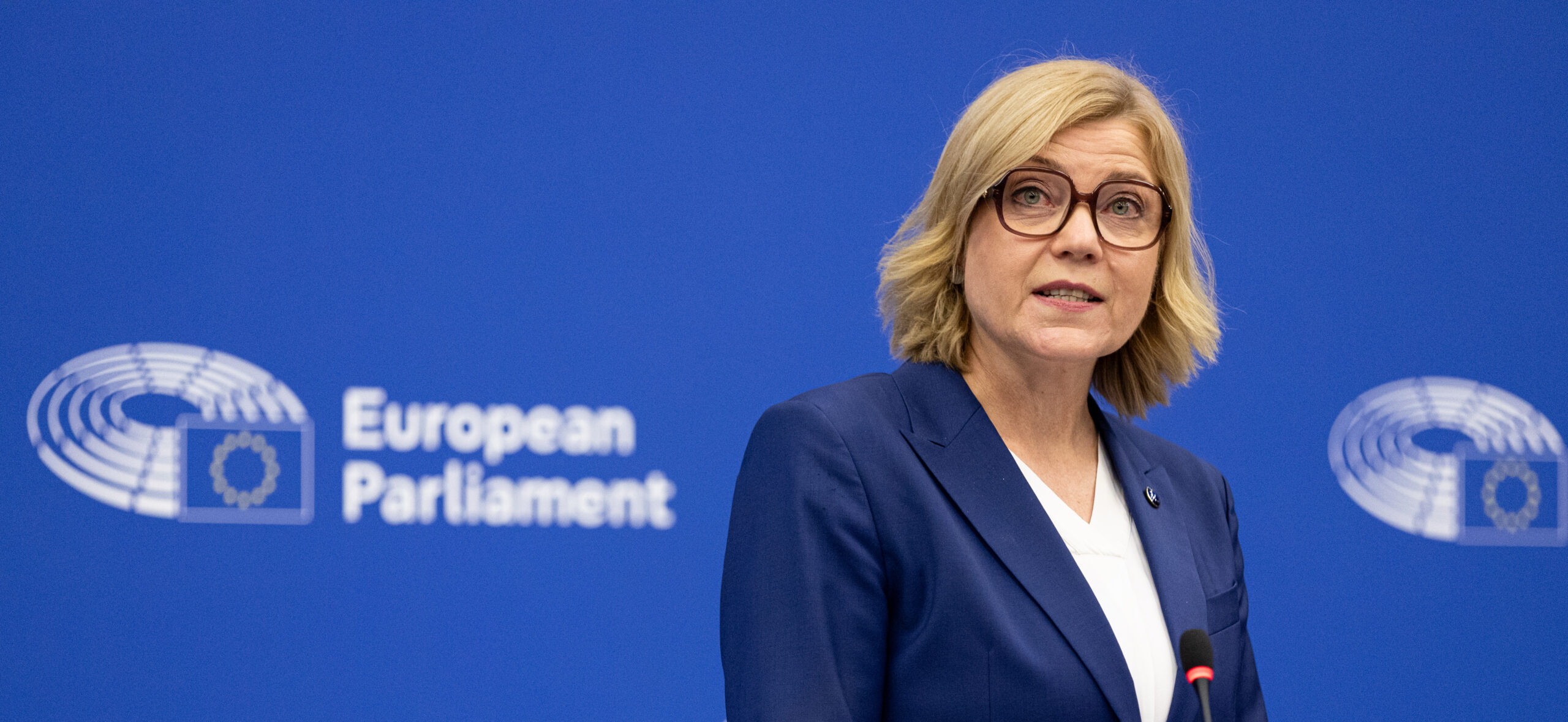
Brussels – “If the vulnerabilities of artificial intelligence are turned into weapons, they can endanger our infrastructure and our society”; that is why “the Commission’s response was immediate”. This was stated by the Executive Vice-President responsible for technological sovereignty, Henna Virkkunen, after the European Commission today (7 July) adopted an Action Plan on the risks and opportunities of advanced artificial intelligence (AI) models for cybersecurity.
AI can be misused to identify vulnerabilities, automate attacks and increase the scale and speed of cyber incidents. This is why cybersecurity is imperative and “we are committed to working with the entire AI and cybersecurity ecosystem: with Member States, AI providers, industry, and our international partners,” Virkunnen reiterated.
The plan sets out several areas of action. Firstly, the Commission aims to strengthen its AI assessment capacity by 2027. This means assessing AI models to ensure they are safe and accessible to European citizens before they are placed on the market. On the issue of access to models, the Commission aims to collaborate with the European Union Agency for Cybersecurity (ENISA) to develop guidelines to support European public and private organisations operating in the sector. There are also plans to create a secure platform for testing AI for cybersecurity, aimed at addressing vulnerabilities in projects across the most critical sectors, including finance, energy, healthcare, transport, and public administration.
As regards protection against cyber-attacks, the priority is to identify and resolve critical vulnerabilities arising from the misuse of AI models more quickly. On this point, Virkunnen emphasised the importance of European legislation, citing “the NIS2, DORA, and the Cyber Resilience Act,” and the importance of reducing dependence on non-European solutions for security.
From now on, it will therefore be necessary to mobilise private capital and equity to fund the development of sovereign AI models with the aim of harnessing European talent and the so-called “AI factories” (and future “gigafactories”) to build a European cybersecurity infrastructure. Finally, to stimulate the development of the European market, the Commission will promote the “EU Grand Challenge on AI for cybersecurity”, a competition that will bring together companies, researchers, and organisations to develop artificial intelligence solutions for cybersecurity.
“Artificial intelligence is transforming the very meaning of cyber security, and we must keep pace,” concluded Virkunnen.
English version by the Translation Service of Withub




![Da sinistra: il presidente del Consiglio europeo, Antonio Costa; il presidente dell'Ucraina, Volodymir Zelensky: la presidente della Commissione europea, Ursula von der Leyen [Bruxelles, 18 giugno 2024. Foto: European Council]](https://www.eunews.it/wp-content/uploads/2026/06/euco_ua260618-120x86.jpg)
![[foto: Saverio De Giglio/imagoeconomica]](https://www.eunews.it/wp-content/uploads/2026/10/cpt-120x86.png)