Another round of US-Iran negotiations has stalled. Once again, commentators have concluded that Tehran is simply buying time.
They are probably right. But they often misunderstand what that means.
Since the 2026 war, many analysts have argued that Iran has abandoned its long-standing doctrine of strategic patience in favour of greater military risk-taking. Iran’s direct exchanges with Israel certainly suggest a greater willingness to accept escalation.
Analysts may be right about the tactics – especially towards new, previously off-limit targets that are now within reach. But many remain at odds when it comes to Iran’s military doctrine and strategy.
Tehran appears more willing to strike directly than it did a decade ago, but its underlying strategic logic has changed remarkably little. Iran is still pursuing the same fundamental objective: not to defeat stronger adversaries outright, but to make confronting Iran increasingly costly.
That reflects a broader problem in how the West interprets Iranian behaviour. Too often, policymakers and commentators judge Tehran by standards it has never set for itself. They ask whether sanctions have forced capitulation, whether military strikes have restored deterrence or whether diplomacy has produced a breakthrough.
Implicitly, they assume Iran is trying to defeat stronger adversaries.
It isn’t.
Iranian leaders have long understood that they cannot match the United States or Israel conventionally. They cannot compete plane for plane, ship for ship or dollar for dollar. Decades of complex sanctions, isolation and technological constraints have made that close to impossible.
So instead they built a different strategy.
Iran doesn’t rely only on missiles, proxy groups and maritime pressure to make conflict more expensive. By replacing centralised command with a more dispersed structure, its military and defence strategy, known as the “mosaic deterrence” allowed Tehran to sustain strikes across multiple fronts, despite significant losses.
But Iran also relies on time.
The objective is not to win quickly. It is to convince or coerce stronger adversaries that sustaining pressure will become politically difficult, economically costly and strategically uncertain.
That helps explain why negotiations with Tehran often move so slowly. Western governments frequently interpret prolonged talks as obstruction. Tehran sees something different. Time tests political resolve. Elections change governments. Coalitions fracture. New crises emerge. Domestic priorities shift. A negotiation that drags on for months is not necessarily a diplomatic failure if it weakens the unity of those applying pressure.
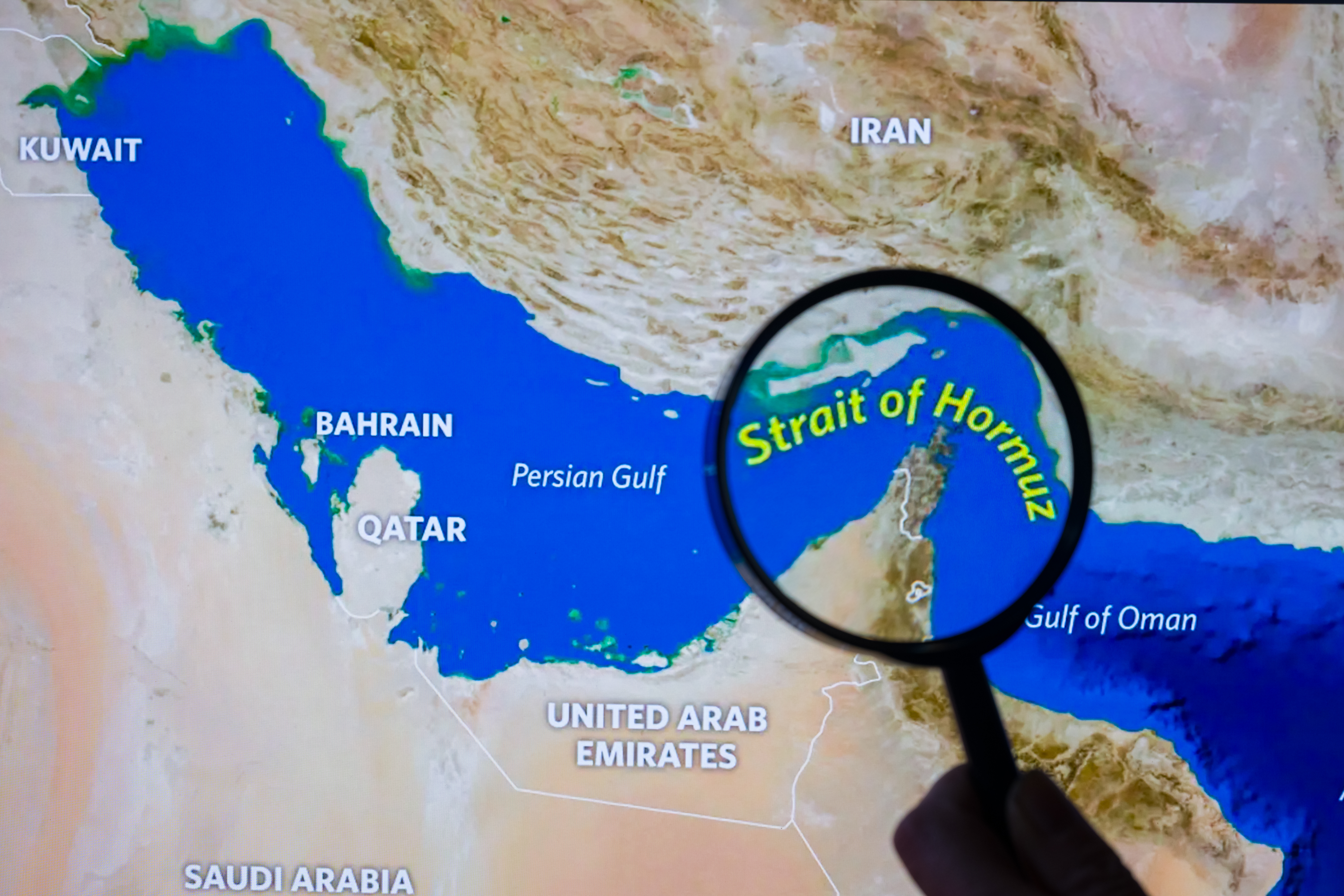
The Strait of Hormuz reflects the same strategic thinking. The Strait of Hormuz is a key transit point for global oil and natural gas markets. Iran does not need to close one of the world’s most important shipping routes indefinitely to achieve its objective. The credible threat of disruption can raise insurance premiums, unsettle energy markets and force governments to account for wider economic consequences.
According to a US Congress report, roughly 27% of the world’s maritime trade in crude oil and petroleum products, alongside an additional 20% of global liquified natural gas trade passes through the Strait. The leverage comes less from shutting the strait than from reminding everyone that it could become more dangerous tomorrow than it is today.
The same logic explains Iran’s missile programme.
Iran did not build the Middle East’s largest missile arsenal because missiles are superior to modern air power. It built them because they solved a strategic problem. As its air force aged and sanctions made modernisation increasingly difficult, Tehran needed another way to threaten distant targets.
Missiles offered reach without air superiority.
More importantly, Iran’s missiles force adversaries to invest billions in missile-defence systems, protect a growing number of military and civilian targets, and plan around uncertainty. Their value lies not only in what they can destroy, but in the costs they impose before they are ever launched.
Iran’s network of proxy groups serves much the same purpose. The network allows Tehran to sustain pressure across multiple fronts while reducing the likelihood of a direct conventional confrontation.
Iran’s objective is consistent. Confronting Iran means extending new expenses for any government, for diplomacy and for defence.
Of course, years of sanctions have weakened Iran’s economy. Proxy networks have suffered serious setbacks. Recent military exchanges have exposed vulnerabilities that Tehran can no longer ignore. Strategic logic can endure even as tactics evolve, but endurance is not the same as success.
That is the distinction many Western analyses continue to miss. They mistake tactical evolution for strategic change. Until that changes, they will continue to misunderstand not only Iran’s behaviour, and the logic that has shaped it for more than four decades, but also risk underestimating the weight behind the Iranians doctrine’s capacity to impose heavy political, economic and military costs.
* Antonia Williams is a writer and journalist specialising in defence, security and asymmetric warfare. She most recently worked in crisis and litigation advisory, with experience analysing legal AI, economic sanctions, cross-border disputes, and emerging policy developments across the UK, the EU and the Middle East.
Her writing focuses on defence policy and strategy, modern warfare, military technology and deterrence, with particular interests in European security, the Middle East and great powers competition. She was previously employed as a Beirut-based reporter and editor, covering politics, economic and governance crises.
Antonia holds a master’s degrees in War Studies from King’s College London, and BA in Journalism from Richmond University.



![Da sinistra: il presidente del Consiglio europeo, Antonio Costa; il presidente dell'Ucraina, Volodymir Zelensky: la presidente della Commissione europea, Ursula von der Leyen [Bruxelles, 18 giugno 2024. Foto: European Council]](https://www.eunews.it/wp-content/uploads/2026/06/euco_ua260618-120x86.jpg)
![[foto: Saverio De Giglio/imagoeconomica]](https://www.eunews.it/wp-content/uploads/2026/10/cpt-120x86.png)