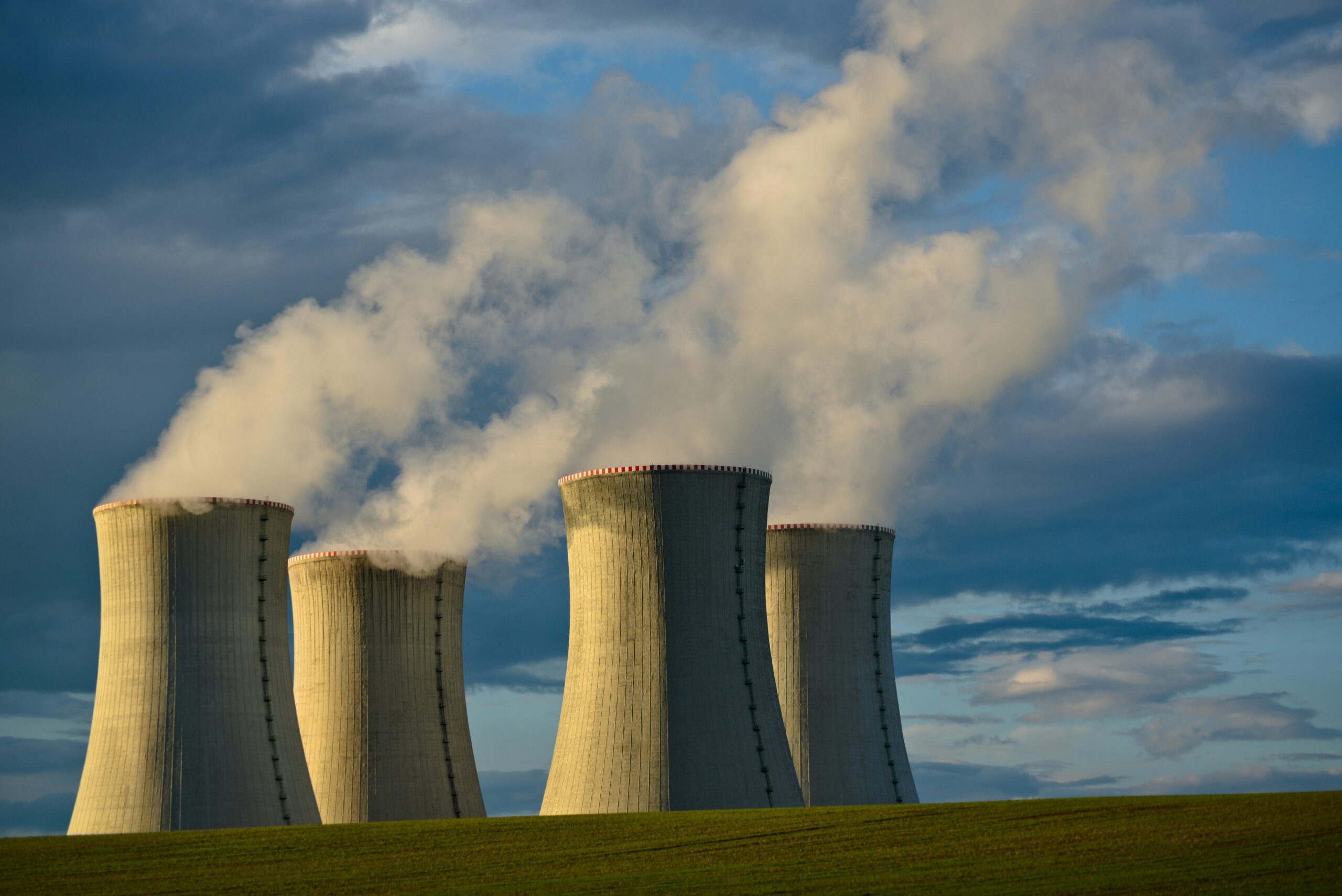
Brussels – As the European Union moves – cautiously – towards the 2030 decarbonisation targets, Member States are beginning to consider what the energy mix for the coming decade should be. For most European governments, the answer also lies in nuclear power. Energy ministers from fifteen Member States have signed a letter, seen by Eunews, addressed to the European Commission’s Vice-President for a Clean, Fair and Competitive Transition, Teresa Ribera, and to the European Commissioner for Energy, Dan Jørgensen, calling for the EU’s energy framework for the period after 2030 to make “full use of nuclear energy,” alongside renewable sources and other low-emission technologies.
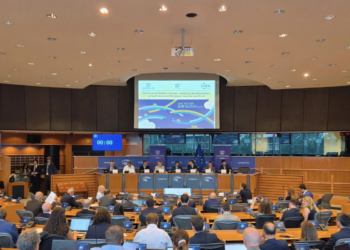
The initiative was discussed during the Nuclear Alliance meeting held on the sidelines of the Energy Council on 26 June. The document was signed by the ministers of Italy, Belgium, Bulgaria, Croatia, the Czech Republic, Estonia, Finland, France, Hungary, the Netherlands, Poland, Romania, Slovenia, Slovakia, and Sweden. Greece and Latvia were present but as observers. The signatories explain that the aim is to “align the European energy framework with the Union’s strategic priorities,” with particular focus on “affordability, competitiveness, decarbonisation, energy security, and strategic autonomy.” In the letter, the ministers also refer to the conclusions of the March 2026 European Council, according to which “the energy transition remains the most effective strategy for strengthening Europe’s strategic autonomy and reducing the vulnerability arising from fossil fuel imports.”
For the fifteen countries, the EU’s climate targets must be achieved through a “technologically neutral” approach fully consistent with the European Climate Law. From this perspective, they argue, nuclear power must play a central role: “Nuclear energy is part of the solution.” According to the signatories, while it was justified over the last decade to “focus efforts on the development of renewable energy,” it is now necessary to set out a path that “enables the gradual replacement of fossil fuels by making use of all available low-emission technologies.” The instruments made available by the EU, they add, “must enable each Member State to achieve decarbonisation in the most cost-effective manner.”
“In an increasingly complex geopolitical context, the European Union must move beyond any ideological approach and establish an energy and climate framework capable of strengthening competitiveness and resilience, whilst supporting Member States in achieving climate neutrality by 2050,” the ministers conclude.
English version by the Translation Service of Withub