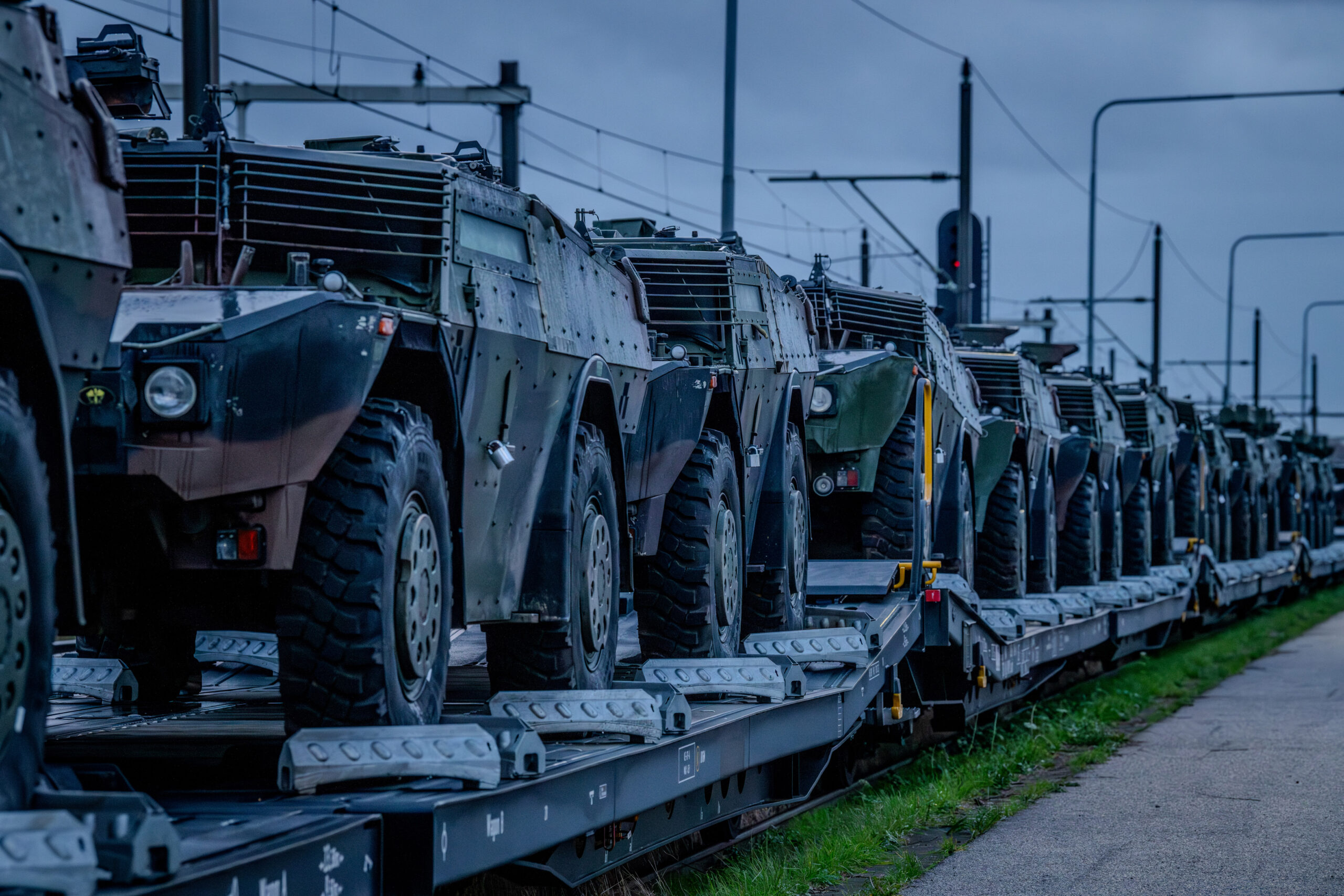
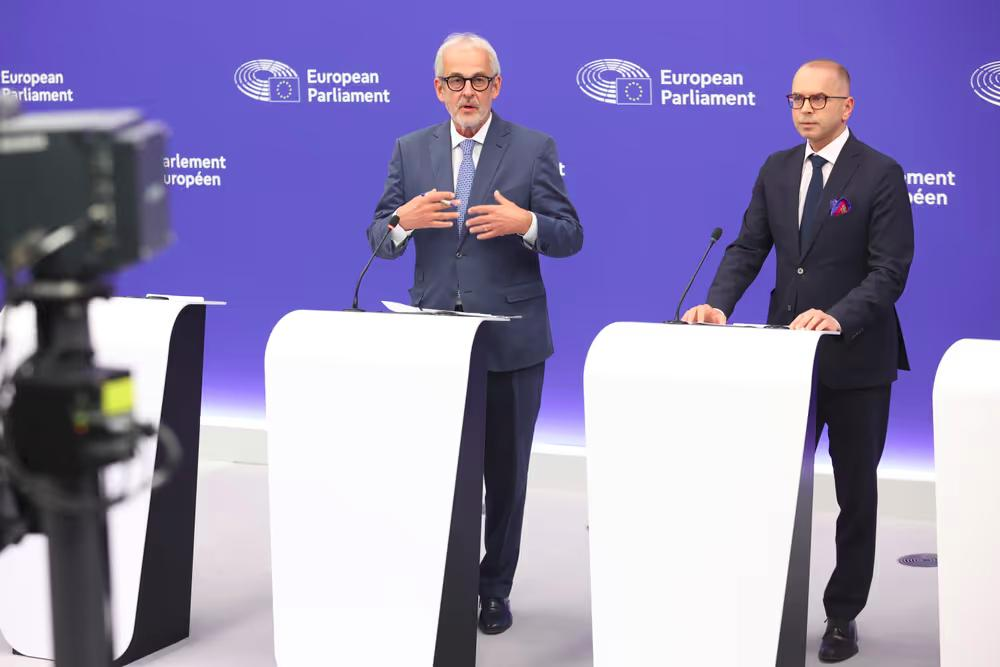
from our correspondent in Strasbourg – Target: 2026. The European Parliament aims to conclude inter-institutional negotiations with the Council of the EU on military mobility by the end of the year. With no objections in plenary, the first trilogue meeting is scheduled for 16 July, marking the start of talks to finalise a dossier considered crucial in the current security context. Now that the work is getting into full swing, “I hope we will find the key to success with the Irish Presidency,” which remains in office until 31 December, says Roberts Zile (ECR), co-rapporteur for the measure on behalf of Parliament.
If the target for reaching a political agreement is set for the end of the year, “to have the system ready by 2028,” with the regulation in force by that date, is the European Parliament’s intention, the MEP said during the press conference called to announce the go-ahead for the start of inter-institutional negotiations.
However, EU military mobility depends on the far from straightforward negotiations over the next Multiannual Financial Framework (MFF 2028–2034). The resources have yet to be secured and have only been identified in theory, explains Michal Szczerba (EPP), the other co-rapporteur on the dossier: “Military mobility cannot be achieved without serious investment.” In this regard, “1.7 billion has so far been secured through the CEF fund” for the major networks. These will now be replaced by the multiannual budget, which provides for “resources ten times greater, at around 18 billion.” But these are virtual amounts, mentioned merely as a guideline within a dossier that is far from being finalised.
As for the future of military mobility, the EPP MEP continues, “we are also looking at the Cohesion Fund, where resources could be used” to finance the common security logistics agenda thanks to the changes introduced by the European Commission regarding the use of structural funds. The possibility of using European resources intended for the development of regions and their economies has been the subject of reviews, and Szczerba goes on to clarify: “It is not just a question of defence spending; it is an investment in our security.”
Now, however, it will be necessary to start untangling the knots in the inter-institutional negotiations due to begin next week. One of the main issues to be resolved concerns compensation for businesses and civilian operators who risk facing competition from the military in the logistics sector. “There is a draft proposal for compensation, but it has not been fleshed out,” Zile admits. “It has not been established who will pay,” and this is one of the issues that will need to be resolved from 16 July onwards.
English version by the Translation Service of Withub

![Da sinistra: il presidente del Consiglio europeo, Antonio Costa; il presidente dell'Ucraina, Volodymir Zelensky: la presidente della Commissione europea, Ursula von der Leyen [Bruxelles, 18 giugno 2024. Foto: European Council]](https://www.eunews.it/wp-content/uploads/2026/06/euco_ua260618-120x86.jpg)
![[foto: Saverio De Giglio/imagoeconomica]](https://www.eunews.it/wp-content/uploads/2026/10/cpt-120x86.png)