- Europe, like you've never read before -
Monday, 14 September 2026
No Result
View All Result
  • it ITA
  • en ENG
Eunews
  • Politics
  • World
  • Business
  • News
  • Defence
  • Health
  • Agrifood
  • Other sections
    • Culture
    • Rights
    • Energy
    • Green Economy
    • Finance & Insurance
    • Industry & Markets
    • Media
    • Mobility & Logistics
    • Net & Tech
    • Sports
  • European 2024
    Eunews
    • Politics
    • World
    • Business
    • News
    • Defence
    • Health
    • Agrifood
    • Other sections
      • Culture
      • Rights
      • Energy
      • Green Economy
      • Finance & Insurance
      • Industry & Markets
      • Media
      • Mobility & Logistics
      • Net & Tech
      • Sports
    No Result
    View All Result
    Eunews
    No Result
    View All Result

    Home » Culture » “Auschwitz” and liberation from Nazi-Fascism: this is how Guccini reminded us of who we are and the reason for a united Europe

    “Auschwitz” and liberation from Nazi-Fascism: this is how Guccini reminded us of who we are and the reason for a united Europe

    From his plea not to forget the extermination camps to his criticism of the Soviet occupation of Czechoslovakia, the singer-songwriter from Emilia demonstrates that “Europe is not an accident of history”

    Emanuele Bonini</a> <a class="social twitter" href="https://twitter.com/emanuelebonini" target="_blank">emanuelebonini</a> by Emanuele Bonini emanuelebonini
    6 August 2026
    in Culture, Opinions
    L

    L

    Powered by powered by evolution group

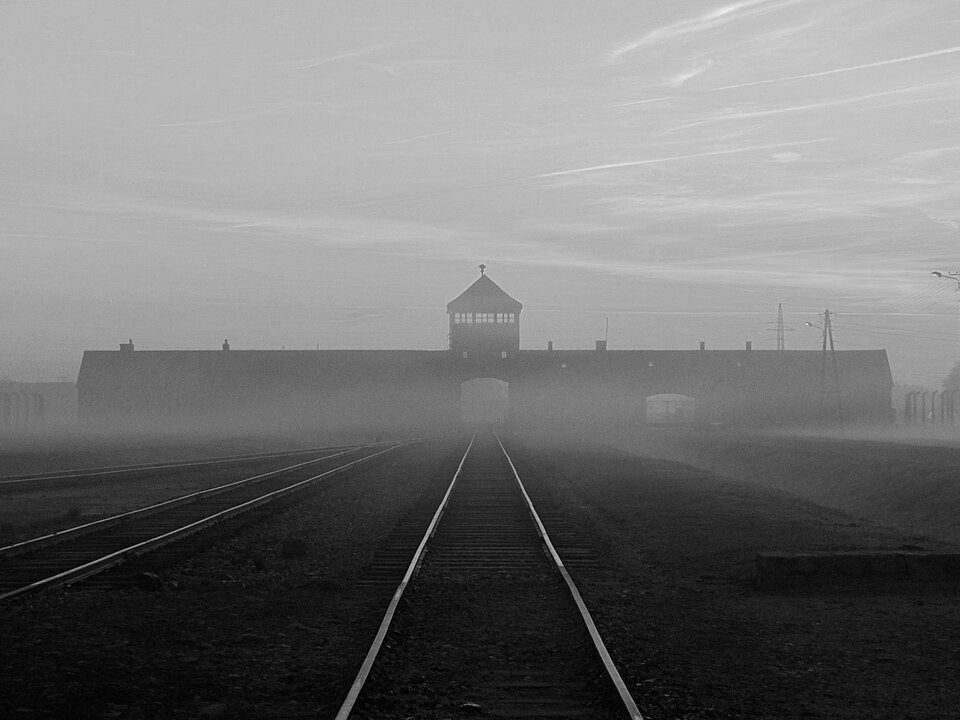
    Brussels – Guccini had never set foot in the European Union. Neither in person nor in his songs. There are no accounts of him visiting the EU institutions, nor are there any lyrics that touch on the subject of integration. By choice, presumably, the singer-songwriter has always avoided the subject. At least not directly. Throughout his long artistic career, filled with concerts and books, Guccini has tackled other themes, one of which has been history—the history of humankind, the very same humankind that, from the ashes of history, has managed to build a new and contrasting one, founded on reconciliation and cooperation. The European Union, in its project to integrate and overcome divisions between peoples, is also a legacy of Auschwitz—that dark chapter in the human saga to which Guccini dedicated one of his most intense and, even today, most representative songs.

    Auschwitz, the place where even “God is dead”, as he himself sang, represented a point of no return, but at the same time a starting point for a new beginning. The Nazi extermination camp, a symbol of the Second World War and of human folly, stands as proof that yes, “the European Union is no accident of history”, as David Sassoli, President of the European Parliament, was keen to emphasise and, in keeping with the EU’s mission of reconciliation, wanted Liliana Segre in the chamber, as a witness to Auschwitz—one of the very few. For few ever returned from that camp. 

    Guccini never directly celebrated Europe as the European Union. He approached Europe in this sense from a distance, implicitly and indirectly. He has depicted it through the events of an Italy divided and torn apart by the war within the war—that civil war born of a Rome-Berlin axis not rejected by everyone. He has sung its praises by celebrating, with “Quel giorno di aprile” (That Day in April, the 21st of April 1945, ed.), the liberation of “his” Bologna from the occupation by Nazi-Fascist troops, marking a rebirth that ultimately became a rebirth for everyone—at different times, but driven by the same desire for Europe. 

    Guccini sang of a different Europe—one that is more relevant and contemporary—in his song “Primavera di Praga” (The Prague Spring), a scathing critique of the Soviet occupation of Czechoslovakia and a veritable hymn to freedom and to a Europe free from oppression and oppressors. Ultimately, a clear manifesto emerges from Guccini’s thinking, one built on memory and criticism, but above all on democracy and values, regarded as absolute. An anti-Soviet, he did not hesitate to take an anti-American stance in the face of the Silvia Baraldini affair. A song that today’s weak European leaders, who bow to the overbearing Trump, should listen to.

    English version by the Translation Service of Withub
    Tags: Francesco Guccinigucciniintegrationue

    Eunews Newsletter

    Related Posts

    Guccini - cantautore
    Culture

    Farewell to Francesco Guccini, the poet who chronicled his times and the Italy that once was – and which remains, just as it was

    6 August 2026
    map visualization
    Photo de Mark Königsur Unsplash

    Sweden: Social Democrats gain ground as the far right retreats; governing will be a puzzle

    by Emanuele Bonini emanuelebonini
    14 September 2026

    The parliamentary election has caused a minor upheaval: voters have backed the centre-left parties, which hold a narrow majority

    Laboratorio. Crediti: Julia Koblitz via Unsplash

    EU: more than 20,000 applications for the “Marie Skodovskaya Curie” research programme

    by Iolanda Cuomo
    11 September 2026

    Brussels – It appears that researchers from all over the world are keen to continue their careers in Europe. This...

    Il seminario "Humanitarian Echoes" sugli aiuti umanitari si è svolto con la partecipazione di Jacques Delors, ex presidente della Commissione europea, ed Emma Bonino, membro della Commissione responsabile per la pesca, la politica dei consumatori e l'Ufficio umanitario della Comunità europea (ECHO). Tra gli altri partecipanti, figure di spicco attive a livello internazionale nel settore degli aiuti umanitari, in particolare Catherine Bertini, direttrice esecutiva del WFP (Programma alimentare mondiale), e Sergio Vieira de Mello, assistente dell'Alto Commissario delle Nazioni Unite per i rifugiati (UNHCR) responsabile degli affari umanitari e coordinatore dei soccorsi d'emergenza.

    Amid expressions of grief and fond memories, the European Parliament bids farewell to Emma Bonino

    by Iolanda Cuomo
    11 September 2026

    European Parliament President Metsola: "The Europe for which she fought will miss her"

    Sessione plenaria del Parlamento europeo a Strasburgo di luglio 2026. Crediti: Parlamento europeo

    State of the Union address, Ceuta, the wildfires and external interference: the topics on the agenda at the European Parliament’s plenary session

    by Iolanda Cuomo
    11 September 2026

    Von der Leyen will outline the priorities for the coming year. A spokesperson for the European People’s Party said: “Given...

    • Director’s Point of View
    • Opinions
    • About us
    • Contacts
    • Privacy Policy
    • Cookie policy

    Eunews is a registered newspaper
    Press Register of the Court of Turin n° 27

    Copyright © 2025 - WITHUB S.p.a., Via Savona 127/B, 20144 Milano
    VAT number: 10067080969 - ROC registration number n.30628
    Fully paid-up share capital 50.000,00€


    No Result
    View All Result
    • it ITA
    • en ENG
    • Politics
    • Newsletter
    • World politics
    • Business
    • General News
    • Defence & Security
    • Health
    • Agrifood
    • Altre sezioni
      • Culture
      • Rights
      • Energy
      • Green Economy
      • Gallery
      • Finance & Insurance
      • Industry & Markets
      • Media
      • Mobility & Logistics
      • Net & Tech
      • News
      • Opinions
      • Sports
    • Director’s Point of View
    • Draghi Report
    • Eunews Newsletter

    No Result
    View All Result
    • it ITA
    • en ENG
    • Politics
    • Newsletter
    • World politics
    • Business
    • General News
    • Defence & Security
    • Health
    • Agrifood
    • Altre sezioni
      • Culture
      • Rights
      • Energy
      • Green Economy
      • Gallery
      • Finance & Insurance
      • Industry & Markets
      • Media
      • Mobility & Logistics
      • Net & Tech
      • News
      • Opinions
      • Sports
    • Director’s Point of View
    • Draghi Report
    • Eunews Newsletter

    Attention