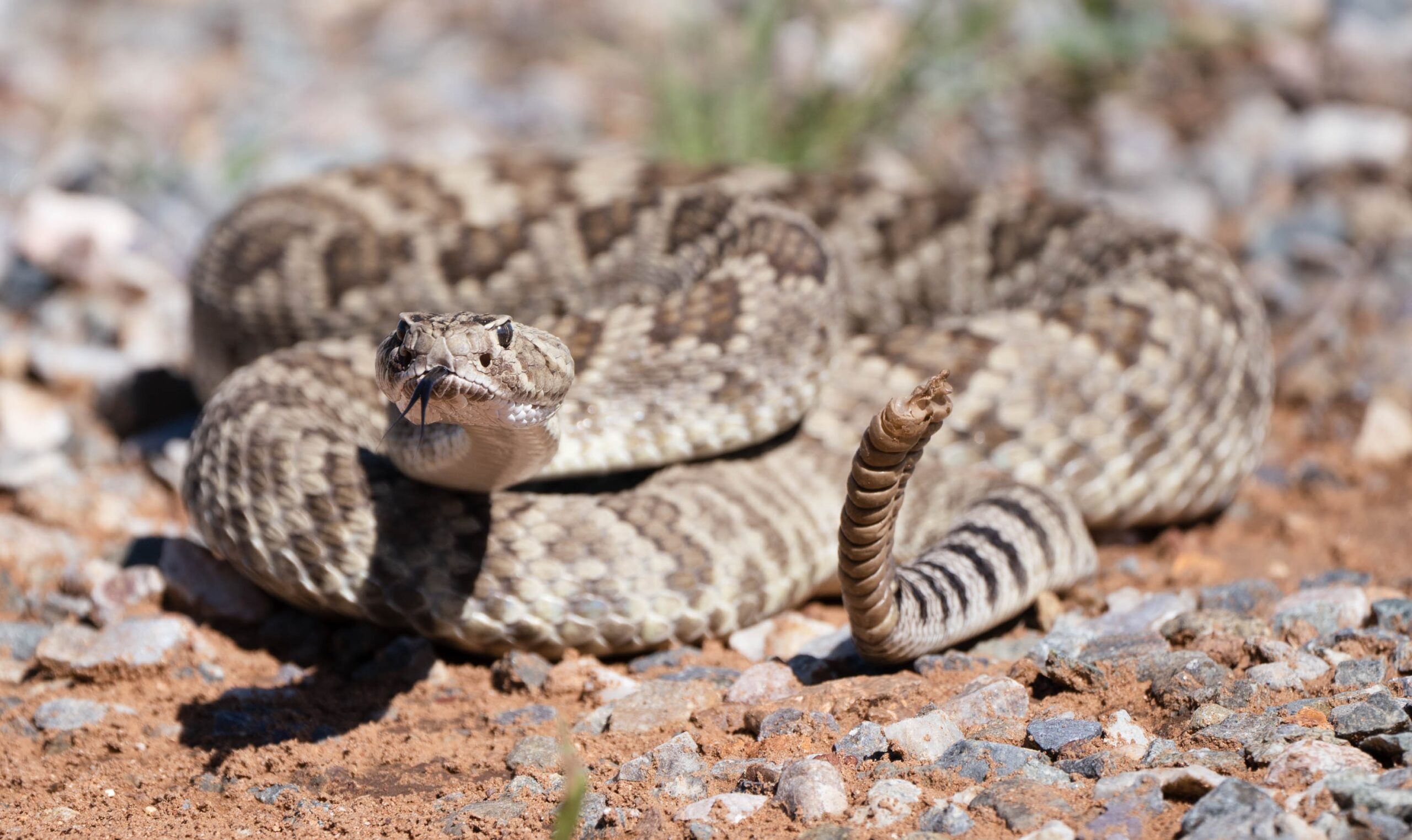
Brussels – “Climate change can also affect animal behaviour and ecosystems,” the European Commission said. The response came after La France Insoumise MEP Manon Aubry was hospitalised following a viper bite during the summer. “We can certainly say that we are working on this,” explained Eva Hrncirova, spokesperson for the EU executive during the daily press briefing, while pointing out, however, that she would need to check with her experts the specific data on viper bites.
“Generally speaking, we recognise that climate change poses significant threats in various areas relating to nature. One thing is linked to another,” Arianna Podestà, spokesperson for the Commission, added, stressing that global warming “also has an impact on the behaviour of nature and animals.” However, to understand whether this might also lead to an increase in threats to humans, “we will need to revisit” the issue once the data has been verified.
The issue stems from the misadventure recounted by Aubry herself. The MEP explained on social media that she had been bitten by a viper and had suffered “some complications related to the envenomation,” that is, the introduction of venom into the body via the bite or sting of a venomous animal, resulting in her admission to intensive care. She now has to keep her leg “immobilised” but will be taking part in the Journées du mouvement from 20 August, “on one leg”, she quipped, promising to silence the “viper’s tongues.”
This is not an isolated case, and it raises the question: are vipers becoming more common, or are they changing their behaviour as a result of climate change? At present, there is insufficient data to establish a correlation between global warming and an increase in the number of bites to humans. However, the Commission intends to analyse the trends in the figures with its own experts.
In Italy, viper bites remain a rare but not negligible occurrence. According to Meyer University Hospital in Florence, there are up to 5 cases per 100,000 inhabitants, with an estimated mortality rate of 0.1-0.2 per cent. In France, where Aubry was bitten, the Société de Toxicologie Clinique estimates that there are around 300 viper bites per year.
Climate change may, however, alter the living conditions of reptiles, from the distribution of their habitats to their periods of activity. Recent studies have highlighted possible changes in the distribution of snake species in Europe linked to rising temperatures. However, the link between changing environmental conditions and increased encounters between vipers and people has not yet been proven.
English version by the Translation Service of Withub
![[Foto: Unsplash]](https://www.eunews.it/wp-content/uploads/2026/06/immo-wegmann-V2AMRkAUCnA-unsplash-350x250.jpg)
![[Foto: Unsplash]](https://www.eunews.it/wp-content/uploads/2026/06/nrd-D6Tu_L3chLE-unsplash-350x250.jpg)


![Da sinistra: il presidente del Consiglio europeo, Antonio Costa; il presidente dell'Ucraina, Volodymir Zelensky: la presidente della Commissione europea, Ursula von der Leyen [Bruxelles, 18 giugno 2024. Foto: European Council]](https://www.eunews.it/wp-content/uploads/2026/06/euco_ua260618-120x86.jpg)
![[foto: Saverio De Giglio/imagoeconomica]](https://www.eunews.it/wp-content/uploads/2026/10/cpt-120x86.png)