Brussels – There is a causal link between human-induced climate change and the heatwave currently affecting Europe. This is the conclusion of a new analysis carried out by scientists at World Weather Attribution, which found that the El Niño-Southern Oscillation (ENSO) played no role in causing the heatwave. According to the report, Europe is warming faster than the global average. “The science on how climate change is exacerbating heatwaves is now well established,” said Theodore Keeping, a researcher on extreme weather events and wildfires at Imperial College London. “Continued fossil fuel emissions are directly responsible for the hardships people are experiencing.”
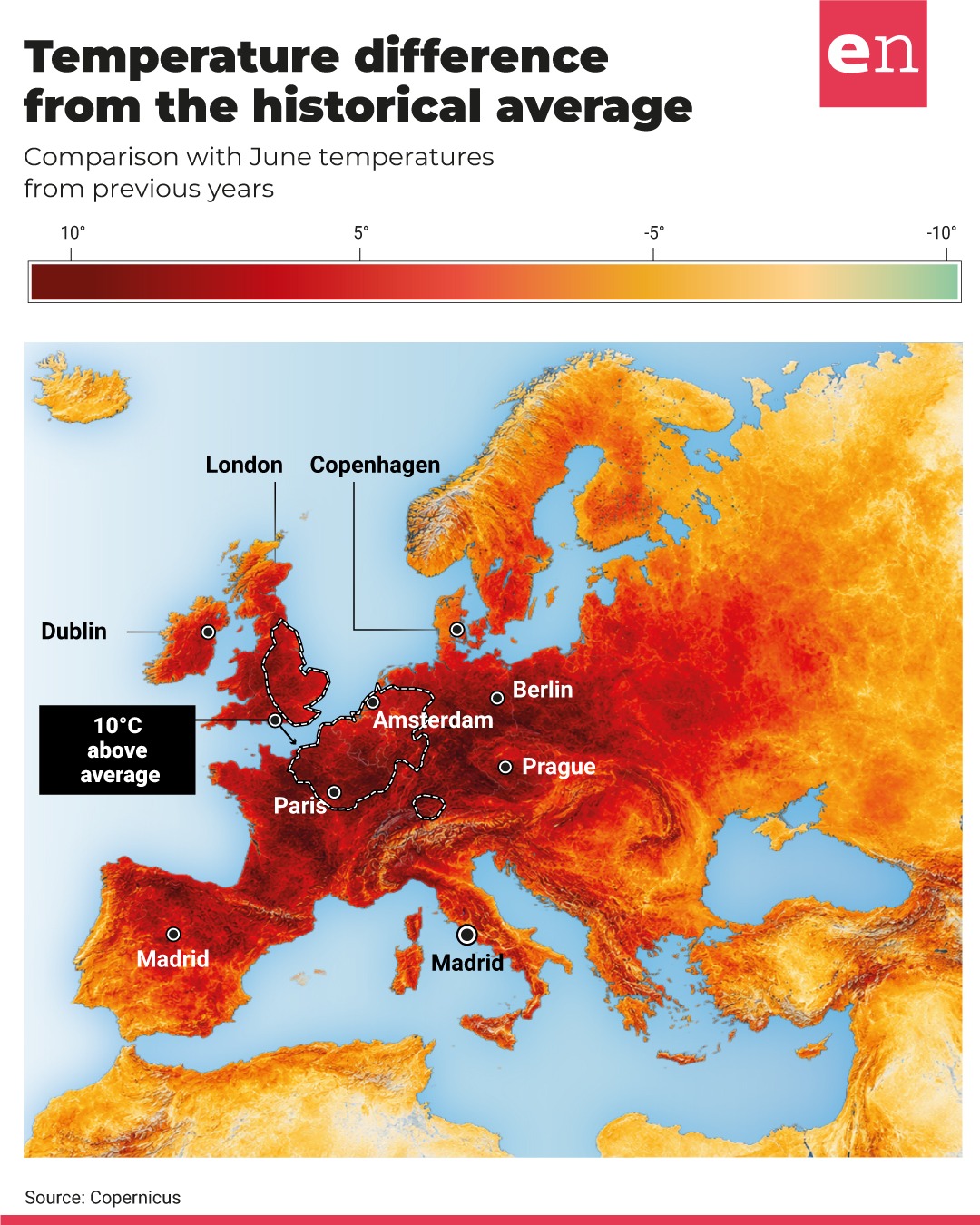
Just a few weeks after a severe heatwave that broke all historical records for May, Europe is facing a second one, which is now breaking June’s and annual records. This, the analysis explains, “is particularly significant given that June is not historically the hottest month in Western Europe.” In France, Germany, Italy, Spain ,and southern England, temperatures are reaching levels 5–12°C above seasonal averages, fuelled by a persistent high-pressure system.
Researchers from Sweden, Denmark, the United States, the Netherlands, Ireland and the United Kingdom have collaborated to assess the extent to which human-induced climate change has altered the likelihood and intensity of extreme heat in Western Europe. In the area studied, the 2026 heatwave is the most intense ever recorded. To understand just how extraordinary this is, the research explains, “in 1976, when some of the previous European records were set, the 2026 temperatures would have been virtually impossible to occur in June, while also highly unlikely at any time of the year.” And again in 2003, when Europe was hit by the first major heatwave of the century, “daytime heat like this would still have been very rare, about 10 times less likely than today, while nighttime temperatures such as this June would have been more than a hundred times less likely in 2003.” Simon Stiell, Executive Secretary of the UN Climate Change Secretariat, also attributed the extreme heat to “climate change,” which is “out of control” due to “global dependence on the burning of coal, oil, and gas.”
Perhaps the most alarming figure concerns the rate at which June is warming. Maximum daytime temperatures are rising at about three times the rate of global warming, while night-time temperatures are rising at twice that rate. The result is that a similar heatwave in June 1976 would have been around 3.5°C cooler by day and 2.4°C cooler by night. In 2003, the difference would have been 2°C and 1.3°C, respectively. Many European capitals are currently experiencing not only the hottest three-day spell in their recent history in June, but the hottest on record since 1950. Furthermore, “the speed of change” is striking because “every few years we see heat records in Europe being shattered,” Keeping pointed out.
The report also highlights the so-called ‘tropical nights’ phenomenon, i.e., nights when the temperature does not fall below 20°C. This is a significant health concern, as the nighttime cooling normally allows the body to recover from daytime heat stress, and its absence significantly increases health risks. In France, some areas have recorded temperatures above 20°C for over a week running, with night-time peaks close to 30°C.
What makes the situation even more worrying is that the weather conditions that triggered this heatwave are not unusual but are part of a pattern already seen in the past. The difference is that today, against a warmer climate baseline, the same type of circulation produces much more extreme temperatures.
Added to this is the humidity factor. Scientists have also measured the WBGT, an index that combines heat, humidity and solar radiation to assess the actual thermal stress on the human body. Since 18 June, 45 per cent of European cities have exceeded the risk thresholds for indoor environments. Staying at home is therefore not enough to stay safe.
As always, the danger is greatest in cities, where the “urban heat island” effect – caused by tarmac, concrete, and a lack of green spaces – is compounded by old, uninsulated buildings, and socio-economic hardship. Homes, schools, transport systems, and energy networks were built for a climate that no longer exists.
Heatwaves “pose a serious threat to human health, have profound repercussions on ecosystems,” and cause “more deaths in Europe than all other natural hazards combined.” According to the scientists, during the summer of 2022, “more than 60,000 people across Europe died as a result of extreme heat.” Even in the following summer, which was significantly cooler, over 47,000 heat-related deaths were recorded. According to the report, during the summer of 2025, 23,500 people in 854 major European cities died as a result of extreme heat, and “more than two-thirds of these deaths (around 16,000) were directly attributable to the impact of climate change on local temperatures.”
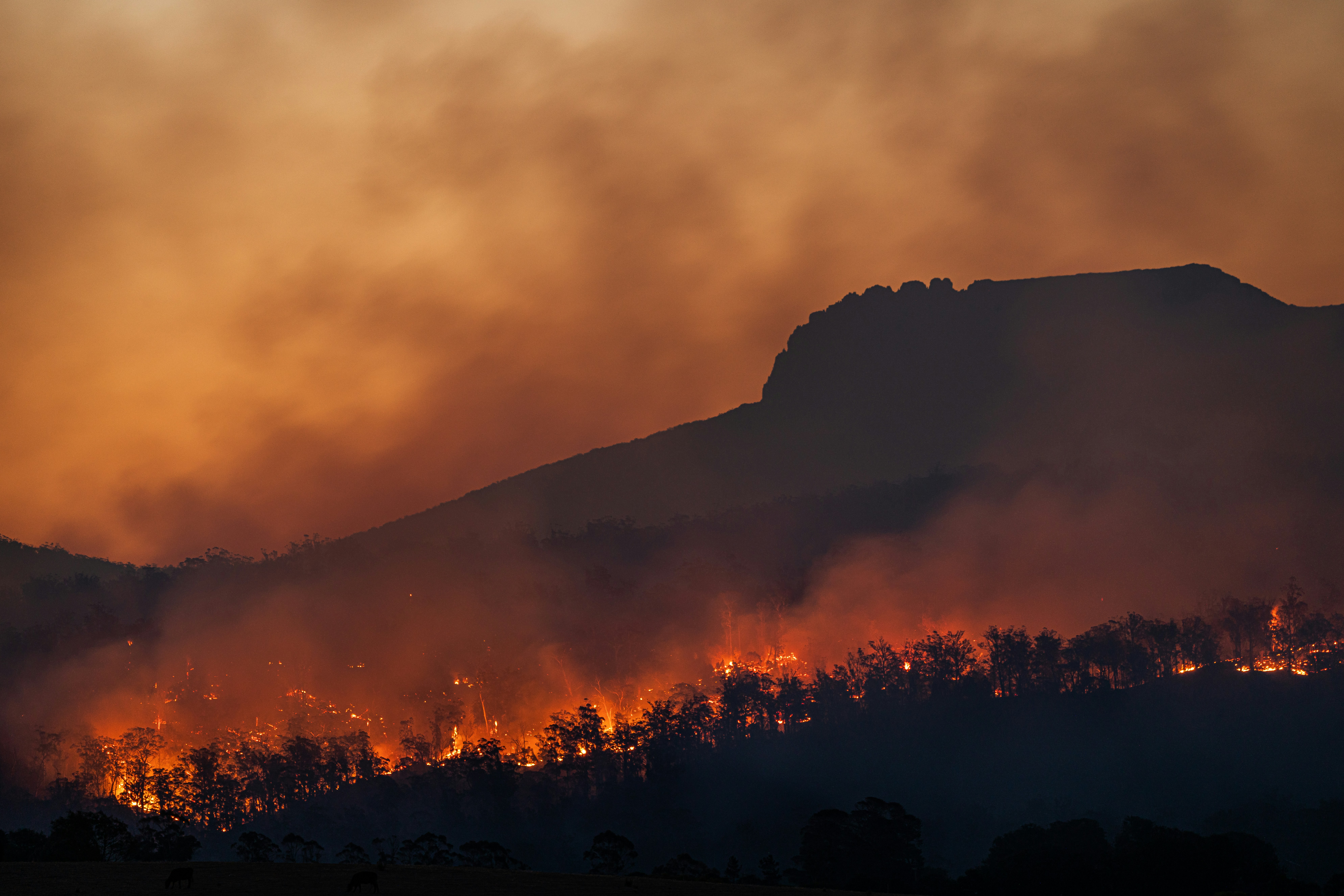
This time round, the impact is already evident. Not only on mortality, but also on ecosystems, infrastructure services, and daily life. The high temperatures “are pushing cooling demand to its highest level in at least 45 years while significantly increasing wildfire risk, particularly in Spain and France.” France is among the hardest-hit countries, with at least 40 confirmed deaths so far, school closures, the cancellation of outdoor events, and severe disruption to rail services. Italy has also recorded heat-related deaths, an increase in A&E admissions and power cuts linked to the growing use of air conditioning, while healthcare and transport systems in Belgium and the Netherlands have had to cope with mounting pressure and service disruptions. In Belgium, wildlife rescue centres have also reported a sharp rise in the number of animals in distress due to the heat. Meanwhile, Spain is facing worsening drought and water stress, with reservoir levels under increasing pressure. The heatwave is also putting European energy systems under strain, with concerns over reduced output from French nuclear power stations cooled by the Rhône and Garonne rivers.
English version by the Translation Service of Withub