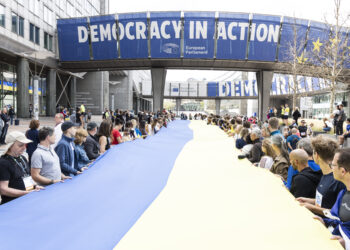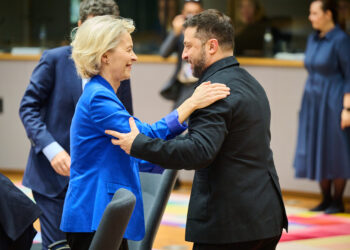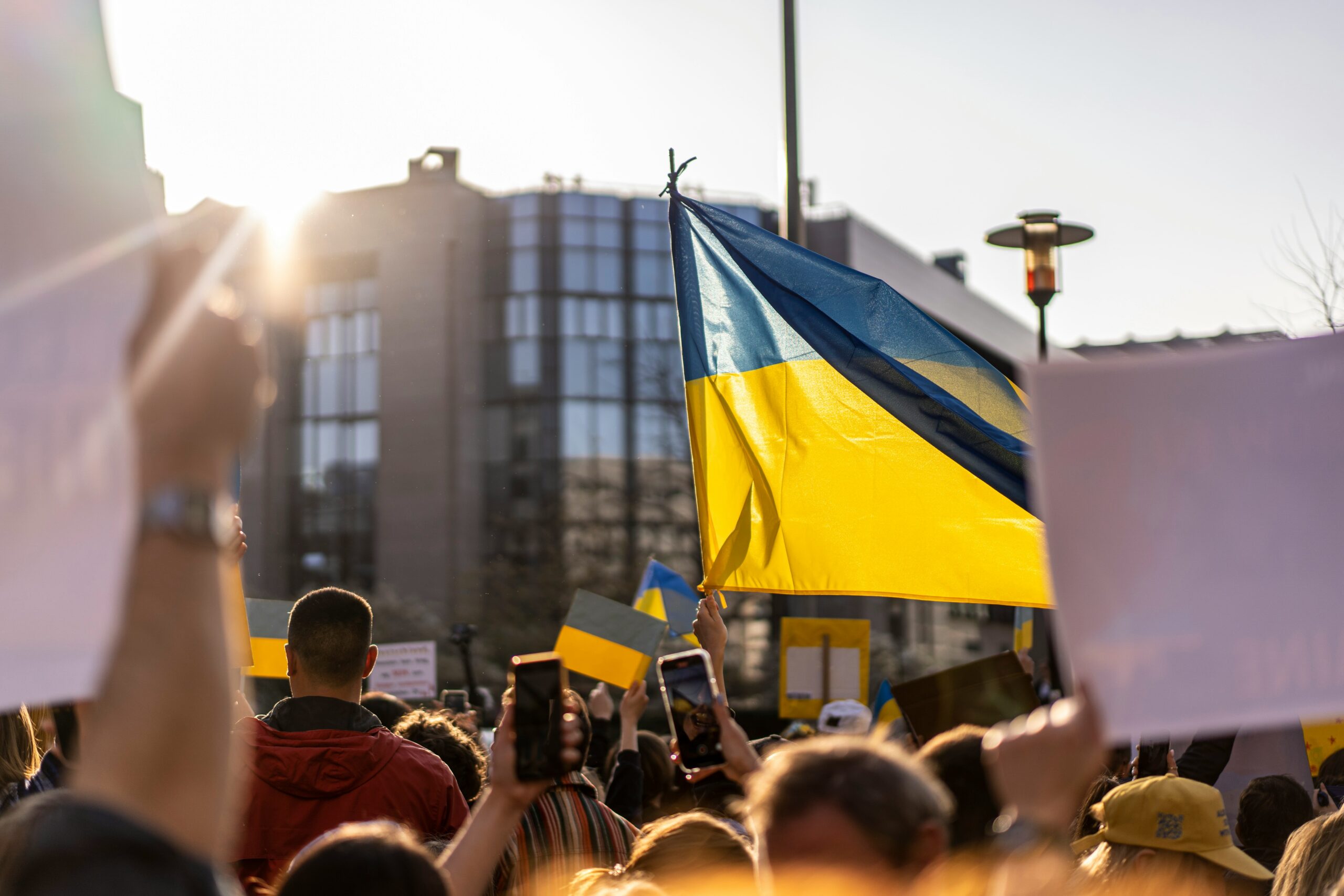
Brussels – More air defence to protect Ukrainian airspace, new measures to bolster Kyiv’s military capabilities, increased pressure on Russia and a further step forward on security guarantees. This is the message emerging from the meeting of the Coalition of the Willing, today (24 August) in Kyiv on the 35th anniversary of Ukraine’s independence. A hybrid summit, with some leaders present in the Ukrainian capital and others joining from their respective capitals, which comes at a particularly delicate stage of the war.
It is “to strengthen support for Ukraine so that it can defend itself against Russian aggression” – this is the commitment reiterated by the Coalition leaders, who also confirmed their determination to “increase pressure on Russia, which continues to reject peace and to carry out attacks against civilians.” The leaders will therefore continue to coordinate measures to reduce the resources available to Moscow, “in particular by combating the shadow fleet” – the fleet of vessels, mainly oil tankers, used by Moscow to transport oil and other products whilst circumventing Western sanctions.
The main focus of the meeting is, first and foremost, on strengthening military support for Kyiv. The British Prime Minister Andy Burnham, who has arrived in Kyiv for his first international visit since he moved into Downing Street, has called on allies to supply more Patriot interceptor missiles, emphasising that Ukraine “needs more help to protect its people right now”. “We are doing everything we can and working with allies outside the coalition to draw on our stocks and help others draw on theirs,” he added.
Meanwhile, London is preparing further support for Ukraine’s missile capabilities. According to the Financial Times, the British government has authorised the European missile manufacturer MBDA to share classified information with Kyiv regarding the British components of cruise missiles. The aim is to enable Ukraine and France to work towards the local production of the SCALP, the French version of the British Storm Shadow – two systems jointly developed by Paris and London. The move is designed to strengthen Kyiv’s ability to strike deep into Russian territory.
The British decision provoked a strong reaction from Moscow, which recalled its ambassador to London, claiming that relations between the two countries had plummeted “to an unprecedented low.” The British Foreign Office responded by stressing that the appointment of the new Russian ambassador is a matter for Moscow to decide, and pointing out that London maintains an embassy in Moscow “to engage in dialogue with the Kremlin and to represent its positions.”
On the political front, Emmanuel Macron warned that Moscow could step up the pressure on European countries. “Russia will escalate tensions with European countries to dissuade them from providing assistance to Ukraine,” said the French president, referring to possible new provocations against NATO countries. “We must press ahead with what we have begun to do within NATO to ensure a resolute stance,” he added.
“A free people does not subdued,” the French president said on X. “On this Ukraine Independence Day, France salutes a people who defend their freedom, their sovereignty, their future.” He added: “Ukraine stands tall. France, Europe, and all the partners of the Volunteer Coalition, by its side.”
German Chancellor Friedrich Merz also reaffirmed his support for Kyiv, paying tribute to the courage of the Ukrainian people who “for years have been defending their country’s independence with remarkable courage against Russia’s brutal war of aggression.” “Today, on this important day, it is particularly true: we stand firmly by Ukraine’s side,” he said. Spain, represented via video link by Foreign Minister José Manuel Albares, also confirmed its support for Kyiv “in achieving a just and lasting peace.”
From Italy, Prime Minister Giorgia Meloni, in a video link, reiterated “Italy’s unwavering support for Ukraine’s sovereignty, territorial integrity and independence.” The Prime Minister also expressed “deep sympathy for the suffering caused by the ongoing Russian attacks on civilian infrastructure,” and confirmed Italy’s commitment to humanitarian aid, with the dispatch of further generators ahead of winter.
Rome also supports tightening the sanctions regime against Moscow. During the summit, Meloni stressed the need to “strengthen the effectiveness of the sanctions regime and counter any attempts to circumvent it,” with the aim of “further weakening Moscow’s war machine.” Italy, she concluded, will continue to work with its international partners to promote “a path of negotiation towards a just and lasting peace”.
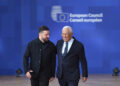
Also present in Kyiv was the President of the European Council, Antonio Costa, who, on Independence Day, paid tribute to the “courageous Ukrainian people” and all those who “are still standing firm today, defending their homeland on the front line and across Ukraine.” “Your courage and bravery are a source of inspiration for the world,” he wrote on X.
Security guarantees for the post-war period now remain on the table. The leaders have agreed to continue their work to help build “a comprehensive, just and lasting peace” in Ukraine, in line with the Paris Declaration of 6 January 2026. The aim is to create the conditions to ensure that any peace agreement can guarantee Kyiv’s sovereignty and security and prevent further Russian aggression.
English version by the Translation Service of Withub