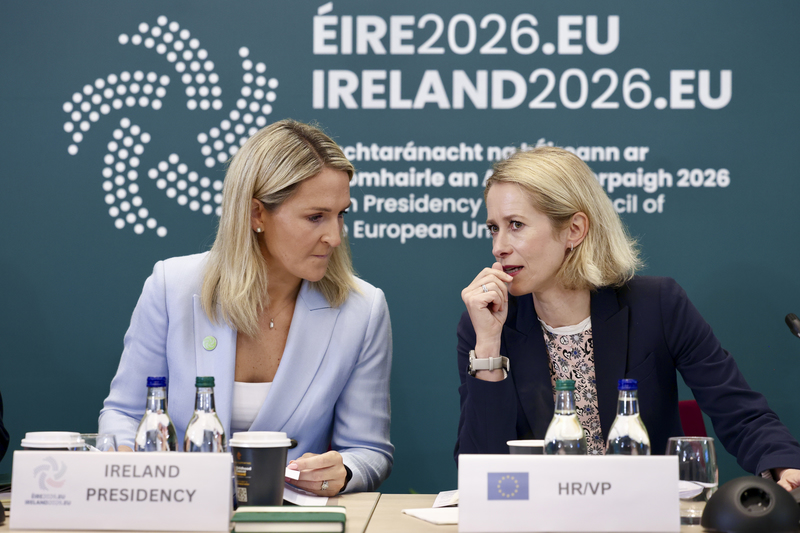
Brussels – Russia is not yet as isolated as it ought to be, nor as the European Union would like it to be. Moscow continues to receive far too much military support, which is being used in an ongoing conflict against its Ukrainian partner. This aid is “unsustainable from every point of view” according to the EU’s High Representative for Foreign Affairs and Security Policy, Kaja Kallas, who can only publicly denounce and censure those who, unexpectedly, continue to fuel the Russian war machine: “Ukraine tells us that there are currently still around 5,500 Western and Asian components in Russia’s military arsenal,” she emphasised at the end of the informal meeting of foreign ministers.
Certain commercial flows in Europe are viewed unfavourably. Kallas does not name names, but one’s thoughts turn to China, regarded as an enemy on a par with Russia. This may refer to the US arms industry, the most flourishing and most developed of its kind. What is certain is that “after four years of war, this is inexcusable,” insists the High Representative, who is also frustrated by the unprecedented, all-out effort regarding sanctions, which are proving insufficient due to parties supplying Moscow with what the Kremlin needs.
“We must cut off supplies” to Russia, insists Kallas, who announces that “new proposals” are being drawn up to “tighten sanctions” against the Russian Federation and its tsar, President Vladimir Putin. She does not go into detail, but suggests that the EU is ready to expand the blacklist of entities and individuals subject to restrictive measures, as well as working on a 22nd package of sanctions, which some foreign ministers would like to see. Lithuania’s Foreign Minister Kęstutis Budrys is calling for this in no uncertain terms: “Sanctions are needed. We must prepare for the 22nd package, but without delay.” Because, he laments, “we are not efficient enough.”
English version by the Translation Service of Withub
![Anouar El Anouni, portavoce dell'Alta rappresentante per la politica estera e di sicurezza dell'Ue [Bruxelles, 27 febbraio 2025]](https://www.eunews.it/wp-content/uploads/2025/02/anouni-350x250.png)

![[foto: European Council]](https://www.eunews.it/wp-content/uploads/2026/03/euco-260319-120x86.jpg)