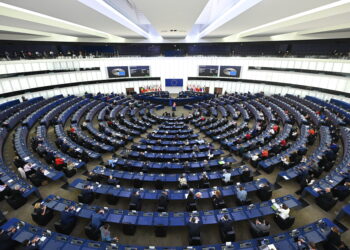

Brussels – No surprises, and no dramatic twists: as expected the European Parliament plenary approved by a large majority (540 yes votes, 105 no votes, and 22 abstentions) the regulations to speed up the authorisation process for defence projects, such as the construction of new facilities or the expansion of existing ones. The text adopted by the plenary establishes a predefined EU-wide deadline of 42 working days for decisions on authorisations, starting from the confirmation that the application is complete.
The timeframe will, however, be flexible. Member States are granted the power to extend the deadline for deciding on authorisations by up to 60 days, on a maximum of two occasions. This means that, in the case of complex projects or where there are risks to the environment, health or workers’ safety, the total duration of the procedure for granting authorisations may not exceed 102 working days. National authorities will be required to inform project promoters within eight working days of the deadline expiring and to specify the conditions to which the authorisations will be subject.
In the event of a lack of response, the principle of “silence implies consent” applies: should the national authorities fail to act on the application for a permit within the applicable time limit, the text of the regulation stipulates that tacit approval shall apply. Any application not expressly rejected by the end of the 42 days shall be deemed to have been approved.
This marks the final adoption of the regulation. Following today’s vote (16 September), the adoption process is now complete. The new rules will enter into force on the twentieth day following their publication in the Official Journal of the European Union.
“By speeding up authorisation procedures, we can make it easier and more predictable for the defence industry to expand production and supply what Europe needs,” emphasises a satisfied Henrick Dahl (EPP), Member of the Internal Market Committee of the European Parliament and co-rapporteur on the measure. The European Union, he adds, “cannot afford to spend years wading through administrative procedures while our security deteriorates.”
He is echoed by Lucia Yar (RE), co-rapporteur for the Security and Defence Committee: “The speed of the authorisation process is now becoming a competitive advantage: a government that makes effective use of the fast-track procedure will attract investment, while one that relies exclusively on the slow national system will see such investment go elsewhere.” Hence the call for governments to take the plenary vote to heart: “The rules are now in place; the results will depend on how quickly the 27 capitals put them into practice.”
It is possible to deviate from environmental regulations
In a separate vote, the House also approved rules allowing EU Member States to grant certain “derogations from EU environmental and chemicals legislation” in the interests of defence. These derogations will apply where “duly justified.” These are the new measures aimed at simplifying the management and implementation of the European Defence Fund (FED), and the plenary also supported them by a large majority in this instance (530 votes in favour, 125 against and 12 abstentions).
English version by the Translation Service of Withub