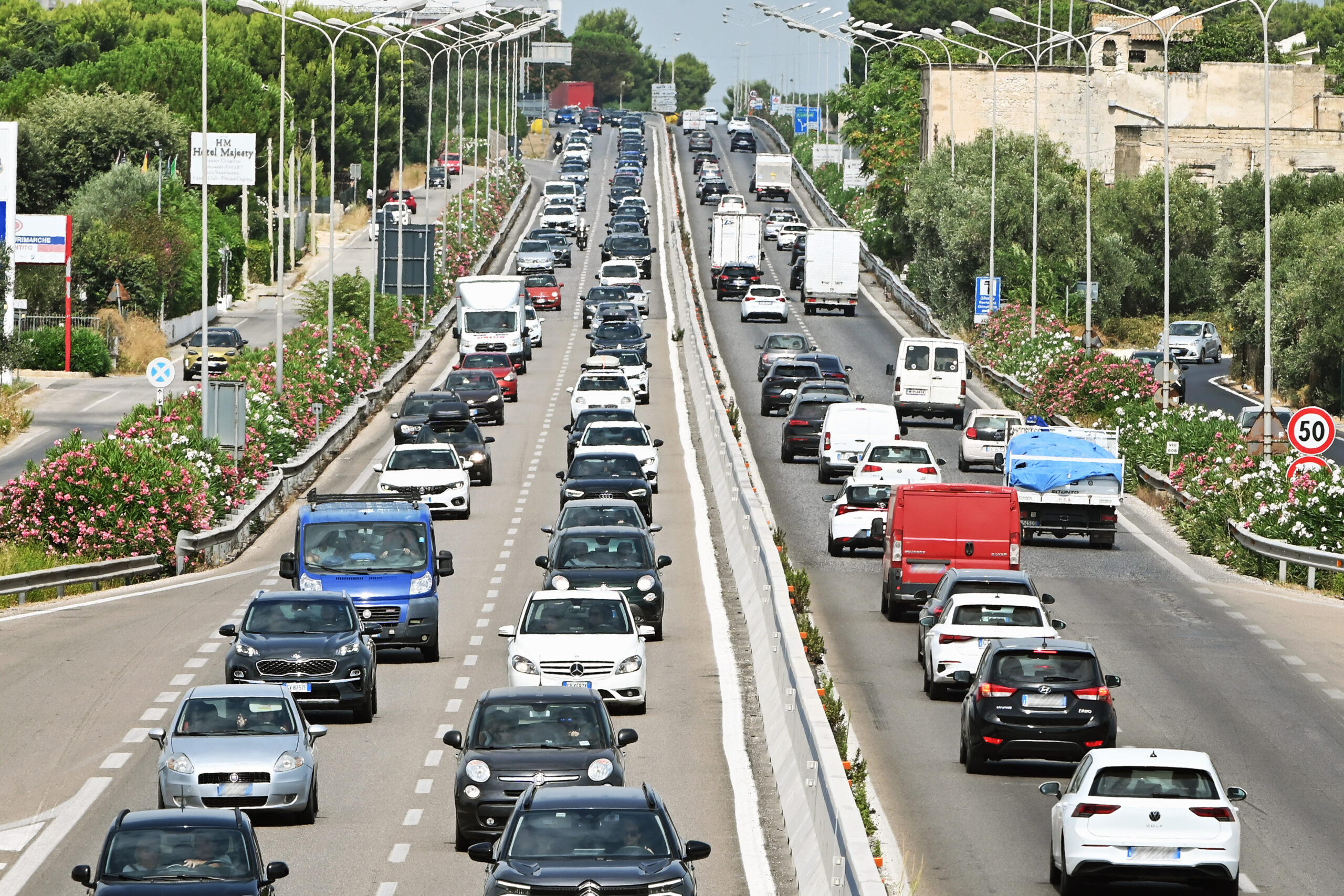
Brussels – The car remains by far the most widely used mode of transport in the EU, accounting for 69.2 per cent of passenger-kilometres travelled in 2024, equivalent to approximately 6,130 billion passenger-km. However, this figure is down by one percentage point compared with 2023, while the shares of air and rail travel are increasing, according to data released by Eurostat, the EU Statistical Office.
More specifically, air travel accounted for 15.8 per cent of the total, up by one percentage point on 2023. This is followed by rail, at 7.5 per cent (+0.3 percentage points), which, for the first time since 2014, has overtaken buses, coaches and trolleybuses, which remained at 7.3 per cent (-0.2 percentage points). Sea transport remains marginal, at 0.4 per cent. Italy ranks above the European average for car use: in 2024, 74 per cent of passenger-kilometres were travelled by car, compared with the EU average of 69.2 per cent.
A comparison with ten years ago, however, shows a slow shift towards other modes of transport. Compared with 2014, the share of car travel in the EU has fallen by 2.9 percentage points, while that of buses, coaches and trolleybuses has decreased by 1.3 percentage points. By contrast, trains and aeroplanes gained 0.9 and 3.6 percentage points, respectively.
There remain marked differences between Member States. The highest proportion of car journeys is recorded in Lithuania, at 83.7 per cent, followed by the Netherlands at 77 per cent and Finland at 75.4 per cent. Italy, at 74 per cent, is therefore towards the top of the table.
As regards rail transport, however, Hungary has the highest share, with 11.3 per cent of passenger-kilometres, ahead of Austria (10.4 per cent) and the Netherlands (9.8 per cent). In Italy, rail transport accounts for 6.2 per cent and totalled 55.9 billion passenger-kilometres in 2024.
English version by the Translation Service of Withub