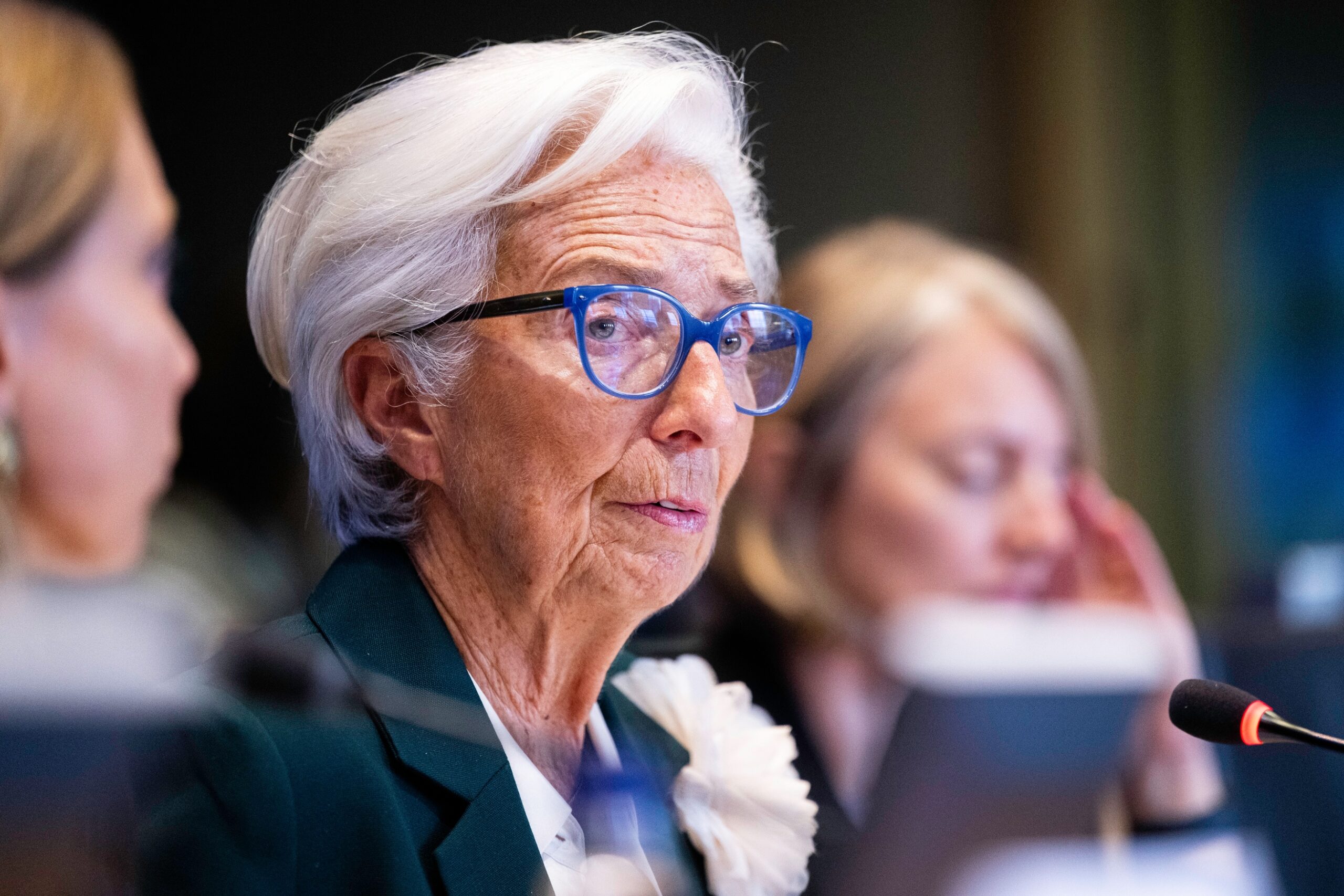
Brussels – Artificial intelligence: a term synonymous with potential, but also with risks – including for the financial markets. The picture is outlined by Christine Lagarde, President of the European Central Bank, who, during a hearing before the European Parliament’s Committee on Economic and Monetary Affairs (ECON) of the European Parliament, highlighted that “investment activity in AI will also depend on what happens in the financial markets and on whether or not the risks associated with the boom in AI financing materialise.” Currently, “global equity valuations are concentrated in a relatively small number of AI-related companies that are also rapidly increasing their debt levels.” Therefore, “a sharp reassessment of the prospects for AI companies and the sustainability of their debt could trigger market corrections and have repercussions for investors in the euro area and the wider economy,” Lagarde stated.
Beyond this point, however, Lagarde believes the EU must take action and “create the conditions for AI to boost productivity and living standards, while safeguarding our sovereignty in this area.” As for the ECB, the task will be “clear,” namely to “closely monitor and study the impact of AI on productivity, investment, labour markets, financial conditions, and inflation, in order to continue to fulfil our mandate of maintaining price stability.” What is certain is that, although the precise effects of AI are “uncertain,” “uncertainty does not justify inaction.”
Lagarde outlines the strengths of AI. Its potential “to transform the way we produce, work and innovate,” to the extent that it is forecast that by 2026, businesses will allocate around 10 per cent of total investment to AI, while funding linked to this technology already accounts for roughly a quarter of the growth in corporate lending. “AI could significantly boost productivity, competitiveness, and living standards in Europe,” she states, adding that according to ECB estimates, the improvement can be quantified as an increase in GDP of between 0.3 per cent and 0.4 per cent per annum over a decade. This would be the “result of the widespread dissemination and adoption of AI” and would represent “a considerable figure which, were it to materialise, would radically change many aspects.”
According to the ECB’s President, “Europe has a real opportunity to harness this technology, but success is by no means guaranteed.” As regards businesses, AI has the potential “to help companies produce more and, over time, greater productivity could reduce costs,” which, “all other things being equal, should ease inflationary pressures in the long term.” But all this will depend on “its uptake in the economy.” Some signs are “encouraging,” but they are not enough. According to an ECB survey, by the end of 2025, 38 per cent of firms in the euro area had already reported at least moderate use of AI. “However, only 7 per cent reported significant use,” Lagarde explains. To unlock the full potential of AI, Europe will need “substantial investment.” For now, although they are “on the rise,” they remain “still lagging behind the United States,” even if the 30 billion euros for AI Gigafactories, for developing advanced AI in the EU, “are a good start.”
In the workplace, AI will change the tasks carried out and the skills required. Here, “it will be important how the benefits of AI are distributed,” notes Lagarde, pointing out that over 50 per cent of workers already use AI in their work. “And so far, on the whole, companies are continuing to hire. In fact, survey data suggest that companies making significant use of AI are more likely to take on new staff during the transition phase,” she explains. But there is one difference to bear in mind: “Companies that use AI to support research, innovation, and new products tend to hire, while those that use it primarily to reduce labour costs are cutting jobs.” Therefore, the key question will be whether, in the long term and for the economy as a whole, “AI will primarily complement workers or replace them.” Income levels, demand and, ultimately, inflation will depend on this, but the picture remains unclear. “Historically, major technological advances have not reduced employment, but it is not yet clear whether AI will prove to be any different,” notes Lagarde.
In conclusion, according to the head of the European Central Bank, “Europe must foster innovation in the field of AI,” which, in other words, means “reducing fragmentation in the single market, promoting the savings and investment union, and accelerating the energy transition.” Furthermore, “EU initiatives, including AI factories, testing facilities, and regulatory sandboxes, can also help ensure that ideas move more quickly from research to commercial application. And there is scope for innovation in many sectors: from greener chips to more efficient algorithms.” Secondly, “Europe must build greater independence” by strengthening the underdeveloped critical parts of the AI value chain. “The aim is not self-sufficiency,” but “to ensure that critical functions can operate under any circumstances.” Thirdly: “Europe must implement AI on a large scale.” In other words, the adoption of this technology must “extend beyond a small group of technology leaders,” and businesses must use it “thoroughly and effectively.” This will require “targeted support for reskilling programmes to address the severe shortage of AI-related skills and ensure that the workforce can adapt to this momentous transformation.”
English version by the Translation Service of Withub
![[Berlino, 10 settembre 2026. Foto: Lorena Deidda/ECB. Copyright: (c) 2026 European Central Bank www.ecb.europa.eu]](https://www.eunews.it/wp-content/uploads/2026/09/lagarde-vucic-260910-350x250.jpg)


![Da sinistra: il presidente del Consiglio europeo, Antonio Costa; il presidente dell'Ucraina, Volodymir Zelensky: la presidente della Commissione europea, Ursula von der Leyen [Bruxelles, 18 giugno 2024. Foto: European Council]](https://www.eunews.it/wp-content/uploads/2026/06/euco_ua260618-120x86.jpg)
![[foto: Saverio De Giglio/imagoeconomica]](https://www.eunews.it/wp-content/uploads/2026/10/cpt-120x86.png)