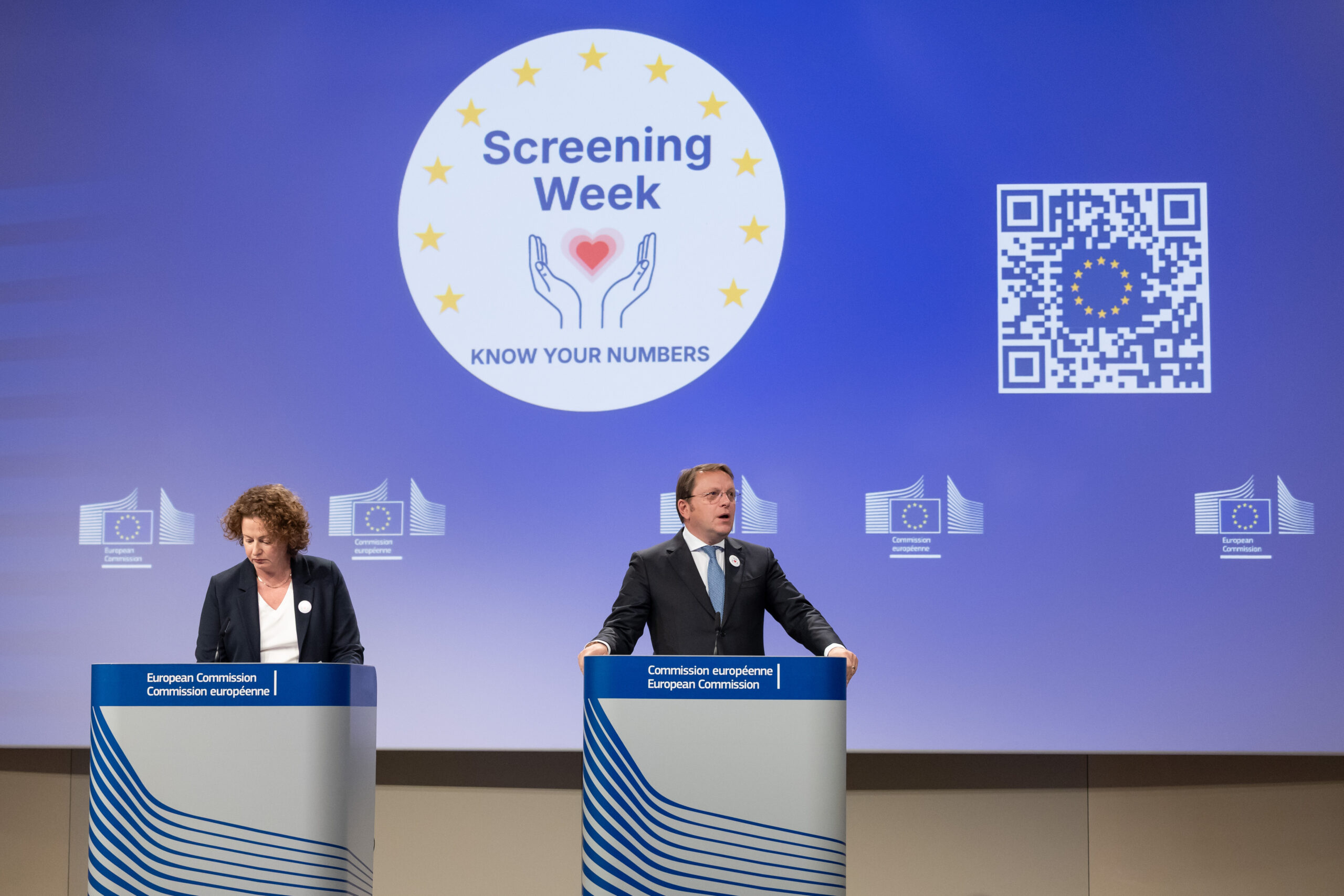
Brussels – “Take a few minutes, find out your numbers, understand your risks and take action early, with the support of a professional. A simple check-up will put you in charge of your health.” This is the appeal made by European Commissioner for Health Oliver Várhelyi to his “fellow Europeans” to mark the launch of the first EU Screening Week, during European Week for the Prevention and Early Detection of Cardiovascular Diseases, which will take place from 28 September to 4 October.
The campaign coincides with the European Commission’s proposal for a Council recommendation on cardiovascular health screening, with the aim of supporting Member States in introducing and implementing national programmes to monitor the main risk factors. The European Commission is particularly keen to ensure that these screenings are accessible even to the most vulnerable groups and those most at risk. This is all in line with the Safe Hearts Plan, the European plan aiming to reduce premature cardiovascular deaths by 25 per cent by 2035.
“Every year, we lose 1.7 million lives to cardiovascular disease,” Várhelyi pointed out at a press conference. And while these remain the leading cause of death in the EU, several risk factors are on the rise. According to figures cited by the Commissioner, almost half of the European population has high blood pressure, while diabetes affects a growing proportion of the population and around one in four people are reportedly unaware of their condition.
The problem also affects younger generations. Around 20 per cent of young people are overweight, while tobacco use and nicotine products remains a growing concern. Among 15- to 19-year-olds, Várhelyi pointed out, more than one in six young people report having smoked cigarettes in the last month and around one in five report having started using e-cigarettes. As for vaping, he added, the picture is even more worrying, with rates roughly double. “If current trends continue, these figures will double,” warned the Commissioner, stressing the urgency of taking action before risk factors turn into diseases.
The direction set out by Brussels is therefore that of prevention and early detection. “For too long, our model has been to treat people once they have fallen ill,” said Várhelyi. “We are now taking a concrete step towards early diagnosis and prevention” by helping citizens to develop healthier habits, detect illnesses earlier and receive appropriate treatment.
Accessible and inclusive healthcare is key, the Commissioner added, because “health must not become a privilege.” The recommendation calls on Member States to consider targeted campaigns, community-based screening programmes, and mobile units, so as to reach even those who face the greatest difficulties in accessing healthcare services.
The first EU Screening Week thus marks the launch of the “Know Your Numbers” campaign, which aims to raise public awareness of the importance of knowing one’s blood pressure, cholesterol and blood glucose levels and discussing these with a healthcare professional. In Brussels, for example, free health checks will be available outside the Berlaymont until 2 October, including blood pressure, HbA1c, lipid profile, waist circumference and body mass index. This initiative has expanded “across Europe” and, as the Commissioner emphasises, “will be delivered at local level,” with the participation of various healthcare stakeholders and the organisations that have signed up. There are over 800 centres dedicated to cardiovascular screening “available to all Europeans, because healthcare cannot be a privilege.”
On the role of technology, Várhelyi reiterated the position already set out by the Commission: “As President Ursula von der Leyen’s State of the Union address said, we must empower healthcare professionals, not replace them.” Data-driven and artificial intelligence-based tools can also contribute to risk assessment, but only if used responsibly and under adequate human supervision.
English version by the Translation Service of Withub


![Da sinistra: il presidente del Consiglio europeo, Antonio Costa; il presidente dell'Ucraina, Volodymir Zelensky: la presidente della Commissione europea, Ursula von der Leyen [Bruxelles, 18 giugno 2024. Foto: European Council]](https://www.eunews.it/wp-content/uploads/2026/06/euco_ua260618-120x86.jpg)
![[foto: Saverio De Giglio/imagoeconomica]](https://www.eunews.it/wp-content/uploads/2026/10/cpt-120x86.png)