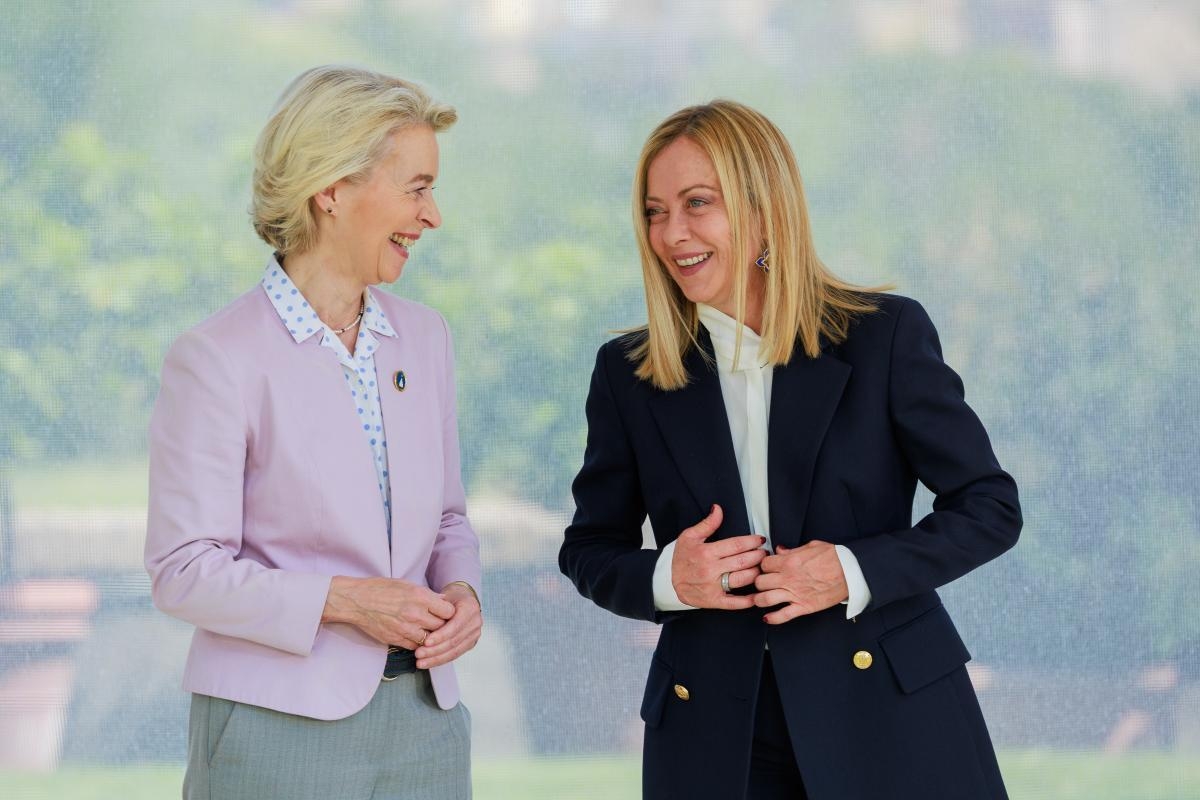
Brussels – The current economic situation is “one of the most complex in recent decades” and, amid this “multi-crisis”, Italy is calling on Brussels for greater flexibility. First on the issue of energy – where it is the leading Member State – and now also regarding inflation, which high energy prices have fueled. Giorgia Meloni spoke yesterday (30 September) via video link at the second edition of ‘Oltre le Radici’, an annual event organised by Il Gazzettino, to announce that she had written once again to the President of the European Commission, Ursula von der Leyen, asking her to discuss at the next Ecofin meeting the possibility of “additional flexibility to support households and businesses.”
At present, she explained, one of the key issues on the government’s agenda is to take action at the European level to utilise the flexibility afforded by the 14 billion to bring down energy prices for businesses. And while many criticised this decision, she pointed out, “I now note that several colleagues are taking action to ask Europe for greater flexibility on energy. I say this to highlight that Italy was not in the wrong; it simply asked for it in good time.”
Then there is the Budget Bill. The Prime Minister did not reveal much about this, but confirmed that the government will continue along the path it has taken so far: “focusing on wages, safeguarding purchasing power, supporting businesses, protecting families, and encouraging the birth rate and health”. In recent years, Meloni explained, the government “has sought to concentrate the few resources available on real priorities, to cut taxes on labour and on businesses.” The Prime Minister cited the 120 per cent super-deduction on labour costs for recruits, the hyper-depreciation scheme valid until 2028, the refinancing of the ‘Nuova Sabatini’ scheme, and the various social security contribution exemptions introduced to boost recruitment.
In Brussels, the Prime Minister called for the EU to “wake up”, in favour of “a less ideological Europe, one that knows how to adapt its priorities to a changing context, and that knows how to listen more closely to the needs of its regions, without shying away from certain challenges.” However, she reiterated: “The European Union must acknowledge that some measures, rather than tackling problems, have created new ones.” One example above all is the ETS, regarding which, she lamented, “there is still no sense of urgency.” The emissions trading scheme, in the Italian government’s view, is in “dire” need of revision. The proposed revision is “totally inadequate; we can no longer afford it.” She pointed out that the additional environmental taxation “weighs heavily on our manufacturing businesses, further damaging their ability to compete in a global market where our main competitors are not subject to the same level of carbon costs and the same constraints”. Failing to understand this means “condemning Europe to deindustrialisation; it is a choice which – Meloni vows – I personally will not accept.”
English version by the Translation Service of Withub