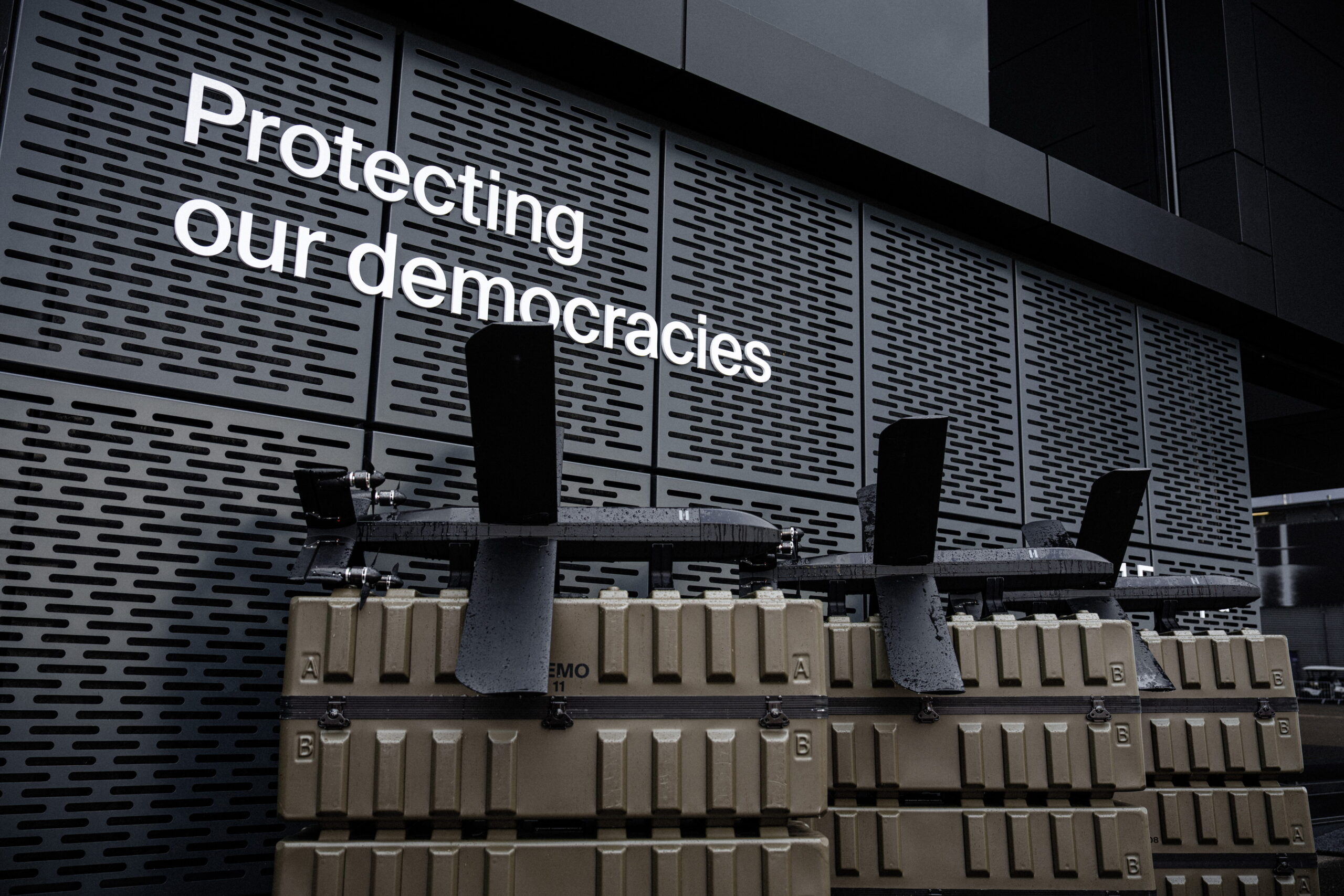
Brussels – The European Commission announced on 7 October that it had disbursed €1.24 billion to finance drones, drone interceptors, ammunition and missiles manufactured by Ukrainian companies.
The funding forms part of the EU’s €90 billion Ukraine Support Loan for 2026–2027, with an indicative €60 billion allocated to defence and €30 billion to budgetary assistance. For 2026 alone, €28.3 billion is planned to support Ukraine’s defence industrial capacity.
The immediate purpose is to sustain Ukraine’s defence against Russia. But the decision also reflects a longer-term development in European defence policy: Brussels is financing Ukrainian weapons production while pursuing closer integration between Ukrainian and European defence industries.
That raises questions about where Europe’s future weapons will be produced, how quickly they can be delivered and what European manufacturers can learn from Ukraine’s wartime experience.
Why Ukrainian production matters
Four years of full-scale war have forced Ukraine to develop weapons under conditions very different from those facing European manufacturers.
Ukrainian companies have had to respond to changing battlefield requirements, adapt designs and expand production under the threat of Russian strikes.
An important part of this model is the direct feedback between soldiers and manufacturers. Battlefield experience can inform design changes within days or weeks, allowing equipment to be adapted as threats evolve.
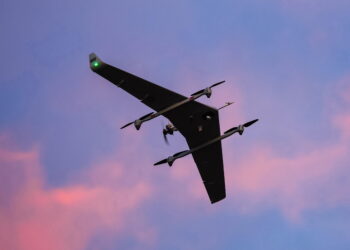
This has accelerated development across several weapons categories, particularly long-range strike drones, interceptor drones and missiles.
The experience has also exposed a problem in modern warfare: sophisticated weapons are expensive, difficult to replace and often produced in quantities insufficient for prolonged, high-intensity conflict.
Air defence illustrates the challenge.
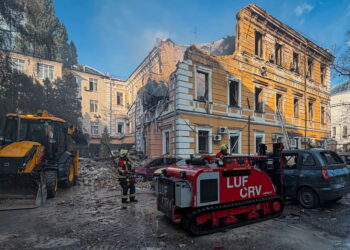
On 7 October, Ukraine reported intercepting or suppressing 161 Russian aerial targets, including ballistic missiles, cruise missiles and attack drones. The attack showed the range of threats Ukraine must counter simultaneously.
Expensive surface-to-air interceptors remain essential against demanding targets, particularly ballistic missiles. Using them against relatively cheap drones, however, places pressure on ammunition stocks and production capacity.
Ukraine’s lower-cost drone interceptors offer one response, helping preserve more capable missiles for threats that require them.
European financing could expand production of these systems while supporting further development based on battlefield feedback.
From military assistance to industrial integration
European countries already finance Ukrainian weapons production through bilateral arrangements and procurement initiatives. The latest disbursement builds on this approach, but the broader EU financing framework introduces greater scale and institutional structure.
Its defence component aims to strengthen Ukraine’s industrial base and support its gradual integration into Europe’s defence industry.
Ukraine has accumulated experience developing and adapting weapons during sustained combat. European manufacturers possess established production infrastructure, specialised technologies and expertise in complex systems.
Western companies are already drawing on that experience. As Business Insider reported, Germany’s Quantum Systems and Ukraine’s Frontline Robotics, alongside America’s Wilcox Industries and Ukraine’s General Cherry, are examples of partnerships merging Ukrainian battlefield expertise with Western industrial capabilities.
The Freyja missile defence programme offers another example. It aims to combine Ukrainian interceptor development with European radar, guidance and command technologies to produce a more affordable ballistic missile defence system.
Under the EU’s SAFE defence financing instrument, Ukrainian companies can participate in joint procurement alongside European industry.
The question is whether these arrangements can develop into sustained partnerships, with shared production capacity and procurement systems capable of responding more quickly to military requirements.
Europe’s industrial strengths are also distributed across countries, from German advanced manufacturing to French aerospace and defence technology and Dutch semiconductor expertise. Connecting these capabilities with Ukrainian production could help uplift European supply chains.
Funding is only part of the equation
The Commission’s announcement does not identify which Ukrainian manufacturers will receive financing or how the €1.24 billion will be divided between weapons categories. Nor does it specify production volumes or delivery schedules.
These details matter because financing does not automatically translate into additional weapons.
Manufacturers require components, skilled workers, production facilities and secure supply chains. Missile production depends on specialised materials, propulsion systems, electronics and testing infrastructure that cannot always be expanded quickly.
Scaling relatively simple drones also presents different challenges from manufacturing guided missiles or advanced air defence interceptors.
The effectiveness of European financing will depend on whether it addresses these constraints and enables manufacturers to deliver weapons at the quantities and pace Ukraine requires.
There is also a procurement challenge. Ukraine’s rapid development model relies on short feedback cycles and the ability to modify systems quickly. European governments need to balance this flexibility with consistent reliability, interoperability, and quality assurance.
What comes next?
The latest disbursement reflects a broader change in European military support. Alongside transfers from existing inventories and orders from established suppliers, EU financing is supporting weapons production within Ukraine.
Europe faces limited production capacity in critical weapons categories, lengthy procurement cycles and the need to rebuild depleted stocks.
Ukraine’s defence industry has developed under many of the conditions European governments are preparing for.
The opportunity is to translate wartime cooperation into lasting industrial capacity, combining Ukraine’s operational experience and rapid adaptation with Europe’s manufacturing infrastructure and technological expertise.
The €1.24 billion disbursement is one step in that process. Its immediate value will be measured in weapons produced and delivered.
Its longer-term significance will depend on whether Europe can turn investment in Ukrainian production into a stronger, more adaptable defence industrial base.