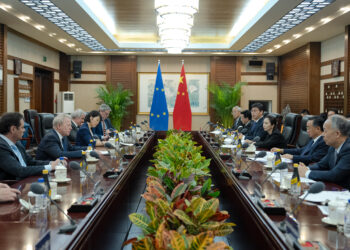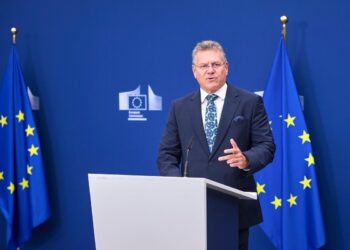
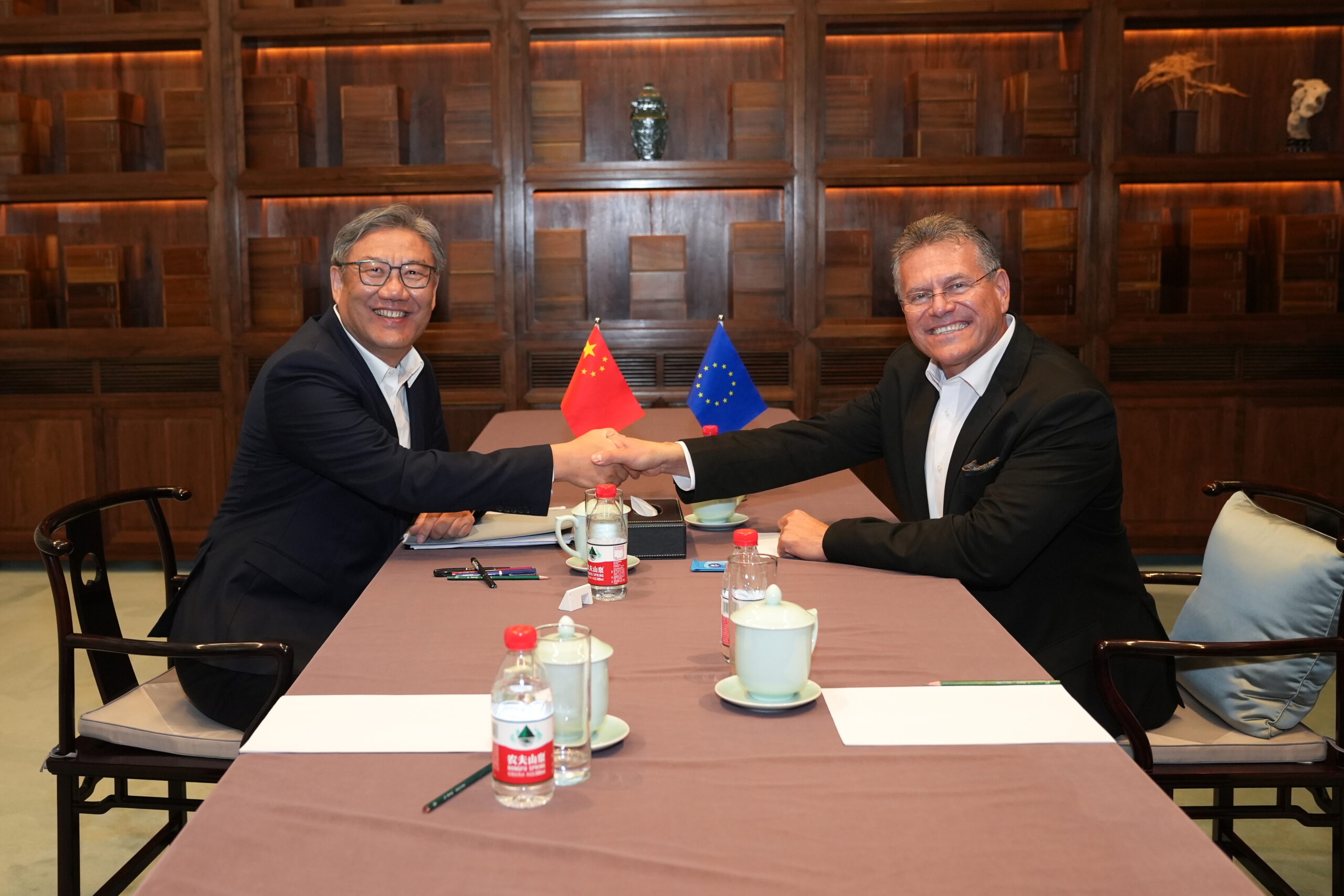
Brussels – The objective was “clear”: the European Commissioner for Trade, Maroš Šefčovič, visited Beijing yesterday (8 October) and today (9 October) to rebalance trade with the Asian giant. At the end of the two-day visit, the first concrete results have emerged, and at today’s press conference on the sidelines of the second meeting of the Trade and Investment Consultation Mechanism (TIC) – where Šefčovič held talks with his Chinese counterpart, the Minister of Commerce, Wang Wentao – the Commissioner welcomed the signing of a joint statement and the agreement on three key points.
Firstly, “ we have reached a shared understanding to moderate China’s export of hybrids and plug-in hybrids to the European Union,” emphasised Šefčovič, opening up “the prospect of cutting China’s exports by more than 50 per cent.” This was perhaps the most complex aspect of the negotiations because Chinese hybrid cars – cars that combine an internal combustion engine (petrol or diesel) with an electric motor and a small battery, while plug-in hybrids are an evolution of the hybrid featuring a much larger battery and a more powerful electric motor – virtually dominate the European market. According to a report by Bloomberg in August 2026, Chinese hybrid car manufacturers set a record: almost 12 per cent of new cars registered on the continent were from Chinese brands. The Commissioner did not provide many details, but noted that “we never had the level of intensity of our exchanges and contacts as we have over the last 34 months with our Chinese counterparts,” suggesting that European demands appeared “reasonable” to the People’s Republic.
Second point. “We have reached a shared understanding to improve access to the Chinese market for a series of EU products through the lower most favoured nations’ MFN tariffs” as set out by the World Trade Organisation (WTO). Šefčovič specified that the products “range from automotive components to olive oil and footwear, with a total value of current exports amounting to almost 4 billion euros.” If this measure comes into force, it will result in duty savings of “at least €225 million.” By way of comparison, “this figure is equivalent to a quarter of the savings expected from some of our ambitious free trade agreements, such as those with Japan or Australia,” the Commissioner pointed out.
Finally, the EU and China have reached “a shared understanding
to further facilitate China’s export licensing for rare earths and permanent magnets.” The elephant in the room – namely the EU’s “unsustainable” trade deficit with China, amounting to over a billion a day – is still there, but it can be addressed through dialogue. “What we need is a tangible outcome from this very intense phase of negotiations,” he emphasised. “I know that, for example, our American partners have gone through many more rounds than we have. We have come through this very intense phase, but I believe we have achieved excellent results,” he added. But there is no room for complacency. “This is far from the end,” he clarified. The trade talks between Brussels and Beijing are “a crucial first step, but only a first step in the process of rebalancing”, he stressed. And addressing his counterparts, he stated: “Dialogue requires results and, where the dialogue cannot deliver, the EU will use its own instruments to ensure a rebalancing.”
Meanwhile, Šefčovič will meet again with Wentao “at our level by January and organise the 3rd trade and investment consultations in March to continue the work.” The ball is now in the European Council’s court, which is due to meet in Brussels on 15 and 16 October. “That is where the final decision will be taken,” he noted. As for ways to restrict exports of hybrid and plug-in hybrid vehicles from China, “there are various ways of going about this,” he continued. “And I believe that, if you look just at the recent couple of months, you will find the answer. But you will certainly understand that I must first discuss the technical details and procedures and secure the endorsement of the European Union’s leaders for these steps,” he explained. “I can assure you that, once we have secured that endorsement, we will start work as soon as possible: it will be the first thing we do as soon as we return to Brussels. And you know that the leaders will examine these negotiated solutions and this shared understanding for the first time already next Thursday,” at the European Council. “That will clearly be the moment when they look at them and assess them, and then we will start to act and put all the procedures in place,” he concluded.
English version by the Translation Service of Withub